What the step up from $25 actually buys
Four things, and only one of them is the material.
1. A published fitting.This is the single biggest difference, and it is worth more than it sounds. Both Carreras publish a full three-number fitting — 54-17-145 and 55-20-150 — which means you can measure a frame you already own and know before you order. Under $25 that information essentially does not exist. Our sizing guide explains how to read those three numbers, and it is the page to open before you buy anything in this band.
2. A brand that answers for the frame.Carrera, Privé Revaux and NEVEN all have brand pages, model numbers and a service path. That is not a guarantee of quality, but it is a guarantee of accountability: there is a page that says what the frame is, which is the thing we rank on throughout this site.
3. Better hardware. Hinges in this band are typically riveted or barrel hinges set into the acetate rather than pressed in, and several frames here carry a metal core in the temple so the arm holds its shape. Our page on acetate frame hingesexplains what separates a repairable hinge from a disposable one — it is the difference between a frame an optician will work on and one they will not.
4. Nothing about the lens, necessarily. This is the band's blind spot. Two of the five frames here do not state polarization at all: Carrera describes gradient lens treatments on both of its models and specifies non-polarized outright elsewhere in the line, so both cards read not published. The three cheaper frames all state polarized. If polarization is non-negotiable, the ranking inverts — start from polarized acetate sunglasses and read polarized vs non-polarized for what you would be trading.
The material line, frame by frame
Two of these five are combination frames and one is genuinely unconfirmed, so this matters more here than in any other band.
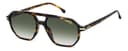
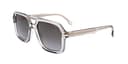
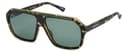
Carrera's 341/S is an acetate front and acetate temples with a metal insert running to the temples. Carrera's 317/Sis an acetate front with metal inserts on each side. Both are combination frames by the brand's own description — read that as a design line and a weight-saving measure, unless metal on your skin is the reason you came to acetate, in which case see our hypoallergenic roundup and acetate and metal frames.
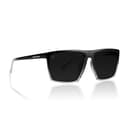
The NEVEN Doc Robbinsstates neither acetate nor TR90, and NEVEN's sibling Legend and Tombstone listings state TR90. So the material is genuinely unconfirmed rather than assumed either way, and the card says so. It is on this list for a different reason: it is a large-fit polarized rectangle in the $50–$100 band, which is a gap almost nothing else fills. If standard frames pinch you, that is worth more than a material claim — and our guide to sunglasses for wide faces covers the measurements to check.
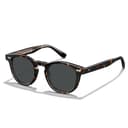
The CARFIA Vintage Round and the Privé Revaux Clevelander both state cellulose acetate outright, and both state polarized. They are the simplest frames here and the least qualified claims.
Who each pick is actually for
A recognizable name on a normal-sized face: the Carrera 341/S. Pilot shapes are usually sold oversized; a 54 mm eye size is the unusual part.
A wider face that wants a long temple:the Carrera 317/S at 55-20-150. The 150 mm temple is the number to notice — it is 5 mm longer than the 341/S, which is what makes it sit correctly on a larger head.
A genuinely large head: the NEVEN, with the material caveat on the card. NEVEN builds its range around L/XL fits, which is the whole reason to consider it.
A square or angular face wanting a substantial round:the CARFIA, with its keyhole bridge — a heritage detail that also lifts the frame slightly off the nose, which many people find more comfortable. Our keyhole bridge guide covers that, and round acetate sunglasses ranks the shape.
One clean pair for everything: the Clevelander. A polarized acetate rectangle with stated 100% UV protection is the least interesting and most useful frame on this page, which is exactly why it is the budget pick. Our everyday sunglasses roundup is built on the same logic.
Should you stretch to $200?
Only for a specific reason, and there are three honest ones. The first is mineral glass: glass lenses resist scratching far better than plastic and they start appearing just above this band. The second is a frame an optician will service for a decade, which is a real property of hand-finished acetate and not a marketing line. The third is the icon itself— if what you want is a Wayfarer, no amount of specification at $80 is going to be a Wayfarer. Our under $200 page covers that band, and are expensive sunglasses worth it works the cost-per-year arithmetic through properly.
If none of those three applies to you, stop here. This band is the value sweet spot in sunglasses, and the honest version of a buying guide says so rather than upselling.