Where a frame touches you, and what is there
A sunglasses frame makes contact in exactly three places, and a rash tells you which one is the problem.
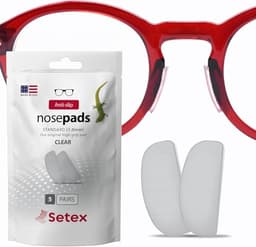
The bridge, on the sides of your nose. On an acetate frame this is solid acetate — a moulded saddle or a keyhole notch, with no pads and no pad arms. On a metal frame it is usually a pair of pads on metal arms, and those arms are the classic nickel contact point. A rash on both sides of the nose and nowhere else is the signature of pad-arm contact.
Behind the ears, at the temple tips. Acetate temples are acetate all the way to the tip. Many have a metal core wire pressed inside the acetate for rigidity, which is not skin contact unless the acetate has worn or split — worth knowing, because a years-old frame whose temple tips have thinned can start a reaction that the same frame never caused when new. A rash behind one ear only usually means wear, not an allergy to a new frame.
At the hinges and screws. Every acetate frame has metal here: the hinge is embedded in the acetate and held with a screw. On a well-made frame it sits flush and below the surface, so skin contact is incidental. The spectacle-frame study above is interesting on exactly this point — it looked at fine scratches on frames as a route to exposure, which is a reminder that a damaged surface behaves differently from an intact one. Our page on acetate frame hinges explains the three constructions and which brands publish theirs.
What “hypoallergenic” can and cannot mean
There is no eyewear standard behind the word. Nobody certifies a frame as hypoallergenic, and no seller on this page claims one does. What you can do is reason about materials, which is what this list is:
Acetate is the no-metal-contact option. It is a cellulose-derived plastic, not a metal alloy, so nickel and chromium are not in the material at all. That is why it is the first thing to try if a metal frame gave you a rash.
Titanium is the metal answer, and we do not sell one. If you need a metal frame — for a rimless style, or for a weight you cannot get in acetate — titanium is the material an optometry reference describes as hypoallergenic and relevant precisely for patients with a nickel allergy, as well as strong, light and corrosion-resistant enough to handle sweat and humidity without pitting. Our registry contains no titanium frame and we will not invent one; acetate vs titanium is the page that sets out the comparison, and it says plainly that titanium wins this specific argument.
Plastic is not automatically safe. The frame-dermatitis literature records reactions to plastic frames via plasticizers, UV stabilisers and varnishes, and also to palladium and titanium in rare cases. A material swap changes your odds; it does not guarantee an outcome. If a reaction continues after you have moved to acetate, the frame material is not your trigger and a patch test is the next step rather than a third frame.
Who each pick is for
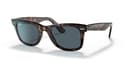
Ray-Ban Original Wayfarer RB2140 — best overall. Thick cellulose acetate front and temples, Ray-Ban’s stated 100% UV protection, published in the 50-22 fitting with 150 mm temples, and serviceable for years by any optician. For this page the deciding property is construction quality: on a frame cut from thick sheet, the hinge hardware is well below the surface and the temple tips are substantial enough that no core wire is going to surface. The compromises are the usual ones — this classic variant is not polarized, and 50 mm sits small on a wide face, where the 54 is the better buy. Our 50 mm vs 54 mm comparison covers the sizing.
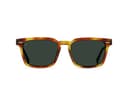
RAEN Adin 54 — best mid-price. Stated Italian cellulose acetate, 100% UV protection, a clean 54 mm round, and the best edge finish of anything here under the premium tier. Finish is not a cosmetic point on this page: a smoothly polished acetate edge and a flush hinge are what keep metal and roughness off your skin for years. Gaps: plastic lens, no published polarization figure on this colourway. Our RAEN review covers the brand.
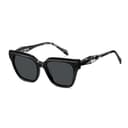
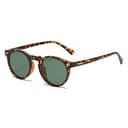
SOJOS Audrey Oversize — best stated all-acetate budget. This is the only budget frame in our registry whose listing states cellulose acetate for the frame and the temples rather than just “acetate” in a title, which is exactly the distinction this page turns on — plenty of cheap frames pair an acetate front with a different plastic or a metal temple. It is polarized and states UV400. What is missing: measurements, and the finish quality that makes a hinge sit flush. See our oversized style guide for the shape.
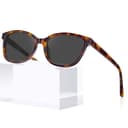
CARFIA Designer Acetate — best smaller shape. A polarized cellulose acetate square with UV400 stated, cut smaller and softer than the Ray-Ban, which makes it the easier pick for a narrower face. Honest gaps: no published measurements, and no stated figure for anything beyond material, lens and polarization. Our CARFIA review covers the brand.
Gleyemor Vintage Round — best budget. The cheapest route to a hand-crafted acetate frame with the material stated on the listing. Use it as a test: if a metal frame has been giving you trouble, this is a low-cost way to find out whether removing the metal fixes it before you spend properly. The gaps are real — no measurements, no UV figure on some ASINs, and hinge and edge quality well below the frames above, which matters more here than on most pages. Our Gleyemor review is candid about it.
What we left off, and why
Three exclusions, all deliberate. The Ray-Ban Clubmaster is one of our favourite frames and it is not on this page: its construction is an acetate brow with a metal lower rim, so there is alloy in the build and on the face. For the same reason we left off frames whose front is TR90 or nylon with acetate temples — a mixed build is fine for most buyers and wrong for this one, and we would rather name the reason than quietly include it.
We also left off every frame whose listing does not state its material. On most of our pages an unstated material is a quality question. Here it is the entire question: if the seller will not say what the frame is made of, it cannot be recommended to someone who reacts to a specific material. Two frames in our registry are recorded with the material field blank for exactly that reason, and they stay off this list. Our page on how to tell if a frame is real acetate covers the checks you can run yourself when a listing is silent.
Finally, a note on cleaning, because it is the avoidable cause we see most often. Residue is a contact irritant in its own right — sunscreen, hairspray and alcohol-based lens sprays all leave a film on the bridge and temple tips. If a frame starts bothering you after months of comfortable wear, clean it properly before you blame the material. Our guides to cleaning sunglasses and acetate frame care cover the method.