Acetate Club

Best Italian Acetate Sunglasses

Italian acetate is a supply chain, not a style: sheet from a maker like Mazzucchelli, cut and polished in Italy. The five frames whose own pages say so, from $25 to $450.

By Stephen V.Last updated How we pick

Our pick is the Persol PO3048S, and it is the pick for the reader who wants the finish rather than the badge: Persol states an Italian acetate frame, crystal lenses and Italian manufacture, and its own heritage page says a frame passes through around thirty manual processes. If you want Italian acetate with a modern lens rather than a heritage one, the Serengeti Raffaele states Italian acetate and pairs it with a polarized mineral 555nm lens. The budget pick is the SOJOS Retro Polygon Round at about $25— the cheapest frame here whose listing states Italian acetate, and the one to buy if you want the material without the provenance story.

“Italian acetate” is the most-used and least-defined phrase in eyewear marketing, so this page starts by narrowing it. It is not a shape, a color or a quality grade. It describes where the sheet stockcame from — historically from a maker like Mazzucchelli 1849 in Castiglione Olona, which has supplied cellulose acetate to the frame trade since the nineteenth century — and, separately, where the frame was cut, tumbled and polished. Those are two different claims, and a listing can honestly make one without the other. Every frame below has a listing or brand page that states at least one of them, and the cards say which. Where a seller does not publish a measurement or a UV figure, the card says not published rather than guessing, and prices are live and dated on every button.

How this is funded: we earn a commission if you buy through our links, at no extra cost to you. It never changes which product we recommend, and we’ll tell you when we’d skip one. Full disclosure.

Quick picks

Ranked on frame material, fit and value. Select a row to jump to the full write-up. We have not handled these frames in person — here is exactly what we do instead.

#ProductBest forPrice
1
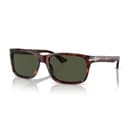
Persol PO3048S Rectangular

Persol PO3048S Rectangular

The most beautifully finished acetate here, full stop. Persol cuts its frames from Italian acetate and hand-polishes them; the Havana has the depth and warmth that separates a $300 frame from a $30 one. This is a buy-for-a-decade frame, not a trend.

Best overall
$333.00 · View on Amazon

Price as of November 21, 2026. #ad How we’re funded

2
Serengeti Raffaele (Shiny Tortoise, Mineral Polarized 555nm, Cat 3)

Serengeti Raffaele (Shiny Tortoise, Mineral Polarized 555nm, Cat 3)

The rare acetate frame whose listing tells you its filter category outright. Serengeti cuts the Raffaele from Italian acetate in a round shape with a keyhole bridge, and fits it with polarized mineral glass rated category 3 on the listing itself — the first time on this site a frame has stated the number rather than left us to infer it. Premium money, but you know exactly what you are buying.

Best lenses
$320.00 · View on Amazon

Price as of November 21, 2026. #ad How we’re funded

3
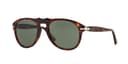
Persol 649 Original PO0649 (Havana / Green, 54 mm)

Persol 649 Original PO0649 (Havana / Green, 54 mm)

The original Persol icon, and the better buy of the two for most people. It is the same Havana pilot shape as the folding 714, with the Meflecto temples Persol names in its own description, a wider size range and a clearly lower price. Unless you will actually carry your sunglasses folded, this is the one.

Best heritage frame
$363.00 · View on Amazon

Price as of November 21, 2026. #ad How we’re funded

4
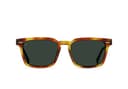
RAEN Adin 54 Round

RAEN Adin 54 Round

An independent-brand round frame in hand-finished Italian acetate, at a fraction of a legacy-designer price. The Moab Tortoise is a beautifully mixed pattern, and the keyhole bridge and slightly squared-round shape flatter a square or angular face.

Best mid-price
$134.99 · View on Amazon

Price as of November 21, 2026. #ad How we’re funded

5
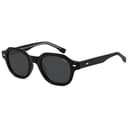
SOJOS Retro Polygon Round (Italian Acetate)

SOJOS Retro Polygon Round (Italian Acetate)

A soft-polygon round frame in acetate that SOJOS describes as Italian-sourced, at genuinely budget money. The slightly geometric cut is more flattering on a square face than a perfect circle, and it's the only budget round on this site whose listing names Italian sheet stock rather than just 'acetate'.

Best budget
$14.24 · View on Amazon

$29.9953% off

Price as of November 21, 2026. #ad How we’re funded

The picks in full

#1Best overall

Persol PO3048S Rectangular

The most beautifully finished acetate here, full stop. Persol cuts its frames from Italian acetate and hand-polishes them; the Havana has the depth and warmth that separates a $300 frame from a $30 one. This is a buy-for-a-decade frame, not a trend.

Strengths

  • Italian acetate, hand-finished — the color depth and edge polish are a visible step up
  • Crystal (glass) lenses on many Persol models resist scratches better than plastic
  • A restrained rectangular shape that flatters round and oval faces

Who should skip it

  • Premium price — this is the splurge pick, not the value pick
  • Runs on the narrower, more classic side; check the lens width against a wide face
Frame materialItalian cellulose acetate
Frame shapeRectangle
Lens protection100% UV protection (per Persol)
PolarizedNot published
Lens width58 mm
Suits face shapesOval, Round, Square

Spec note. Persol is one of the few makers that consistently uses Italian acetate and hand-finishing; the Meflecto flexible temple system is a genuine comfort feature, not marketing.

Specs and material read from the product listing, on July 21, 2026. “Not published” means the seller does not state that figure.

#2Best lenses

Serengeti Raffaele (Shiny Tortoise, Mineral Polarized 555nm, Cat 3)

The rare acetate frame whose listing tells you its filter category outright. Serengeti cuts the Raffaele from Italian acetate in a round shape with a keyhole bridge, and fits it with polarized mineral glass rated category 3 on the listing itself — the first time on this site a frame has stated the number rather than left us to infer it. Premium money, but you know exactly what you are buying.

Strengths

  • Filter category 3 stated in the listing title, with 555 nm polarized mineral glass from Corning per Serengeti
  • Italian acetate with a keyhole bridge, per Serengeti's product page
  • Serengeti states UV protection to 400 nm on its lens-technology page

Who should skip it

  • Premium price — this is Persol money, not budget acetate money
  • No measurements read: Amazon sizes it only as Small-Medium, and Serengeti's own page could not be fetched
  • Mineral glass is heavier on the nose and can crack under impact, as with any glass lens
Frame materialItalian acetate (per Serengeti)
Frame shapeRound
Lens protectionUV protection to 400 nm (per Serengeti); filter category 3 (per listing)
PolarizedYes
Lens widthNot published
Suits face shapesSquare, Oval, Heart

Spec note. Serengeti describes the Raffaele as Italian acetate with a keyhole nose bridge and fits it with its Mineral Polarized 555nm lens — borosilicate optical glass from Corning, tuned to 555 nm at the center of the visible spectrum. The Amazon listing title states 'Cat 3 to 3', the notation Serengeti uses for a fixed (non-photochromic) category-3 lens, and sizes the frame Small-Medium.

Specs and material read from the product listing, on September 21, 2026. “Not published” means the seller does not state that figure.

#3Best heritage frame

Persol 649 Original PO0649 (Havana / Green, 54 mm)

The original Persol icon, and the better buy of the two for most people. It is the same Havana pilot shape as the folding 714, with the Meflecto temples Persol names in its own description, a wider size range and a clearly lower price. Unless you will actually carry your sunglasses folded, this is the one.

Strengths

  • Persol lists the Havana / Green in 52-20, 54-20 and 56-20 — the only one of the pair offered in a 56
  • Persol names the Meflecto flexible temples, the keyhole bridge and the arrow in the model's own description
  • Acetate frame and crystal lenses per Persol's spec panel, handmade in Italy

Who should skip it

  • Premium money, even as the cheaper of Persol's two pilot icons
  • The standard Havana / Green is not polarized; Persol's polarized versions cost more
  • It does not fold, so it needs a full-size case — the one thing the 714 does that this cannot
Frame materialAcetate, handmade in Italy (per Persol)
Frame shapeAviator
Lens protection100% UV protection (per listing)
PolarizedNo
Lens width54 mm
Suits face shapesOval, Square, Heart

Spec note. Persol's spec panel for the Havana / Green lists an acetate frame, crystal lenses and Italian manufacture, with a 54-20 fitting and 140 mm temples. Persol dates the model to 1957, when it was designed to protect Turin's tram drivers from dust and glare.

Specs and material read from the product listing, on September 15, 2026. “Not published” means the seller does not state that figure.

#4Best mid-price

RAEN Adin 54 Round

An independent-brand round frame in hand-finished Italian acetate, at a fraction of a legacy-designer price. The Moab Tortoise is a beautifully mixed pattern, and the keyhole bridge and slightly squared-round shape flatter a square or angular face.

Strengths

  • Hand-finished Italian acetate — patterns have genuine depth, not a printed look
  • The soft-round shape balances a strong jaw better than a perfect circle
  • Independent brand: designer-level finish, roughly a third of the price

Who should skip it

  • Smaller-run brand — fewer colorways in stock at any given time
  • The 54mm eye size suits medium faces; large faces may want to size up
Frame materialItalian cellulose acetate
Frame shapeRound
Lens protection100% UV protection (per RAEN)
PolarizedNot published
Lens width54 mm
Suits face shapesSquare, Oval, Heart

Spec note. RAEN is a California independent that uses Italian Mazzucchelli-grade acetate on its higher frames; a soft-round shape (versus a perfect circle) is more forgiving on angular faces.

Specs and material read from the product listing, on July 21, 2026. “Not published” means the seller does not state that figure.

#5Best budget

SOJOS Retro Polygon Round (Italian Acetate)

A soft-polygon round frame in acetate that SOJOS describes as Italian-sourced, at genuinely budget money. The slightly geometric cut is more flattering on a square face than a perfect circle, and it's the only budget round on this site whose listing names Italian sheet stock rather than just 'acetate'.

Strengths

  • Soft geometric-round shape softens a strong jaw
  • Acetate frame and polarized lenses at the low end of the price range
  • Lightweight for a round acetate frame

Who should skip it

  • 'Italian acetate' at this price means the sheet stock, not hand-finishing
  • A true circular lens isn't for everyone — try the shape first
Frame materialCellulose acetate (Italian, per listing)
Frame shapeRound
Lens protectionUV400
PolarizedYes
Lens widthNot published
Suits face shapesSquare, Oval, Heart

Spec note. A 'polygon' round has flattened facets rather than a perfect circle, which reads a little more modern and is more forgiving on angular faces.

Specs and material read from the product listing, on July 21, 2026. “Not published” means the seller does not state that figure.

What “Italian acetate” actually refers to

Cellulose acetate starts as a resin made from cellulose taken from wood pulp or cotton. Daicel, one of the raw-material producers, describes it as a material that resists sunlight and UV radiation and does not easily degrade — which is the technical reason frames made from it last decades rather than seasons. That resin is plasticized, pigmented and pressed into sheet. The sheet is the product that gets called Italian: block stock, often with the tortoise or havana pattern laid up in layers so the color runs through the thickness of the material instead of being printed on the surface.

Mazzucchelli 1849 is the name behind most of that sheet. It is an Italian company whose entire business is cellulose acetate for the eyewear trade, and it is the reason a mid-market frame can honestly claim Italian material while being assembled elsewhere. So there are three distinct claims hiding inside one phrase:

1. Italian sheet.The acetate block was made in Italy. This is the claim most listings mean, and it is the weakest of the three, because the sheet is sold on the open market. It is still worth something — layered sheet with depth of color is genuinely harder to make than flat pigmented stock.

2. Made in Italy. The frame was cut, tumbled and finished in Italy. This is the claim Persol makes on its product pages, and it is the one that changes how a frame feels in the hand, because the polish and the edge work are labor, not material.

3. Hand-finished. A person did the final polishing and nose-pad shaping. Persol's heritage page puts the number at roughly thirty manual processes; Oliver Peoples describes craftspeople hand-carving a prototype front from a single piece of acetate, heating it to the curve of the face, then filing and sculpting the nose pads. Neither claim is auditable from a product page, but both are stated by the brand rather than inferred by us.

Our explainer on what Italian acetate means goes through the supply chain in full, and Japanese acetatecovers the other often-claimed origin — a genuinely different sheet, usually denser and cut thinner.

How we ranked these five

Three criteria, in this order. First, the strength of the stated claim. A brand page that names the material and the country outranks an Amazon title that says “Italian acetate” in the keywords. That is why the two Persols and the Serengeti sit above the SOJOS, even though the SOJOS is excellent value.

Second, what the lens adds.Italian acetate says nothing about optics. Persol's 649 pairs its acetate with crystal — actual mineral glass — which resists scratching far better than plastic and is heavier. Serengeti's Raffaele pairs Italian acetate with a polarized mineral 555nm lens in filter category 3, which under the standard bands means it transmits between 8% and 18% of visible light. Those are real, published differences between frames that make the same material claim.

Third, published fit.A frame you cannot measure is a gamble regardless of where its acetate came from. Persol publishes the 649 in 52-20, 54-20 and 56-20, which is unusually generous — most of this category offers one eye size. Our guide to sunglasses sizing explains how to read those three numbers against a frame you already own.

Where the money actually goes

Between the $25 pick and the $450 one, the material claim barely changes. What changes is everything around it.

At the budget end you are buying the sheet and nothing else: the frame is cut from acetate, the edges are machine-polished, the hinge is a standard barrel, and the lens is a polarized plastic one. That is a genuinely good deal, and for most people it is the right answer — our affordable acetate roundup is built around exactly that argument.

At the Persol end you are paying for the finishing labor, the hinge engineering (the arrow-shaped Meflecto stem Persol patented in the 1930s is a flexible temple, not a logo), the crystal lens, and the fact that the frame is serviceable for decades. The relevant question is not whether that is “worth it” in the abstract but whether you keep frames. If you replace sunglasses every two summers, the material argument favors the cheap pick overwhelmingly. If the last pair you owned lasted eight years, the maths inverts. Our page on whether expensive sunglasses are worth it works that through with real numbers, and why acetate sunglasses are expensive breaks down the cost of the material itself.

How to check the claim yourself

Three checks, none of which require a lab. Look at the edge. A frame cut from sheet shows the pattern continuing through the cut edge of the rim and the temple tip; a printed or molded frame shows a surface pattern over a solid core. Look for a mold seam. Injection-molded frames have a faint parting line along the inside of the rim or the temple; a milled acetate frame does not. Warm it and feel it.Acetate softens with gentle heat and can be adjusted by an optician — Daicel gives its softening range at roughly 230–300°C for carbonization, so the material tolerates the warm-air adjustment an optician uses without deforming permanently. Our guide to telling whether a frame is acetate has the full set, and adjusting acetate frames covers what the heat check implies for fit.

One thing none of these checks can tell you: the country. There is no visual difference between Italian sheet and Chinese sheet of the same grade, and anyone who tells you otherwise is selling something. The country claim is a provenance claim, and the only honest source for it is the brand's own page — which is exactly why this list is built from brand pages and listing text, and why the cards cite the date each one was read.
Frequently asked questions

What are the best Italian acetate sunglasses?

The Persol PO3048S. Persol states an Italian cellulose acetate frame, crystal lenses and Italian manufacture, and its heritage page describes acetate passing through around thirty manual processes. The Serengeti Raffaele is the pick if you want Italian acetate with a modern lens - Serengeti's own product page gives it as Italian acetate with a Mineral Polarized 555nm lens in filter category 3. The SOJOS Retro Polygon Round is the budget answer at about $25, and is the cheapest frame we track whose listing states Italian acetate.

Is Italian acetate better than other acetate?

Sometimes, and not for the reason people assume. The phrase usually means the sheet stock came from an Italian maker such as Mazzucchelli 1849, whose entire business is cellulose acetate for eyewear. Good Italian sheet is layered, so the tortoise or havana pattern runs through the thickness of the material rather than sitting on the surface, and that depth of color is genuinely hard to fake. But the sheet is sold on the open market, so Italian material does not imply Italian manufacture or hand finishing - those are separate claims a brand has to make separately.

Does 'Italian acetate' mean the sunglasses were made in Italy?

No. They are two different claims. 'Italian acetate' describes where the sheet came from; 'made in Italy' describes where the frame was cut, tumbled and polished. A frame can honestly carry the first without the second, and many mid-market frames do. On this page the cards say which claim each seller actually makes, and link to the listing or brand page it was read from.

Who makes Italian acetate for sunglasses?

Mazzucchelli 1849 is the name most often behind it - an Italian company based in Castiglione Olona that has supplied cellulose acetate to the eyewear trade since the nineteenth century, and which also makes the M49 bio-based grade. It is not the only maker, and a listing that says 'Italian acetate' is not obliged to name its supplier, so treat the phrase as a statement about origin rather than about a specific mill.

Is Italian acetate worth the extra money?

It depends entirely on how long you keep frames. At the budget end you are buying the sheet and a machine polish, which is a good deal. At the Persol end you are buying finishing labor, a flexible patented temple, a crystal glass lens and a frame an optician can service for decades. If you replace sunglasses every couple of summers, the cheap pick wins outright. If your last pair lasted most of a decade, the premium one is cheaper per year.

How can I tell if acetate is really Italian?

You cannot, visually - and that is the honest answer. You can check that a frame is acetate rather than molded plastic: the pattern continues through the cut edge of the rim, there is no mold parting line inside the rim or temple, and the material softens under an optician's warm air so it can be adjusted. None of those checks reveals a country. For origin, the brand's own product page is the only source worth trusting, which is why every pick here links to the page its claim was read from, with the date.

Sources

  • Mazzucchelli 1849 — the cellulose-acetate maker for eyewear — Background on cellulose acetate as the traditional material for spectacle and sunglass frames (accessed July 21, 2026)
  • Mazzucchelli 1849 — M49 bioplastic (bio-based cellulose acetate) — Manufacturer detail on bio-acetate: 68% bio-based content, >90% biodegradation after 115 days per ISO 14855-2:2018 (accessed July 21, 2026)
  • Daicel Corporation (Material SBU) — Cellulose Acetate — Manufacturer detail on the raw material: a resin derived from cellulose obtained from wood pulp or cotton; products made from it resist sunlight and particularly UV radiation and do not easily degrade, making them suitable for long-term use; it is inherently flame-retardant with high thermal stability, softening and carbonizing at approximately 230–300°C; and Daicel's cellulose acetate products are certified under the Japan BioPlastics Association's "Biomass Plastic" and "Biodegradable Plastic" schemes, with some certifications applying only to specific grades (accessed October 17, 2026)
  • Persol — Heritage: frame material, bridge, Meflecto and Arrow — Persol on its Turin origins (1917), cellulose acetate passing through thirty manual processes, the Meflecto flexible stem patented in the 1930s, and the arrow-shaped hinge (accessed September 15, 2026)
  • Persol — 649 Original, Havana frame with green lenses (PO0649 24/31) — Persol's product page: 52-20, 54-20 and 56-20 sizes; acetate frame, crystal lenses, made in Italy; keyhole bridge, arrow and Meflecto; designed in 1957 for Turin's tram drivers (accessed September 15, 2026)
  • Serengeti — Raffaele (acetate collection) — Serengeti's product page: Italian acetate, round, keyhole nose bridge, offered in Shiny Tortoise with the Mineral Polarized 555nm lens in category 3 (accessed September 21, 2026)
  • Oliver Peoples — Superior Craftsmanship I (prototyping and factories) — Oliver Peoples on how its frames are made: two dedicated factories, one in Italy and one in Japan, combining technology with hand work; craftspeople hand-carve raw material into three-dimensional prototypes before industrial production, carving the front from a single piece of acetate, heating it to bend it to the curve of the face, then filing the frame and sculpting the nose pads (accessed October 17, 2026)
  • The College of Optometrists — Tints and driving (BS EN ISO 12312-1 filter categories) — Category bands: 0 = 80-100% transmission, 1 = 43-80%, 2 = 18-43%, 3 = 8-18%, 4 = 3-8%; filters for road use shall be categories 0-3; under 75% transmittance is unsuitable for twilight or night driving (accessed September 21, 2026)
  • Specialty Vision — Eyeglass Frame Materials (optometry-practice reference) — On titanium frames: very strong, lightweight and corrosion-resistant, suited to a thin, light profile and small or delicate styles; hypoallergenic, which matters for patients with a nickel allergy; corrosion resistance handles sweat, humidity and daily handling without pitting; a higher cost than basic metals. On blended-nylon frames: commonly used for sports and safety eyewear including wraparound styles, handles impact and motion better than standard plastics, and resists sweat and moisture well. On plastic frames: the most popular choice for affordability and styling, but they break more easily than metal and may fade in color over time, while Italian zyl acetate is known for its quality, hand-polished finishes and multi-layer color effects, and lasts many years with proper care (accessed October 11, 2026)

Keep reading