What handmade actually means in an acetate frame
Start from the process, because it makes the word legible. An acetate frame begins as cured sheet stock, gets milled to shape, gets tumbled for days to polish it, then gets its hinges pressed in and its temples riveted. Our how acetate is made walkthrough covers the full sequence.
The milling is machine work at every price — nobody is hand-carving a frame front. The tumbling is a machine too. So “handmade” is really describing the operations around those: hand-finishing the edges, aligning the pattern, hand-polishing the surface after tumbling, setting the hinges, and inspecting the result. Those are the steps where a person’s time either was or was not spent, and they are the steps you can see.
What it means at each price
At $15.Probably assembly. Someone put the parts together and set the hinges by hand, which is genuinely a hand operation and genuinely how these frames are built. Do not expect hand-polished edges or matched pattern alignment. That is not a criticism at this price — a stated-acetate frame with polarized lenses for the price of lunch is remarkable value, and it is why one is on this list.
At around $40.Assembly plus more finishing time. The edges are cleaner, the polish is more even, the hinges sit better. This is where the word starts to describe something you can feel when you pick the frame up, and where the budget-brand listings that say “hand-crafted” are being fair.
At $130 and up. Hand-finishing in the sense the word originally meant: edges polished by a person against a wheel, patterns aligned across the front and temples, individual inspection. This is where you see depth in an edge polish from across a room, and it is the difference our cost breakdown is describing.
How to check the claim yourself
Three checks, none of which need any equipment.
Look at an edge in the light. A hand-polished edge has a slight, even roundness that catches light continuously along its length. A machine-finished edge is flatter, and often has faint parallel marks left by the cutter. This is easiest to see on a clear frame, which hides nothing.
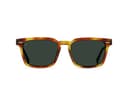
Check whether the pattern is aligned. On a well-made tortoiseshell frame the layered pattern flows sensibly across the front and often continues onto the temples, because someone chose how to cut the parts from the sheet. On a cheap frame the pattern is wherever the cutter happened to land. This is the single most reliable price tell in acetate.
Look at the hinge seat. Genuine acetate frames have metal hinges pressed into heated acetate. Look for a clean, symmetrical seat with no gap or lifted edge around the metal. It is the join most likely to reveal how much care went into assembly, and it is covered in our five acetate checks.
What handmade does not buy you
Not eye protection — that is a lens property, it costs almost nothing to include, and a $15 frame stating UV400 protects you exactly as well as a $300 one. Not fit, either: a hand-finished frame in the wrong width will still sit badly, which is why the face-shape guides and our sizing guide matter more than any finishing claim. Hand-finishing buys you a frame that looks and feels better and ages more gracefully. That is worth real money to some people and nothing at all to others, and both positions are reasonable.