How to Store Sunglasses
Most sunglasses are not broken by an accident. They are ruined slowly, by a hot car, a dry cloth and a soft pouch at the bottom of a bag — all three of which are storage decisions.
How this is funded: we earn a commission if you buy through our links, at no extra cost to you. It never changes which product we recommend, and we’ll tell you when we’d skip one. Full disclosure.
Sunglasses rarely die in a single event. They are worn out gradually by three storage habits: left in a hot car, set down lens-first, and carried loose in a bag. All three are free to fix, and fixing them is worth more to a frame’s life than anything you can buy for it.
The short version: closed, lenses up, in a rigid case, out of the heat. Everything below is why, plus the specific answers for a car, a house and a suitcase.
Heat is the one a case cannot save you from
Acetate is a thermoplastic, and that is the whole point of it — it is why an optician can warm a frame and bend it to your head, and why a well-made acetate frame can be refitted for years. It is also the material’s one storage weakness.
Be precise about the mechanism, because the internet is not. Your car does not get hot enough to melt a frame. Daicel, the Japanese cellulose acetate producer, publishes softening and carbonization for the material at approximately 230–300 °C, and describes it as inherently flame-retardant with high thermal stability. A parked car in summer is nowhere near that figure. What happens instead is subtler: a frame that is under tension — temples sprung slightly wider than their resting shape because they have been fitted to your head, or pressed against a surface — will slowly give up that tension when it is warm. The frame does not deform dramatically. It just stops being adjusted. Then the temples splay, the grip behind your ears goes, and the pair starts sliding down your nose.
The good news is that this is reversible: the same heat adjustment that fitted the frame originally fits it again, which is one of acetate’s real advantages over a moulded frame that cannot be adjusted at all. Our guide to adjusting acetate frames covers doing it properly, and acetate vs plastic covers why the alternative has no answer here.
Practically: do not treat a car as storage. The dashboard is the worst spot in the cabin, a closed glovebox in the sun is not much better, and a sun-visor clip is for driving rather than parking. A case in the door pocket or centre console is the least-bad option if the pair has to live in the car. If you want a permanent car pair, buy one you would not mind replacing.
Lens-down is how scratches start
Setting a pair down lens-first on a table, a console or a counter is the most common single-handed habit that wrecks lenses. The surface is never as clean as it looks, and the particles on it are harder than the coating on your lens.
The AAO’s guidance on scratched lenses is worth knowing for the same reason: an ophthalmologist’s answer on its site notes that light scratches will not change the prescription or the protective features of a lens, while extensive scratches or loss of coatings can impair clarity and possibly decrease protection from UV light — and that lens wipes themselves cause damage when sand or grit is on the wipe or the lens. Grit is the common factor. Keep the lens off surfaces and you remove most of the grit from the equation entirely.
If you have nowhere to put a pair, three habits all work: rest it on its folded temples with the lenses facing up, hang it from one temple on a shirt or a bag strap, or put it on your head. The first is the one to teach yourself, because it takes the same half-second as doing it wrong. Our scratched sunglasses guide covers what can actually be repaired once the damage is done.
Fold the left temple first
A small thing that costs nothing. Frames are built so the temples nest in a specific order — left first, then right — and folding them the other way puts a slight twist through the hinges every single time. Over a few thousand repetitions on a cheap hinge that is a real source of looseness. On an acetate frame the hinge is the part most likely to fail first, which is the subject of our page on acetate frame hinges; our page on whether acetate frames can be repaired covers what to do when one does go.
Case, pouch, or neither
A rigid case is the only thing that protects against crushing, which is the failure that actually breaks frames in bags. If you own one good pair, use the case it came with. If you own several, an oversized hard case is worth having, because forcing a wide frame into a case cut for a narrow one springs the temples — the same tension problem as the car, applied mechanically.
A microfiber pouch protects against dust and nothing else. It is useful in a drawer, inside a case, or in a jacket pocket where nothing heavy will land on it. It is not luggage protection, however premium the frame it shipped with.
A retainer cord is the underrated one, because it addresses the moment storage actually fails: taking a pair off and needing somewhere to put it. A pair hanging on a cord is never set down lens-first and never sat on.
Clean before you store, not after
Whatever is on the frame when you close the case stays on it. Sunscreen, sweat, salt and hairspray all attack an acetate surface’s polish over months, and the nose pads and temple tips are where residue collects. A rinse in cool water, a drop of dish soap if the frame is greasy, and a dry with a clean microfiber cloth before it goes away is the whole routine. Never wipe a dry lens that has visible dust on it — wet it first.
Full method, including what not to use on a lens coating, is in how to clean sunglasses, and the long-run version for frames — keeping the polish alive over years rather than months — is in acetate frame care. If your frames have gone cloudy or chalky rather than dirty, that is a finish question and it is covered in do acetate frames turn yellow.
Storing more than one pair
A collection damages itself, and almost always in the same way: two pairs in one drawer, one resting on the other’s lenses. A shallow tray with dividers, a drawer insert, or individual cases laid flat all solve it. Three further notes.
Keep them out of direct sun. Not for the frame’s sake — cellulose acetate is unusually good here, and Daicel states its products resist sunlight and particularly UV radiation and do not easily degrade, which is part of why the material has been used for frames for a century. It is the lens coatings and the printed branding that fade first, and a sunny windowsill is also a warm one.
Store them open or closed, but consistently closed is easier. A closed frame takes less space and keeps the lenses facing each other rather than facing a surface.
Rotate what you wear. Mostly a comfort point: a frame worn every day stays in the shape you fitted it to, while one that lives in a drawer for a year and comes out for a holiday is the pair that needs re-adjusting. If you own several, our travel roundup and beach picks cover which pair deserves the rough treatment, and which should stay home.
What storage actually needs
Three cheap things do most of the work here, and the order matters: somewhere rigid to put the frame, something safe to dry the lens with, and something to stop the pair being set down at all.
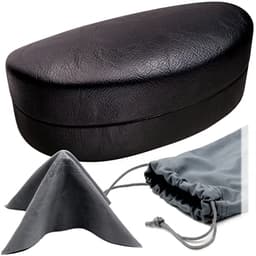
An oversized hard case
Acetate fronts are thicker and more curved than wire frames, which is why so many of them get jammed into a case that doesn't quite close and end up scratched anyway. This one is cut extra-large for exactly that shape, and the microfiber pouch and cloth come with it.
Price as of October 16, 2026. #ad How we’re funded
Listed as “Hard Sunglasses Case - EXTRA LARGE for CURVED FRAMES Black Distressed Leather Like Hard Shell - comes with Microfiber Pouch & Cloth - Oversized XL Large Glasses Case Men and Women (AS517 XL Black)” — read on August 16, 2026.
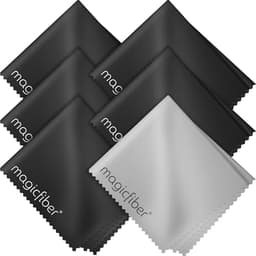
Microfiber cloths, six-pack
The only thing that should ever touch a dry lens. Buying a six-pack rather than one is the actual point: a cloth that has been living in a pocket is carrying grit and has quietly become a scratching tool, so you want a clean one in the case, the car and the bag.
Listed as “MagicFiber Microfiber Cleaning Cloth, Glasses Cleaner, Eyeglass Wipes, 6pk” — read on August 16, 2026.
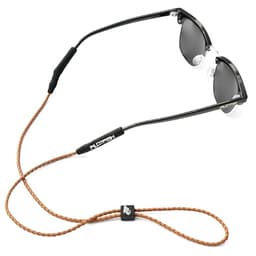
A slim leather retainer cord
Acetate is heavier than wire, which is how a good frame ends up shoved on top of your head and, eventually, on the floor. A slim leather cord in tortoise reads like part of the frame rather than sports kit, which is the difference between wearing one and not.
Price as of October 16, 2026. #ad How we’re funded
Listed as “Pilotfish Leather Sunglasses Strap - Glasses Retainer Cord for Men or Women, Secure Chain Eyeglass or Sunglass Holder (Tortoise)” — read on August 16, 2026.
Frequently asked questions
How should you store sunglasses?
Closed, lenses facing up, in a rigid case, somewhere that does not get hot. Fold the left temple first, since frames are built to nest in that order. If a case is not to hand, rest the pair on its folded temples with the lenses up, or hang it by one temple - never set it lens-down on a surface, which is how most scratches start. Clean and dry the lenses before you close the case rather than after.
Is it bad to leave sunglasses in a hot car?
Yes, and heat is the one storage mistake a case does not protect you from. Acetate is a thermoplastic: an optician adjusts it with gentle warm air, far below the temperature at which the material softens outright - Daicel gives softening and carbonization of cellulose acetate at approximately 230 to 300 degrees Celsius. Your car never reaches that. What sustained warmth does instead is let a frame that is under tension relax, so it comes out of adjustment: temples splay, the fit loosens, and the pair starts sliding down your nose.
Should sunglasses be stored lens up or lens down?
Lens up, always. A lens resting on a table, a car console or a kitchen counter sits in the dust and grit those surfaces collect, and that grit is what scratches coatings. The AAO's own guidance on scratched lenses notes that lens wipes can cause damage when sand or grit is on the wipe or the lens - the same mechanism applies to setting a lens straight down on a surface that is never actually clean.
Do I need a hard case or is a pouch enough?
Both, for different jobs. A rigid case is what stops a frame being crushed in a bag, which is the failure mode that snaps a hinge or cracks a rim. A microfiber pouch protects against dust and makes a decent drawer liner, and it is useful inside a case, but on its own it will not survive a laptop bag. If you own one premium frame, the case it shipped with is the right case to keep using.
How do you store a collection of sunglasses?
Flat, separated and closed. A drawer insert or a shallow tray with dividers keeps each pair from resting on another's lenses, which is the main way a collection damages itself. Keep them out of direct sunlight on a windowsill or an open shelf: cellulose acetate resists UV well - Daicel states its products resist sunlight and particularly UV radiation and do not easily degrade - but the lens coatings and any printed branding are less durable than the frame is.
Where should I keep sunglasses in the car if not the dashboard?
Nowhere permanent. Take them with you, or keep them in a case in the door pocket or centre console, which run cooler than a dashboard in direct sun. A sun-visor clip is fine while you are driving and wrong as a parking spot, because the visor is in the hottest part of the cabin. If you want a car pair, buy a cheap one you will not mind replacing rather than parking a good frame in a hot box - our everyday sunglasses roundup covers the frames built for that.
Sources
- Daicel Corporation (Material SBU) — Cellulose Acetate — Manufacturer detail on the raw material: a resin derived from cellulose obtained from wood pulp or cotton; products made from it resist sunlight and particularly UV radiation and do not easily degrade, making them suitable for long-term use; it is inherently flame-retardant with high thermal stability, softening and carbonizing at approximately 230–300°C; and Daicel's cellulose acetate products are certified under the Japan BioPlastics Association's "Biomass Plastic" and "Biodegradable Plastic" schemes, with some certifications applying only to specific grades (accessed October 17, 2026)
- Specialty Vision — Eyeglass Frame Materials (optometry-practice reference) — On titanium frames: very strong, lightweight and corrosion-resistant, suited to a thin, light profile and small or delicate styles; hypoallergenic, which matters for patients with a nickel allergy; corrosion resistance handles sweat, humidity and daily handling without pitting; a higher cost than basic metals. On blended-nylon frames: commonly used for sports and safety eyewear including wraparound styles, handles impact and motion better than standard plastics, and resists sweat and moisture well. On plastic frames: the most popular choice for affordability and styling, but they break more easily than metal and may fade in color over time, while Italian zyl acetate is known for its quality, hand-polished finishes and multi-layer color effects, and lasts many years with proper care (accessed October 11, 2026)
- American Academy of Ophthalmology — Do scratched lenses affect your prescription and/or the blue light coating? — An AAO ophthalmologist's answer: light scratches will not change the prescription or protective features of the lens, although they can be annoying if near your visual axis; extensive scratches or loss of coatings can impair your clarity of vision and possibly decrease protection from UV light. It also notes that lower-quality lenses and coatings scratch more easily and may need replacing, and that lens wipes can cause damage if they are low quality, misused, or used when sand or grit is on the wipe or the lens (accessed October 11, 2026)
- Mazzucchelli 1849 — the cellulose-acetate maker for eyewear — Background on cellulose acetate as the traditional material for spectacle and sunglass frames (accessed July 21, 2026)
Keep reading
How to care for acetate frames
Cleaning, polish and heat adjustment over the life of a frame.
Read the guideHow to clean sunglasses
The method that does not scratch what you are trying to clean.
Read the guideScratched sunglasses
What can be fixed, what cannot, and when to replace the lens.
Read the guideBest everyday sunglasses
Frames built to survive a bag, a car and daily handling.
See the picks