How we assess a licensed fashion brand
Kate Spade is a fashion label, not an eyewear manufacturer, so the frames are made under license — more on who actually builds them below. That matters for how we judge the brand. We do not buy units or test lenses, so we do not claim hands-on results. What we can do reliably is read the published specification, confirm the stated frame material, and reason honestly about fit and value. For a licensed fashion frame the value question is the whole game: some of the price is the frame, and some of it is the name on the temple. The fair test is whether the money buys a genuinely better frame than a budget cat-eye — better material, better lenses, a more wearable shape — or whether you are mostly paying for the label. A licensed frame is not automatically worse than an in-house one; the design house sets the look and a specialist eyewear maker builds it, which can be a perfectly good arrangement. But it does mean the honest question is always about proportion: how much of the price is the frame you hold, and how much is the label on it. Here is what the Amberlee actually delivers on that test.
What Kate Spade gets right
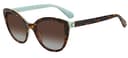
Four things, and they are real rather than marketing. First, and most importantly, polarization. Most cat-eyes in the sub-forty-dollar bracket are not polarized — they give you a tint and UV protection but no glare control. The Amberlee’s polarized lenses cut reflected glare off water, roads and car hoods, which is a genuine day-to-day upgrade and the single clearest reason the frame costs more than a fast-fashion pair. If you want to understand exactly what that layer does and does not do, our polarized vs non-polarized guide lays it out. Second, real cellulose acetate. The frame is genuine acetate rather than the brittle injection-molded plastic a lot of cheap cat-eyes use, which gives it a warmth and a depth of color that molded frames cannot match — on a Havana tortoise finish that means layered, glowing color rather than a flat printed pattern. Third, a wearable softened cat-eye. The uplift at the outer corners is present but restrained, so the frame flatters a heart-shaped face or a round or square one without reading as a costume prop. Fourth, a decent finish. It is a step above kiosk quality in the polish, the hinges and the overall build — not luxury, but noticeably more considered than the cheapest tier.
The trade-offs
Being upfront is the point of this site, so here is the honest cost. The first trade-off is price relative to what it is. Kate Spade sits in the mid-premium band, and for that money you are getting a well-made licensed fashion frame — not luxury eyewear, and not a frame that will outclass a genuine high-end pair on materials or construction. Part of what you pay for is the name and the licensing arrangement behind it, and it is only fair to say so plainly. The second trade-off is subtler: many of the prettiest Amberlee colorways use gradient lenses, which fade from darker at the top to lighter at the bottom. Gradients look wonderful and are easier to see through indoors, but a solid tint of the same darkness blocks more light overall. If your priority is maximum brightness control on a glaring beach day, a solid lens is the more functional choice; if you want a frame that looks elegant and works well in mixed light, the gradient is a reasonable style-first pick. Neither is a flaw exactly — they are simply the reality of a fashion-led frame priced to sit in the middle of the market.
It is worth naming what the mid-price does not fix, too. A Kate Spade frame will not make a shape that does not suit your face suit it, and paying more than budget money does not buy you more eye protection than a good cheap frame with the same lens rating. The finish and the polarization are real, but they do not override the basics of picking a shape and size that work for you in the first place. Treat the price as buying polarization, real acetate and a considered fashion frame — not as a shortcut past the fundamentals.
Kate Spade vs a budget acetate cat-eye
This is the comparison that matters most, and the honest answer is nuanced. What the Kate Spade premium buys over a budget acetate cat-eye is polarization, a better finish, and the brand— the glare control most cheap cat-eyes lack, a more polished build, and the reassurance of a recognized name. What it does notbuy is better eye protection. UV protection comes from the lens, and any properly made frame — budget or designer — that carries a UV400 or 100% UV rating protects your eyes just as well as the Amberlee does. So the decision is really about whether polarization and finish are worth the step up in price to you. If you want to see where the Amberlee lands against every price point in the same shape, our roundup of the best cat-eye acetate sunglasses covers the full range, and for the polarized angle specifically, our best polarized acetate sunglasses picks put it next to its direct rivals. Put simply, if two frames both carry a proper UV rating, the Amberlee is not protecting your eyes any better than the cheap pair; the extra money is buying the glare control, the nicer material and the brand, and only you can say how much those are worth on a frame you will wear often.
The Amberlee in detail
The Amberlee is a softened cat-eye cut from genuine cellulose acetate, and the softening is the point: the outer corners lift enough to give the shape its character but not so much that it becomes a statement piece, which is what makes it wearable day to day rather than saved for occasions. The Havana tortoise finish is a real strength here — because the frame is acetate rather than molded plastic, the tortoise reads as layered, warm color with depth, the kind of finish that looks more expensive than the frame actually is. The lenses are polarized, which is the headline feature and the clearest justification for the price over a fast-fashion cat-eye. Where you will make a decision is the lens tint: the gradient colorways are the most flattering to wear but block less light than a solid tint of the same darkness, so choose the gradient for looks and mixed light, or hunt for a solid lens if you want the most shade on the brightest days.
On fit, the softened cat-eye is one of the more forgiving shapes for a range of faces. It flatters a heart-shaped face by balancing a wider forehead against a narrower chin, it softens the angles of a square face, and it adds definition to a round one. That flexibility is part of why a cat-eye is such a safe fashion buy — it works across more face shapes than most statement silhouettes. As with any frame, the one thing worth checking before you commit is the lens width against a pair you already own and like, because a shape that suits you can still be sized wrong for your face.
Think of the Amberlee as a frame that punches slightly above its price on looks and comfort while staying honest about what it is: a licensed fashion cat-eye, well made, polarized, and priced in the sensible middle. It is not trying to be luxury eyewear, and judged as what it actually is — a considered mid-price frame — it is an easy one to like. If you are shopping the category more broadly, our best acetate sunglasses for women roundup shows where it fits among the picks.
Who should buy
Buy Kate Spadeif you want a polarized acetate cat-eye that looks elegant, flatters a heart, round or square face, and sits in the sensible middle of the market — more frame and better lenses than a fast-fashion pair, without stepping up to designer money. It is a strong choice if the polarization and the real-acetate finish are what you value, and if you like the softened cat-eye shape enough to wear it often. Think twiceif your goal is simply a good look with solid eye protection for as little as possible — a budget acetate cat-eye with UV400 lenses gets you most of the way for a fraction of the cost — or if you specifically need maximum light blocking, in which case skip the gradient colorways for a solid tint. And if you are chasing genuine luxury materials and construction, this is a fashion frame, not a heritage eyewear piece, so set expectations accordingly. For the wider view of where it lands, our best acetate sunglasses guide is the next stop.