Acetate Club

Best Designer Sunglasses Under $200

Five houses sell acetate frames under $200 on the open market. Six picks that were under $200 at our last price check, and a plain answer on what the name buys.

By Stephen V.Last updated How we pick

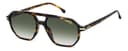
Our pick is the Carrera 341/S in Havana Goldat about $108: a pilot double bridge with an acetate front and acetate temples, a metal insert running back to the arms, and — the part that matters — a published 54-17-145 fitting at a normal 54 mm eye size rather than the oversized proportion most acetate pilots use. It is for someone who wants a recognised eyewear house and wants to know what size they are buying. The budget pick is the Carrera 329/S at about $45, the cheapest frame we track that carries a real eyewear name and publishes a full fitting (58-18-145), with the honest caveat that Carrera states its lens as non-polarized.

Price check.Every frame below was under $200 when we selected it, and each button carries the live retailer price — as of November 22, 2026— rather than a number we typed. If a button now reads above $200, read the button and not the headline.

The honest framing for this band: $200 does not buy you a luxury house, it buys you a licensed or independent one.The couture names — the ones whose dupes we write about — mostly start north of $300 and run to $600. Under $200 you are buying either a dedicated eyewear house (Carrera, RAEN), a licensed fashion label (Kate Spade), a design-led independent (OTIS) or the one icon that never left the band (Ray-Ban). That is five brands, six picks, and no two picks from the same category of brand doing the same job.

How this is funded: we earn a commission if you buy through our links, at no extra cost to you. It never changes which product we recommend, and we’ll tell you when we’d skip one. Full disclosure.

Quick picks

Ranked on frame material, fit and value. Select a row to jump to the full write-up. We have not handled these frames in person — here is exactly what we do instead.

#ProductBest forPrice
1
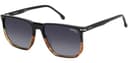
Carrera 341/S (Havana Gold, Pilot Double Bridge, 54 mm)

Carrera 341/S (Havana Gold, Pilot Double Bridge, 54 mm)

The smallest and priciest of the three, and the one that answers the obvious objection to an acetate pilot: at 54 mm it is cut for a normal face rather than the oversized aviator proportion. Carrera states acetate front and temples here, with a metal insert running back to the temples — read that as a design line, not an all-acetate frame.

Best overall
$108.21 · View on Amazon

Price as of November 22, 2026. #ad How we’re funded

2
Ray-Ban Original Wayfarer RB2140

Ray-Ban Original Wayfarer RB2140

The frame that defined acetate eyewear, and still the benchmark. The RB2140 is thick cellulose acetate cut in the original 1950s shape — the Havana colorway is real layered tortoiseshell, not a printed pattern. If you buy one acetate frame for life, it's this.

Best icon
$133.70 · View on Amazon

$191.0030% off

Price as of November 22, 2026. #ad How we’re funded

3
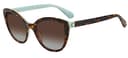
Kate Spade Amberlee/S Cat-Eye

Kate Spade Amberlee/S Cat-Eye

A polarized acetate cat-eye that lands between fast-fashion and designer money. The Havana acetate has real warmth, the polarized lenses are a genuine upgrade over the budget cat-eyes, and the shape is flattering without being costume-y.

Best designer cat-eye
$117.29 · View on Amazon

$141.3417% off

Price as of November 22, 2026. #ad How we’re funded

4
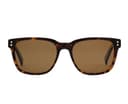
OTIS Test of Time X Eco (Havana Brown)

OTIS Test of Time X Eco (Havana Brown)

A genuinely good frame with a sustainability claim we would not repeat without a caveat. OTIS builds this on its eco-acetate with polarized mineral glass lenses, which is a real specification advantage. But OTIS states the frames are biodegradable in a landfill environment, and it publishes no standard, no figure and no lab to support that.

Best glass lens
$145.60 · View on Amazon

Price as of November 22, 2026. #ad How we’re funded

5
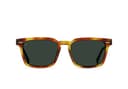
RAEN Adin 54 Round

RAEN Adin 54 Round

An independent-brand round frame in hand-finished Italian acetate, at a fraction of a legacy-designer price. The Moab Tortoise is a beautifully mixed pattern, and the keyhole bridge and slightly squared-round shape flatter a square or angular face.

Best indie label
$134.99 · View on Amazon

Price as of November 22, 2026. #ad How we’re funded

6
Carrera 329/S (Black Havana, 58 mm)

Carrera 329/S (Black Havana, 58 mm)

The pick that makes the Carrera argument on its own: Carrera states acetate for the front AND the temples, publishes the full 58-18-145 fitting, and sells it at a price most budget acetate brands charge while publishing nothing. The catch is the lens — this is a gradient, and Carrera does not call it polarized.

Best budget designer name
$44.56 · View on Amazon

Price as of November 22, 2026. #ad How we’re funded

The picks in full

#1Best overall

Carrera 341/S (Havana Gold, Pilot Double Bridge, 54 mm)

The smallest and priciest of the three, and the one that answers the obvious objection to an acetate pilot: at 54 mm it is cut for a normal face rather than the oversized aviator proportion. Carrera states acetate front and temples here, with a metal insert running back to the temples — read that as a design line, not an all-acetate frame.

Strengths

  • Carrera states acetate front and acetate temples, with a published 54-17-145 fitting
  • A pilot double bridge at 54 mm — most pilots in this shape run far wider
  • Carrera advertises 100% UV protection, and the model is offered prescription-ready

Who should skip it

  • A metal insert runs to the temples, so this is a combination frame rather than all-acetate
  • The most expensive of the three Carreras here, for the smallest frame
  • Polarization is not stated on the colorway we read, and the 54-17-145 fitting was published on the Black Gold variant while this ASIN is Havana Gold
Frame materialAcetate front with acetate temples, with a metal insert to the temples (per Carrera)
Frame shapeAviator
Lens protection100% UV protection (per Carrera)
PolarizedNot published
Lens width54 mm
Suits face shapesOval, Square, Heart

Spec note. Carrera describes the 341/S as a pilot with a double bridge and a metal insert running to the temples, offered in versions with mirrored lenses or multi-layer temples and fittable with prescription lenses; the Black Gold colorway page publishes 54-17-145 with an acetate front and acetate temples, and the Havana Gold page states acetate front and temples with green shaded lenses but no dimensions. The Amazon listing title for this ASIN states 54/17/145, which is consistent with the Black Gold figures and is how the fitting is recorded here.

Specs and material read from the product listing, on November 1, 2026. “Not published” means the seller does not state that figure.

#2Best icon

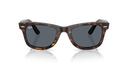
Ray-Ban Original Wayfarer RB2140

The frame that defined acetate eyewear, and still the benchmark. The RB2140 is thick cellulose acetate cut in the original 1950s shape — the Havana colorway is real layered tortoiseshell, not a printed pattern. If you buy one acetate frame for life, it's this.

Strengths

  • Genuine thick cellulose acetate — the Havana is layered tortoise, not a flat print
  • The reference wayfarer shape; angular lines add definition to a round or oval face
  • Ray-Ban lenses carry full UV protection and the frame is endlessly serviceable

Who should skip it

  • This classic variant is not polarized — you pay extra for the polarized version
  • The deep 1950s fit sits large on very small faces
Frame materialCellulose acetate
Frame shapeWayfarer
Lens protection100% UV protection (per Ray-Ban)
PolarizedNo
Lens width50 mm
Suits face shapesOval, Round, Heart

Spec note. The Original Wayfarer (RB2140) is the acetate model in the Wayfarer family; the lighter New Wayfarer (RB2132) is listed by Ray-Ban as nylon. If you specifically want acetate, the 2140 is the one.

Specs and material read from the product listing, on July 21, 2026. “Not published” means the seller does not state that figure.

#3Best designer cat-eye

Kate Spade Amberlee/S Cat-Eye

A polarized acetate cat-eye that lands between fast-fashion and designer money. The Havana acetate has real warmth, the polarized lenses are a genuine upgrade over the budget cat-eyes, and the shape is flattering without being costume-y.

Strengths

  • Polarized lenses — cuts glare, which most sub-$40 cat-eyes don't offer
  • Acetate frame with a proper Havana tortoise finish
  • A softened cat-eye that flatters heart and square faces

Who should skip it

  • Mid-premium price for what is still a licensed fashion frame, not luxury eyewear
  • Gradient lenses are style-first; a solid tint blocks more light
Frame materialCellulose acetate
Frame shapeCat-eye
Lens protection100% UV protection (per listing)
PolarizedYes
Lens width55 mm
Suits face shapesHeart, Square, Round

Spec note. Kate Spade eyewear is made under license by Safilo; the frames are acetate and the Amberlee is offered in a polarized version, which is the one worth buying.

Specs and material read from the product listing, on July 21, 2026. “Not published” means the seller does not state that figure.

#4Best glass lens

OTIS Test of Time X Eco (Havana Brown)

A genuinely good frame with a sustainability claim we would not repeat without a caveat. OTIS builds this on its eco-acetate with polarized mineral glass lenses, which is a real specification advantage. But OTIS states the frames are biodegradable in a landfill environment, and it publishes no standard, no figure and no lab to support that.

Strengths

  • Mineral glass lenses, which resist scratching far better than plastic over years of wear
  • Polarized, and OTIS states its lenses block 100% of UVA and UVB
  • 70s-leaning square shape with a genuine point of view, at well under designer money

Who should skip it

  • OTIS claims the eco-acetate is biodegradable in a LANDFILL environment; the published test basis for acetate biodegradation is industrial composting, and OTIS cites no standard, figure or lab
  • Mineral glass is heavier on the nose and less impact-resistant than plastic
  • Sold through third-party sellers, so stock and price move more than a first-party listing
Frame materialEco-acetate (OTIS states it is derived from cotton seeds and plant matter)
Frame shapeSquare
Lens protection100% UVA/UVB (per OTIS)
PolarizedYes
Lens width55 mm
Suits face shapesOval, Round, Heart

Spec note. OTIS lists the Test of Time X at 55-18-140. Its lenses are mineral glass rather than plastic — OTIS's own argument being that glass is sourced from sand and soda ash and is endlessly recyclable, which is a separate sustainability claim from the frame material.

Specs and material read from the product listing, on September 3, 2026. “Not published” means the seller does not state that figure.

#5Best indie label

RAEN Adin 54 Round

An independent-brand round frame in hand-finished Italian acetate, at a fraction of a legacy-designer price. The Moab Tortoise is a beautifully mixed pattern, and the keyhole bridge and slightly squared-round shape flatter a square or angular face.

Strengths

  • Hand-finished Italian acetate — patterns have genuine depth, not a printed look
  • The soft-round shape balances a strong jaw better than a perfect circle
  • Independent brand: designer-level finish, roughly a third of the price

Who should skip it

  • Smaller-run brand — fewer colorways in stock at any given time
  • The 54mm eye size suits medium faces; large faces may want to size up
Frame materialItalian cellulose acetate
Frame shapeRound
Lens protection100% UV protection (per RAEN)
PolarizedNot published
Lens width54 mm
Suits face shapesSquare, Oval, Heart

Spec note. RAEN is a California independent that uses Italian Mazzucchelli-grade acetate on its higher frames; a soft-round shape (versus a perfect circle) is more forgiving on angular faces.

Specs and material read from the product listing, on July 21, 2026. “Not published” means the seller does not state that figure.

#6Best budget designer name

Carrera 329/S (Black Havana, 58 mm)

The pick that makes the Carrera argument on its own: Carrera states acetate for the front AND the temples, publishes the full 58-18-145 fitting, and sells it at a price most budget acetate brands charge while publishing nothing. The catch is the lens — this is a gradient, and Carrera does not call it polarized.

Strengths

  • Carrera states acetate front and acetate temples — not acetate temples on a molded front
  • Full 58-18-145 fitting published by the brand and repeated in the Amazon listing title
  • Carrera states UV protection 100 and ships it with a storage case

Who should skip it

  • NOT polarized — Carrera gives the lens as a shaded gold mirror gradient, so expect no glare filtering
  • 58 mm is a wide eye size; this is a frame for a medium-to-wide face, not a small one
  • A geometric octagonal front is a stronger look than a plain rectangle and dates faster
Frame materialAcetate front with acetate temples (per Carrera)
Frame shapeGeometric
Lens protectionUV protection 100 (per Carrera)
PolarizedNo
Lens width58 mm
Suits face shapesOval, Round, Square

Spec note. Carrera's own product page gives the 329/S as a full-rim geometrical (octagonal) frame with an acetate front and acetate temples, a 58 mm lens, 18 mm bridge and 145 mm temple, a grey shaded gold mirror gradient NON-polarized lens, UV protection 100, and a storage case. The Amazon listing title repeats the same 58/18/145 fitting, which is how the ASIN was matched to the model.

Specs and material read from the product listing, on November 1, 2026. “Not published” means the seller does not state that figure.

What a designer name actually buys under $200

Not UV protection — that is built into a $14 lens and claimed at every price, as best UV400 sunglasses sets out. Four things do change as you move from a $40 frame to a $150 one, and it is worth being specific.

1. Published measurements. Houses publish fittings because opticians need them. Four of these six publish a lens width (54 mm, 58 mm, 55 mm, 55 mm) and two publish a complete three-number fitting. In the band below, almost nothing does.

2. A stated material, stated precisely.Carrera names an acetate front and acetate temples on the 341/S, and names the metal insert separately rather than hiding it. RAEN states Italian cellulose acetate on the Adin. OTIS states an eco-acetate derived from cotton seeds and plant matter. That precision is what you are paying for — a budget listing says “acetate frame” and stops.

3. Lens substrate, in one case. The OTIS Test of Time X is the only pick here with a mineral glass lens, stated at 100% UVA/UVB and filter category 3. Glass is heavier and it can shatter; it also resists scratches in a way plastic simply does not. Our glass lens sunglasses page ranks that category properly, and lens materials explains the trade.

4. A service path.A recognised house has replacement arms, screws and lens options through opticians. That is the difference between a repair and a bin — see can acetate frames be repaired?

The five brands, and what each one is for

Carrerais an eyewear house, not a fashion label with an eyewear licence, and in this band it is the information buy: two of our three Carreras publish a full fitting, a filter note or both. The caveats are stated on the cards — the 329/S lens is given by Carrera as a grey shaded gold mirror gradient that is not polarized, and the 317/S has metal inserts at each side. Our Carrera review goes through the line.

Ray-Banis the one icon that still sits inside $200, and the RB2140 Original Wayfarer is the acetate model in the family — the lighter RB2132 New Wayfarer is listed by Ray-Ban as nylon, so the number matters. The standard variant is not polarized; Ray-Ban sells polarization as a dearer version of the same frame. See our Ray-Ban review and original vs new wayfarer.

Kate Spadeis licensed fashion eyewear, and that is not an insult — it is a description of how most designer sunglasses are made. The Amberlee/S is a polarized acetate cat-eye with a published 55 mm lens, which is the combination the couture houses charge three times as much for. Our Kate Spade review covers what licensing means for build quality.

OTIS is the design-led independent, and the one brand here whose argument is the lens rather than the logo: mineral glass, stated filter category, eco-acetate frame. See our OTIS review.

RAENis the indie label play — Italian cellulose acetate, a soft 54 mm round, keyhole bridge, and no logo doing the talking. It is the pick for someone who wants the material and finish of a $300 frame without the recognisable name, which is also the argument our Oliver Peoples alternatives page makes at a higher price point.

What $200 does not buy

A couture logo.There is no honest route to a Celine, Dior, Tom Ford or Saint Laurent frame under $200 at retail, and anything presenting itself as one is either a dupe (a copied shape, which is legal) or a counterfeit (a copied mark, which is not). Our dupe pages — Celine, Dior, Tom Ford and YSL— are explicit about that difference.

Hand-finishing at the Persol or Oliver Peoples level. Hand-polished Italian acetate and multi-step finishing start above this band; our why acetate frames cost what they do page explains where the hours go, and Italian acetate covers the sheet material itself.

Guaranteed polarization.Two of the six picks are stated non-polarized, and that is a real pattern at the designer end rather than an oversight — a mirror gradient or a classic G-15 tint is a styling choice, not a glare filter. If polarization is non-negotiable, start from polarized acetate sunglasses.

How we ranked these six

A published fitting first. This is a band where you should not have to guess, and four of six publish at least a lens width.

Then a precisely stated material.“Acetate front and acetate temples” beats “acetate frame”, and “Italian cellulose acetate” beats both. Where a brand states a metal element, we state it too.

Then one pick per job, no duplicates.A pilot, a wayfarer, a cat-eye, a glass-lens square, an indie round and a budget geometric — six different purchases rather than six versions of the same frame. That is also why the page spans about $45 to $191 instead of clustering at the ceiling.

Then honesty about the cons on the card. Non-polarized where non-polarized, metal inserts where metal inserts, glass weight where glass. For the no-ceiling version of this list, see designer acetate sunglasses; for the band below, acetate sunglasses under $100; and if you are shopping late November, Black Friday sunglasses deals explains how to tell a real discount from a reset list price.
Frequently asked questions

What are the best designer sunglasses under $200?

The Carrera 341/S at about $108 is our pick: an acetate-front pilot double bridge with a published 54-17-145 fitting at a normal 54 mm eye size. The Ray-Ban Original Wayfarer RB2140 is the icon in the band, the Kate Spade Amberlee/S is the polarized designer cat-eye with a published 55 mm lens, the OTIS Test of Time X is the only pick with a mineral glass lens, and the RAEN Adin 54 is the indie Italian-acetate round. The Carrera 329/S at about $45 is the budget designer name.

Can you buy real designer sunglasses for under $200?

Yes, but not couture ones. Under $200 you are buying a dedicated eyewear house such as Carrera or RAEN, a licensed fashion label such as Kate Spade, a design-led independent such as OTIS, or Ray-Ban - the one icon still inside the band. The luxury houses whose frames people most want mostly start above $300 and run to $600, and anything presenting itself as one of those under $200 is either a dupe of the shape or a counterfeit of the mark.

What is the difference between a dupe and a counterfeit?

A dupe copies a shape, which is legal and is what our brand pages recommend. A counterfeit copies a trademark - the logo, the name, the model markings - which is not legal to sell or to import. The practical test is whether the frame is pretending to be the original brand. A $40 acetate cat-eye that looks like a designer cat-eye is a dupe; the same frame with a house logo on the temple is a counterfeit.

Are designer sunglasses under $200 better quality than a $40 pair?

In four specific ways, none of which is UV protection. They publish measurements so you can size the frame before buying; they state the material precisely rather than saying "acetate frame" and stopping; one pick here has a mineral glass lens with a stated filter category; and a recognised house has a service path for arms, screws and replacement lenses. UV filtering itself costs essentially nothing to build into a lens and is claimed at every price.

Are designer sunglasses under $200 polarized?

Not reliably, and this is the commonest surprise in the band. Two of our six picks are stated non-polarized: Carrera gives the 329/S lens as a grey shaded gold mirror gradient without polarization, and the standard Ray-Ban RB2140 variant is not polarized either - Ray-Ban sells polarization as a separate, dearer version of the same frame. At the designer end a mirror gradient or a classic green tint is a styling decision rather than a glare filter.

Which designer sunglasses under $200 publish their size?

Four of our six picks publish at least a lens width, and two publish a full three-number fitting: the Carrera 341/S at 54-17-145 and the Carrera 329/S at 58-18-145. Kate Spade publishes 55 mm on the Amberlee/S, RAEN publishes 54 mm on the Adin, OTIS publishes 55 mm on the Test of Time X and Ray-Ban publishes 50 mm on this RB2140 variant. Publishing a measurement is one of the clearest practical differences between this band and the one below it.

Sources

  • Carrera — sunglasses (official product pages) — Carrera's own product pages, used as the MATERIAL provenance for the three Carrera registry entries, because the Amazon listing titles state the fitting but not the frame material and Carrera sells injected frames alongside acetate ones. 329/S: full-rim geometrical (octagonal) frame, acetate front and acetate temples, 58 mm lens / 18 mm bridge / 145 mm temple, grey shaded gold mirror gradient NON-polarized lens, UV protection 100, supplied with a storage case. 317/S: square double-bridge navigator, acetate front with metal inserts on each side, 55-20-150, gradient lens treatment, UV protection 100. 341/S: pilot with a double bridge and a metal insert running to the temples, acetate front and acetate temples, 54-17-145 published on the Black Gold colorway (the Havana Gold page states acetate front and temples with green shaded lenses but no dimensions), 100% UV protection advertised on the US page, offered prescription-ready. 3017/S, read the same day and NOT featured: cat-eye, acetate front and temples, 55-19-140 in Havana, UV Protection 100, gradient treatment, filter category 3, RXAble, with metal frontal rivets and a relief C on each temple. No page read states an injection-molding process for any of these models — Carrera names the material only (accessed November 1, 2026)
  • Ray-Ban — Original Wayfarer Classic RB2140, Polished Tortoise / G-15 Green (50-22) — Ray-Ban's listing for the 50 mm Original Wayfarer: 50-22 fitting, 41 mm lens height, 150 mm temples, acetate frame, G-15 green lens (accessed September 18, 2026)
  • Ray-Ban — New Wayfarer Classic RB2132, Polished Black / G-15 Green (52-18) — Ray-Ban's listing for the New Wayfarer: frame material given as nylon, square shape, 52-18 and 55-18 fittings with 145 mm temples, lens height 37.6 mm at 52-18 and 40.8 mm at 55-18 (a 58-18 Color Mix variant is also listed), plus an RB2132F low-bridge version in 55-18 (accessed October 5, 2026)
  • Mazzucchelli 1849 — M49 bioplastic (bio-based cellulose acetate) — Manufacturer detail on bio-acetate: 68% bio-based content, >90% biodegradation after 115 days per ISO 14855-2:2018 (accessed July 21, 2026)
  • Daicel Corporation (Material SBU) — Cellulose Acetate — Manufacturer detail on the raw material: a resin derived from cellulose obtained from wood pulp or cotton; products made from it resist sunlight and particularly UV radiation and do not easily degrade, making them suitable for long-term use; it is inherently flame-retardant with high thermal stability, softening and carbonizing at approximately 230–300°C; and Daicel's cellulose acetate products are certified under the Japan BioPlastics Association's "Biomass Plastic" and "Biodegradable Plastic" schemes, with some certifications applying only to specific grades (accessed October 17, 2026)
  • ISO 12312-1:2022 — Eye and face protection — Sunglasses for general use — The international standard for general-use sunglasses: UV filtering, filter categories and transmittance (accessed July 21, 2026)
  • U.S. FTC — Guides Against Deceptive Pricing (16 CFR Part 233) — The federal guides on former-price and list-price comparisons: a struck-through price must be one the item was actually offered at, openly and in good faith, for a reasonably substantial period (accessed September 12, 2026)
  • American Academy of Ophthalmology — Recommended Types of Sunglasses — AAO on choosing sunglasses that block 99–100% of UV-A and UV-B (UV400) (accessed July 21, 2026)

Keep reading