Acetate Club

Best UV400 Sunglasses

UV400, "100% UV protection", "100% UVA/UVB" and "UV protection to 400 nm" are four different sentences, and only one of them is a number. Five frames sorted by what their seller actually prints.

By Stephen V.Last updated How we pick

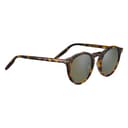
Our pick is the CARFIA Vintage Round, and the reason is boring and important: its listing states UV400in those characters, on a frame it also states is hand-crafted cellulose acetate with polarized lenses, for under $40. That combination — the protection claim, the material claim and the polarization claim all printed by the same seller — is rarer than it should be. It is for someone who wants the protection figure stated plainly and does not want to pay for a heritage name to get it. The budget pick is the Gleyemor Vintage Round in tortoise at about $14, which also states UV400 outright: the single cheapest way on this site to buy a stated 400 nm claim rather than a vibe.

Here is the thing nobody tells you. UV400 is not a certification, a test result or a standard.It is a shorthand that means the lens blocks ultraviolet light up to a wavelength of 400 nanometres — which covers UVA and UVB, because UVA runs to roughly 400 nm and UVB sits below it. Nobody audits the phrase. What makes it useful is that it is specific: it names a number, and a number is checkable in a way that “UV protection” is not. That is the whole basis of this ranking.

So we sorted five frames by what their seller literally prints, not by what we assume the lens does. Two state UV400. One states “UV protection to 400 nm” plus a filter category. One states “100% UVA/UVB” plus a filter category. One states “UV protection 100”. Those are four different promises of varying precision, and the cards below quote each one as written. Where a seller states nothing, the card says not published rather than filling in a plausible figure. Every price is live and carries its own date stamp on the button.

How this is funded: we earn a commission if you buy through our links, at no extra cost to you. It never changes which product we recommend, and we’ll tell you when we’d skip one. Full disclosure.

Quick picks

Ranked on frame material, fit and value. Select a row to jump to the full write-up. We have not handled these frames in person — here is exactly what we do instead.

#ProductBest forPrice
1
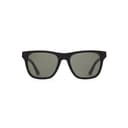
CARFIA Vintage Round (Hand-Crafted Acetate)

CARFIA Vintage Round (Hand-Crafted Acetate)

CARFIA leans hard into hand-crafted acetate at a budget price, and this vintage round is the men's-leaning pick — a substantial keyhole-bridge frame with polarized UV400 lenses. A lot of frame for the money, provided the round shape suits you.

Best overall
$36.09 · View on Amazon

$44.9920% off

Price as of November 22, 2026. #ad How we’re funded

2
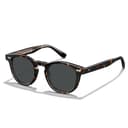
Serengeti Raffaele (Shiny Tortoise, Mineral Polarized 555nm, Cat 3)

Serengeti Raffaele (Shiny Tortoise, Mineral Polarized 555nm, Cat 3)

The rare acetate frame whose listing tells you its filter category outright. Serengeti cuts the Raffaele from Italian acetate in a round shape with a keyhole bridge, and fits it with polarized mineral glass rated category 3 on the listing itself — the first time on this site a frame has stated the number rather than left us to infer it. Premium money, but you know exactly what you are buying.

Best stated 400 nm figure
$320.00 · View on Amazon

Price as of November 22, 2026. #ad How we’re funded

3
OTIS Guilt Trip X Eco (Black / Grey Polarized)

OTIS Guilt Trip X Eco (Black / Grey Polarized)

The big one in the range, and the only OTIS frame here cut for a genuinely large face. OTIS publishes the whole fitting on this one — 57-19-130 — so for once you can measure a glass-lensed frame against one you already own before committing. Same polarized mineral glass and plain black eco-acetate as the rest of the line, in a squared classic shape that is not chasing a trend.

Best stated filter category
$240.00 · View on Amazon

Price as of November 22, 2026. #ad How we’re funded

4
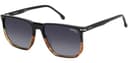
Carrera 329/S (Black Havana, 58 mm)

Carrera 329/S (Black Havana, 58 mm)

The pick that makes the Carrera argument on its own: Carrera states acetate for the front AND the temples, publishes the full 58-18-145 fitting, and sells it at a price most budget acetate brands charge while publishing nothing. The catch is the lens — this is a gradient, and Carrera does not call it polarized.

Best designer name with a figure
$44.56 · View on Amazon

Price as of November 22, 2026. #ad How we’re funded

5
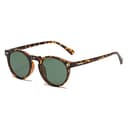
Gleyemor Vintage Round (Tortoise Acetate)

Gleyemor Vintage Round (Tortoise Acetate)

The same hand-crafted acetate round in tortoise with a G15 green lens — the most classic pairing in eyewear. It isn't a Persol and doesn't pretend to be, but a stated-acetate frame in a proper vintage colorway at this price is a lot of frame for the money.

Best budget
$11.19 · View on Amazon

$13.9920% off

Price as of November 22, 2026. #ad How we’re funded

The picks in full

#1Best overall

CARFIA Vintage Round (Hand-Crafted Acetate)

CARFIA leans hard into hand-crafted acetate at a budget price, and this vintage round is the men's-leaning pick — a substantial keyhole-bridge frame with polarized UV400 lenses. A lot of frame for the money, provided the round shape suits you.

Strengths

  • Hand-crafted acetate with a keyhole bridge — a classic detail at a budget price
  • Polarized and UV400 both stated
  • Reads intentional and vintage rather than cheap

Who should skip it

  • Heavier than a metal round; the substantial build isn't for everyone
  • Finish is good for the price, not designer-grade
Frame materialCellulose acetate
Frame shapeRound
Lens protectionUV400
PolarizedYes
Lens widthNot published
Suits face shapesSquare, Oval

Spec note. A keyhole bridge (the notched cutout above the nose) is a heritage acetate detail; it also lifts the frame slightly off the nose, which some people find more comfortable.

Specs and material read from the product listing, on September 29, 2026. “Not published” means the seller does not state that figure.

#2Best stated 400 nm figure

Serengeti Raffaele (Shiny Tortoise, Mineral Polarized 555nm, Cat 3)

The rare acetate frame whose listing tells you its filter category outright. Serengeti cuts the Raffaele from Italian acetate in a round shape with a keyhole bridge, and fits it with polarized mineral glass rated category 3 on the listing itself — the first time on this site a frame has stated the number rather than left us to infer it. Premium money, but you know exactly what you are buying.

Strengths

  • Filter category 3 stated in the listing title, with 555 nm polarized mineral glass from Corning per Serengeti
  • Italian acetate with a keyhole bridge, per Serengeti's product page
  • Serengeti states UV protection to 400 nm on its lens-technology page

Who should skip it

  • Premium price — this is Persol money, not budget acetate money
  • No measurements read: Amazon sizes it only as Small-Medium, and Serengeti's own page could not be fetched
  • Mineral glass is heavier on the nose and can crack under impact, as with any glass lens
Frame materialItalian acetate (per Serengeti)
Frame shapeRound
Lens protectionUV protection to 400 nm (per Serengeti); filter category 3 (per listing)
PolarizedYes
Lens widthNot published
Suits face shapesSquare, Oval, Heart

Spec note. Serengeti describes the Raffaele as Italian acetate with a keyhole nose bridge and fits it with its Mineral Polarized 555nm lens — borosilicate optical glass from Corning, tuned to 555 nm at the center of the visible spectrum. The Amazon listing title states 'Cat 3 to 3', the notation Serengeti uses for a fixed (non-photochromic) category-3 lens, and sizes the frame Small-Medium.

Specs and material read from the product listing, on September 21, 2026. “Not published” means the seller does not state that figure.

#3Best stated filter category

OTIS Guilt Trip X Eco (Black / Grey Polarized)

The big one in the range, and the only OTIS frame here cut for a genuinely large face. OTIS publishes the whole fitting on this one — 57-19-130 — so for once you can measure a glass-lensed frame against one you already own before committing. Same polarized mineral glass and plain black eco-acetate as the rest of the line, in a squared classic shape that is not chasing a trend.

Strengths

  • A genuinely large fit — OTIS lists 57-19-130 and calls it a larger-fit frame, which is rare in a glass-lensed acetate
  • Polarized mineral glass rated filter category 3, with 100% UVA/UVB stated by OTIS
  • The full fitting is published, lens to temple, so the size is checkable before you buy

Who should skip it

  • The temples are 130 mm against a 57 mm front, shorter than the 140-145 the rest of the range runs — it fits wide rather than deep
  • OTIS states its eco-acetate is biodegradable but cites no standard, figure or lab that supports it; the published test basis for acetate is industrial composting
  • Mineral glass adds weight, and scratched or cracked lenses are excluded from the lifetime warranty
Frame materialEco-acetate (OTIS states it is derived from cotton seeds and plant matter)
Frame shapeSquare
Lens protection100% UVA/UVB, filter category 3 (per OTIS)
PolarizedYes
Lens width57 mm
Suits face shapesRound, Oval, Heart

Spec note. OTIS lists the Guilt Trip X at 57-19-130 with a 6 base lens curve, Visottica hinges with stainless steel screws, and a category 3 polarized mineral glass lens. It is the widest front of the three OTIS frames here and has the shortest temples, so it suits a wide face rather than a long one.

Specs and material read from the product listing, on September 22, 2026. “Not published” means the seller does not state that figure.

#4Best designer name with a figure

Carrera 329/S (Black Havana, 58 mm)

The pick that makes the Carrera argument on its own: Carrera states acetate for the front AND the temples, publishes the full 58-18-145 fitting, and sells it at a price most budget acetate brands charge while publishing nothing. The catch is the lens — this is a gradient, and Carrera does not call it polarized.

Strengths

  • Carrera states acetate front and acetate temples — not acetate temples on a molded front
  • Full 58-18-145 fitting published by the brand and repeated in the Amazon listing title
  • Carrera states UV protection 100 and ships it with a storage case

Who should skip it

  • NOT polarized — Carrera gives the lens as a shaded gold mirror gradient, so expect no glare filtering
  • 58 mm is a wide eye size; this is a frame for a medium-to-wide face, not a small one
  • A geometric octagonal front is a stronger look than a plain rectangle and dates faster
Frame materialAcetate front with acetate temples (per Carrera)
Frame shapeGeometric
Lens protectionUV protection 100 (per Carrera)
PolarizedNo
Lens width58 mm
Suits face shapesOval, Round, Square

Spec note. Carrera's own product page gives the 329/S as a full-rim geometrical (octagonal) frame with an acetate front and acetate temples, a 58 mm lens, 18 mm bridge and 145 mm temple, a grey shaded gold mirror gradient NON-polarized lens, UV protection 100, and a storage case. The Amazon listing title repeats the same 58/18/145 fitting, which is how the ASIN was matched to the model.

Specs and material read from the product listing, on November 1, 2026. “Not published” means the seller does not state that figure.

#5Best budget

Gleyemor Vintage Round (Tortoise Acetate)

The same hand-crafted acetate round in tortoise with a G15 green lens — the most classic pairing in eyewear. It isn't a Persol and doesn't pretend to be, but a stated-acetate frame in a proper vintage colorway at this price is a lot of frame for the money.

Strengths

  • Stated hand-crafted acetate in the classic tortoise and G15 green combination
  • Polarized and UV400 both stated at the very bottom of the price range
  • The soft vintage-round shape softens a square or angular face

Who should skip it

  • Color depth looks flat next to a mid or premium acetate — expect value, not richness
  • No published measurements, so check the fit if you have a narrow face
Frame materialCellulose acetate (hand-crafted, per listing)
Frame shapeRound
Lens protectionUV400
PolarizedYes
Lens widthNot published
Suits face shapesSquare, Oval

Spec note. A G15 lens is the gray-green tint Ray-Ban made standard; it darkens the scene without shifting colors much, which is why it pairs so consistently with tortoise frames.

Specs and material read from the product listing, on August 19, 2026. “Not published” means the seller does not state that figure.

What UV400 actually means, in one paragraph

Ultraviolet light is divided by wavelength. UVB runs roughly 280 to 315 nm, UVAroughly 315 to 400 nm, and visible light starts just above 400 nm. A lens described as UV400 is claiming to block essentially everything below 400 nm — which is to say all of UVA and all of UVB that reaches the ground. That is why the phrase and “100% UVA/UVB” usually describe the same thing in practice: one states the boundary as a number, the other states it as a pair of band names. Our UV400 explained page works through the wavelengths properly, and UV420 covers the marketing extension that pushes the claim into visible blue light.

The practical consequence matters more than the physics. Eye-health bodies are consistent that cumulative UV exposure is implicated in cataract and in growths on the eye surface, and that eyelid skin is a common site for skin cancers. That is the case for wearing something. It is not a case for wearing something expensive: a compliant lens is cheap to make, which is exactly why a $14 frame can carry the same stated figure as a $320 one.

The four sentences, ranked by how much they tell you

1. “UV protection to 400 nm” plus a filter category. This is the most informative wording in the market and almost nobody uses it. Serengeti states UV protection to 400 nm on the Raffaele andstates the lens as filter category 3 — two independent facts, one about invisible radiation and one about visible darkness. That is the top of the information ladder.

2. “100% UVA/UVB” plus a filter category. OTIS states 100% UVA/UVB and filter category 3 on the Guilt Trip X. Band names rather than a number, but paired with the category, so you still learn two things.

3. “UV400” on its own. The commonest wording in the budget market, and genuinely useful: it names the boundary. What it does not tell you is how dark the lens is, which is a separate specification set independently of UV filtering. The CARFIA and the Gleyemor sit here.

4. “100% UV protection” or “UV protection 100”. Carrera prints “UV protection 100” on the 329/S. It is the vaguest of the four — 100% of what, measured to what wavelength, is left unstated — and it is also the wording used by most heritage houses, including Ray-Ban and Persol. Vague is not the same as false. It is just less checkable.

Darkness is not protection, and this is the error that costs people money

A dark lens and a UV-filtering lens are two different things, controlled by two different parts of the lens. You cannot tell UV performance by looking through a pair, holding it up to a window or comparing two tints side by side. The filter category scale — 0 to 4, where category 0 passes 80–100% of visible light, category 1 passes 43–80%, category 2 passes 18–43%, category 3 passes 8–18% and category 4 passes 3–8% — describes darkness only. A category 1 lens can block all UV; a category 3 lens can, in principle, block very little. Our filter categories guide sets the scale out, and how to check UV protection covers the only reliable method, which is an optician’s photometer rather than your eyes.

Two of our five picks state a category figure: the Serengeti at 3 and the OTIS at 3. The other three state nothing about darkness at all, and their cards say so. If comparable darkness matters to you more than a comparable UV figure — for bright water, snow or very high altitude — start from the two that publish it.

One more thing the number will not do for you: UV400 says nothing about polarization. Polarization is a glare filter, it is not protection, and a frame can have either, both or neither. Three of the five picks here state polarized; the Carrera 329/S is stated by Carrera as a grey shaded gold mirror gradient lens that is not polarized, which is a real consideration if you drive. See polarized vs non-polarized and how to tell if sunglasses are polarized.

Why a $14 frame and a $320 frame can print the same claim

Because the UV filter is the cheap part. It is built into the lens material or applied as a coating during manufacture, it costs essentially nothing at volume, and it does not wear out the way a mirror coating does. What the extra $300 buys is everything else: lens substrate (mineral glass rather than plastic), optical consistency across the lens, frame material and finish, a published fitting, and a repairable frame. Our are expensive sunglasses worth it? page works through that trade without pretending the answer is always no.

Which means the honest ranking instruction for this page is: if your only requirement is a stated UV400 figure, buy the cheapest frame that states it and stop reading. That is the Gleyemor at about $14. Everything above it on this page is being bought for a different reason — a glass lens, a published fitting, a designer name, a frame an optician can adjust — and the cards say which.

What this page cannot tell you

We own none of these frames and we have not put any lens on a photometer. Every figure on this page is a figure the seller or the brand published, quoted as published. Where a brand uses one wording on its own site and a marketplace listing uses another, the card follows the brand page and the registry note records the discrepancy. If a seller states nothing, we do not infer UV400 from the price, the material or the tint — that inference is exactly the fabrication this site exists to avoid, and how we choose sets out what we do instead.

For the wider category, best acetate sunglasses is the main roundup, and non-polarized sunglasses covers the case where you specifically want UV protection without a polarizing filter.
Frequently asked questions

What are the best UV400 sunglasses?

The CARFIA Vintage Round is our pick: its listing states UV400, hand-crafted cellulose acetate and polarized lenses together, for under $40. The Serengeti Raffaele is the most informative claim in the market - UV protection to 400 nm plus a stated filter category 3 on a mineral polarized lens - and the OTIS Guilt Trip X states 100% UVA/UVB with filter category 3. The Gleyemor Vintage Round in tortoise at about $14 is the budget answer and states UV400 outright.

Is UV400 a real standard or just marketing?

It is shorthand, not a certification. UV400 means the lens blocks ultraviolet light up to 400 nanometres, which covers UVA (roughly 315 to 400 nm) and UVB (roughly 280 to 315 nm). No body audits the phrase itself. What makes it more useful than "UV protection" is that it names a wavelength, and a wavelength is checkable; "100% UV protection" leaves both the percentage basis and the cutoff unstated.

Is UV400 the same as 100% UV protection?

In practice they usually describe the same performance, but they are not the same sentence. UV400 states a cutoff wavelength. "100% UV protection" and "100% UVA/UVB" state a completeness claim without naming the boundary. Of our five picks, two state UV400, one states UV protection to 400 nm, one states 100% UVA/UVB and one states UV protection 100 - and the cards quote each as written rather than flattening them into one claim.

Do darker lenses block more UV?

No. Darkness and UV filtering are set independently. Lens darkness is described by the filter category scale, 0 to 4: category 0 passes 80 to 100% of visible light, category 1 passes 43 to 80%, category 2 passes 18 to 43%, category 3 passes 8 to 18% and category 4 passes 3 to 8%. A light category 1 lens can block all UV and a very dark lens can block little, so you cannot judge protection by looking through a pair. Only an instrument can measure it.

Do cheap UV400 sunglasses protect as well as expensive ones?

On the UV figure alone, a cheap frame that states UV400 is making the same claim as a $300 frame, because the UV filter is the inexpensive part of a lens and does not wear out the way a mirror coating does. What the extra money buys is lens substrate, optical consistency, frame material and finish, a published fitting and repairability. If a stated UV figure is your only requirement, the cheapest frame that prints it is the rational buy.

Does UV400 mean the lenses are polarized?

No, and conflating them is the commonest mistake in this category. Polarization is a glare filter that cuts light reflected off flat surfaces like water, snow and asphalt; UV filtering blocks invisible radiation. A frame can state one, both or neither. Three of the five picks here state polarized lenses; Carrera states the 329/S lens as a grey shaded gold mirror gradient that is not polarized.

Sources

  • American Academy of Ophthalmology — Recommended Types of Sunglasses — AAO on choosing sunglasses that block 99–100% of UV-A and UV-B (UV400) (accessed July 21, 2026)
  • U.S. FDA — Tips to Stay Safe in the Sun: From Sunscreen to Sunglasses — FDA: lens darkness does not indicate UV protection; look for a 100% UV / UV400 label (accessed July 21, 2026)
  • National Eye Institute — Protecting your eyes from the sun's UV light — NEI on UV eye risks and choosing sunglasses that block UV-A and UV-B (accessed July 21, 2026)
  • World Health Organization — The known health effects of ultraviolet radiation — WHO on cumulative UV exposure and its link to cataract and eye damage (accessed July 21, 2026)
  • ISO 12312-1:2022 — Eye and face protection — Sunglasses for general use — The international standard for general-use sunglasses: UV filtering, filter categories and transmittance (accessed July 21, 2026)
  • The College of Optometrists — Tints and driving (BS EN ISO 12312-1 filter categories) — Category bands: 0 = 80-100% transmission, 1 = 43-80%, 2 = 18-43%, 3 = 8-18%, 4 = 3-8%; filters for road use shall be categories 0-3; under 75% transmittance is unsuitable for twilight or night driving (accessed September 21, 2026)
  • Serengeti — Raffaele (acetate collection) — Serengeti's product page: Italian acetate, round, keyhole nose bridge, offered in Shiny Tortoise with the Mineral Polarized 555nm lens in category 3 (accessed September 21, 2026)
  • Serengeti — The Serengeti Lens (lens technology) — Serengeti on its mineral lenses (Corning borosilicate optical glass), the 555 nm tuning, Spectral Control, and UV protection to 400 nm (accessed September 21, 2026)
  • Carrera — sunglasses (official product pages) — Carrera's own product pages, used as the MATERIAL provenance for the three Carrera registry entries, because the Amazon listing titles state the fitting but not the frame material and Carrera sells injected frames alongside acetate ones. 329/S: full-rim geometrical (octagonal) frame, acetate front and acetate temples, 58 mm lens / 18 mm bridge / 145 mm temple, grey shaded gold mirror gradient NON-polarized lens, UV protection 100, supplied with a storage case. 317/S: square double-bridge navigator, acetate front with metal inserts on each side, 55-20-150, gradient lens treatment, UV protection 100. 341/S: pilot with a double bridge and a metal insert running to the temples, acetate front and acetate temples, 54-17-145 published on the Black Gold colorway (the Havana Gold page states acetate front and temples with green shaded lenses but no dimensions), 100% UV protection advertised on the US page, offered prescription-ready. 3017/S, read the same day and NOT featured: cat-eye, acetate front and temples, 55-19-140 in Havana, UV Protection 100, gradient treatment, filter category 3, RXAble, with metal frontal rivets and a relief C on each temple. No page read states an injection-molding process for any of these models — Carrera names the material only (accessed November 1, 2026)

Keep reading