Acetate Club

Best Non-Polarized Sunglasses

Polarization is a comfort feature, not a safety one — and it is the wrong choice for cockpit glass, LCD dashboards and some phone screens. The four acetate frames whose listings confirm a non-polarized lens.

By Stephen V.Last updated How we pick

Our pick is the Ray-Ban Original Wayfarer RB2140, and the reason is specific rather than sentimental: the classic RB2140 variant is not polarized, Ray-Ban states 100% UV protection on it anyway, and it is the one frame on this list you can buy, fit and have serviced for decades. It is for anyone who needs a sunglass lens that leaves LCD screens, cockpit glass and dashboard displays readable. If you want one pair that tracks changing light, the Serengeti Foyt Large; if you want the best-built frame here, the Persol 649.

This page exists because “non-polarized” is almost never a listed filter and is very often confused with “no UV protection”. They are entirely separate lens properties, which our guide to polarized vs non-polarized lenses sets out in full. Every frame below has a listing or brand page that states the lens is not polarized — we have not inferred it from silence. That bar is why this list has four picks and not ten: most sellers simply do not publish the property either way, and a frame whose listing says nothing stays off this page. Prices are live and dated on every card.

How this is funded:we earn a commission if you buy through our links, at no extra cost to you. It never changes which product we recommend, and we’ll tell you when we’d skip one. Full disclosure.

Quick picks

Ranked on frame material, fit and value. Select a row to jump to the full write-up. We have not handled these frames in person — here is exactly what we do instead.

#ProductBest forPrice
1
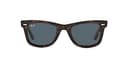
Ray-Ban Original Wayfarer RB2140

Ray-Ban Original Wayfarer RB2140

The frame that defined acetate eyewear, and still the benchmark. The RB2140 is thick cellulose acetate cut in the original 1950s shape — the Havana colorway is real layered tortoiseshell, not a printed pattern. If you buy one acetate frame for life, it's this.

Best overall
$191.00 · View on Amazon

Price as of October 10, 2026. #ad How we’re funded

2
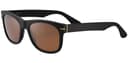
Serengeti Foyt Large (Matte Black, Mineral 555nm Photochromic, Cat 2 to 3)

Serengeti Foyt Large (Matte Black, Mineral 555nm Photochromic, Cat 2 to 3)

A frame that lives in two filter categories on purpose. Serengeti's photochromic mineral lens darkens from category 2 to category 3 as the light gets brighter, which is what the 'Cat 2 to 3' on the listing means, in an eco-acetate square cut for larger faces. It is the honest answer for someone who wants one pair for overcast mornings and full sun — at a premium price, and not polarized.

Best for changing light
$300.00 · View on Amazon

Price as of October 10, 2026. #ad How we’re funded

3
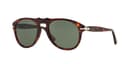
Persol 649 Original PO0649 (Havana / Green, 54 mm)

Persol 649 Original PO0649 (Havana / Green, 54 mm)

The original Persol icon, and the better buy of the two for most people. It is the same Havana pilot shape as the folding 714, with the Meflecto temples Persol names in its own description, a wider size range and a clearly lower price. Unless you will actually carry your sunglasses folded, this is the one.

Best upgrade
$363.00 · View on Amazon

Price as of October 10, 2026. #ad How we’re funded

4
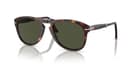
Persol 714 Original PO0714 Folding (Havana / Green, 54 mm)

Persol 714 Original PO0714 Folding (Havana / Green, 54 mm)

The folding version of the 649, and the one with the story — Persol calls it the first-ever folding glasses, and Steve McQueen made it famous. You pay a clear premium for a fold that takes ten extra manufacturing steps, on a front Persol measures within a millimeter of the 649. Worth it if you will genuinely carry it folded.

Best for travel
$452.00 · View on Amazon

Price as of October 10, 2026. #ad How we’re funded

The picks in full

#1Best overall

Ray-Ban Original Wayfarer RB2140

The frame that defined acetate eyewear, and still the benchmark. The RB2140 is thick cellulose acetate cut in the original 1950s shape — the Havana colorway is real layered tortoiseshell, not a printed pattern. If you buy one acetate frame for life, it's this.

Strengths

  • Genuine thick cellulose acetate — the Havana is layered tortoise, not a flat print
  • The reference wayfarer shape; angular lines add definition to a round or oval face
  • Ray-Ban lenses carry full UV protection and the frame is endlessly serviceable

Who should skip it

  • This classic variant is not polarized — you pay extra for the polarized version
  • The deep 1950s fit sits large on very small faces
Frame materialCellulose acetate
Frame shapeWayfarer
Lens protection100% UV protection (per Ray-Ban)
PolarizedNo
Lens width50 mm
Suits face shapesOval, Round, Heart

Spec note. The Original Wayfarer (RB2140) is the acetate model in the Wayfarer family; the lighter New Wayfarer (RB2132) is listed by Ray-Ban as nylon. If you specifically want acetate, the 2140 is the one.

Specs and material read from the product listing, on July 21, 2026. “Not published” means the seller does not state that figure.

#2Best for changing light

Serengeti Foyt Large (Matte Black, Mineral 555nm Photochromic, Cat 2 to 3)

A frame that lives in two filter categories on purpose. Serengeti's photochromic mineral lens darkens from category 2 to category 3 as the light gets brighter, which is what the 'Cat 2 to 3' on the listing means, in an eco-acetate square cut for larger faces. It is the honest answer for someone who wants one pair for overcast mornings and full sun — at a premium price, and not polarized.

Strengths

  • Photochromic mineral glass that shifts between category 2 and category 3, stated on the listing
  • Eco-friendly acetate, handcrafted, per Serengeti's product page
  • A genuinely large fit — Amazon sizes it Large, and Serengeti sells a separate medium Foyt

Who should skip it

  • This variant is NOT polarized — Serengeti sells polarized Foyt lenses separately, and this listing is the non-polarized one
  • Premium price, and no measurements read from the listing
  • Photochromic glass adds weight, and a lens that is category 2 in low light is still too dark for night driving
Frame materialEco-friendly acetate (per Serengeti)
Frame shapeSquare
Lens protectionUV protection to 400 nm (per Serengeti); filter category 2 to 3 (per listing)
PolarizedNo
Lens widthNot published
Suits face shapesRound, Oval, Heart

Spec note. Serengeti describes the Foyt as handcrafted eco-friendly acetate with category 2 to 3 lenses, available in polarized and non-polarized mineral versions; its photochromic mineral lenses pass through a hydrogen-fueled Lehr furnace that activates the Spectral Control treatment. The Amazon listing title for this variant states 'Mineral Non Polarized 555nm Cat 2 to 3' and sizes it Large; the listing labels the fit 'Masculine'.

Specs and material read from the product listing, on September 21, 2026. “Not published” means the seller does not state that figure.

#3Best upgrade

Persol 649 Original PO0649 (Havana / Green, 54 mm)

The original Persol icon, and the better buy of the two for most people. It is the same Havana pilot shape as the folding 714, with the Meflecto temples Persol names in its own description, a wider size range and a clearly lower price. Unless you will actually carry your sunglasses folded, this is the one.

Strengths

  • Persol lists the Havana / Green in 52-20, 54-20 and 56-20 — the only one of the pair offered in a 56
  • Persol names the Meflecto flexible temples, the keyhole bridge and the arrow in the model's own description
  • Acetate frame and crystal lenses per Persol's spec panel, handmade in Italy

Who should skip it

  • Premium money, even as the cheaper of Persol's two pilot icons
  • The standard Havana / Green is not polarized; Persol's polarized versions cost more
  • It does not fold, so it needs a full-size case — the one thing the 714 does that this cannot
Frame materialAcetate, handmade in Italy (per Persol)
Frame shapeAviator
Lens protection100% UV protection (per listing)
PolarizedNo
Lens width54 mm
Suits face shapesOval, Square, Heart

Spec note. Persol's spec panel for the Havana / Green lists an acetate frame, crystal lenses and Italian manufacture, with a 54-20 fitting and 140 mm temples. Persol dates the model to 1957, when it was designed to protect Turin's tram drivers from dust and glare.

Specs and material read from the product listing, on September 15, 2026. “Not published” means the seller does not state that figure.

#4Best for travel

Persol 714 Original PO0714 Folding (Havana / Green, 54 mm)

The folding version of the 649, and the one with the story — Persol calls it the first-ever folding glasses, and Steve McQueen made it famous. You pay a clear premium for a fold that takes ten extra manufacturing steps, on a front Persol measures within a millimeter of the 649. Worth it if you will genuinely carry it folded.

Strengths

  • It folds — Persol states it was the first-ever folding glasses and needs ten extra manufacturing steps
  • Same acetate frame, crystal lenses and Italian manufacture as the 649, per Persol's spec panel
  • At 54 mm Persol lists it at 54-21-140, one millimeter off the 649, so the fold costs almost nothing in fit

Who should skip it

  • Costs clearly more than the 649 for the same shape in the same eye size
  • Offered in 52-21 and 54-21 only — no 56 mm option for a wide face
  • Persol's 714 description is about the fold and does not mention Meflecto, so do not assume the 649's flexible temples carry over
Frame materialAcetate, handmade in Italy (per Persol)
Frame shapeAviator
Lens protection100% UV protection (per listing)
PolarizedNo
Lens width54 mm
Suits face shapesOval, Square, Heart

Spec note. Persol's spec panel for the Havana / Green lists an acetate frame, crystal lenses and Italian manufacture, with a 54-21 fitting and 140 mm temples. Persol states the 714 was introduced in the 1960s as a folding version of the 649 and requires ten additional manufacturing steps.

Specs and material read from the product listing, on September 15, 2026. “Not published” means the seller does not state that figure.

When non-polarized is the right answer

You read an LCD or LED screen outdoors. A polarizing filter is aligned to cut light vibrating in one plane. Many LCD panels emit light that is already polarized, so rotating a polarized lens in front of one can dim it, tint it, or black it out entirely at certain angles. That covers aircraft instrument glass, older car dashboard clusters, some infotainment screens, boat chartplotters and plenty of phones in landscape. If your work or your hobby depends on reading one of those in daylight, a polarized lens is a liability rather than an upgrade.

You need to see glare rather than remove it. This sounds counter-intuitive and it is the reason pilots are routinely advised away from polarization. Glare off a flat surface carries information: a wet patch on a road reads differently from a dry one, and ice reads differently again. A polarized lens suppresses exactly that signal. It is a comfort gain in most situations and an information loss in a few.

You get a “rainbow” or patchy effect through glass. Tempered and laminated glass holds internal stress patterns that a polarized lens renders as blotches and bands. Some people never notice; others find a windscreen unusable through polarized lenses.

What non-polarized does NOT mean

It does not mean less UV protection. The two are unrelated: UV blocking comes from the lens material and its coating, and polarization is a separate filter laminated into or onto the lens. The FDA is explicit that you cannot judge a lens by how it looks — look for a stated 100% UV or UV400 label, which every pick here carries. Our guide to checking UV protection covers how to read that line on a listing, and UV400 explained covers what the number means.

It also does not mean lighter. Lens darkness is the filter category — a separate, standardised number from 0 to 4 — and a non-polarized category 3 lens is exactly as dark as a polarized one. Two of the picks below publish their category, which is more than most frames at any price manage.

The picks, and who each suits

The Ray-Ban Original Wayfarer RB2140 is our best overall. The classic variant is not polarized — Ray-Ban sells a polarized version at a premium — and it carries Ray-Ban’s stated 100% UV protection. It is thick cellulose acetate in the original shape, published in 50-22 and 54-18 fittings, kept in production and endlessly serviceable. The compromises are price and depth: the 1950s fit sits large on a very small face. Our Ray-Ban review and wayfarer style guide have the model in full, and note that the lighter New Wayfarer RB2132 is listed by Ray-Ban as nylon rather than acetate.

Best for changing light is the Serengeti Foyt Large, and it is the most interesting frame here. Its Amazon listing states “Mineral Non Polarized 555nm Cat 2 to 3”: a photochromic mineral glass lens that moves between filter category 2 and category 3 as the light changes, explicitly in the non-polarized version. So you get a lens that tracks an overcast morning into full afternoon sun without the screen problems. It is premium money, photochromic glass is heavy, and Serengeti sells polarized Foyt lenses separately — check you are buying this variant. Our Serengeti review and photochromic guide cover the lens properly.

Best upgrade is the Persol 649. The standard Havana / Green is not polarized; Persol’s polarized versions cost more. What you get instead is the best-engineered frame on this page: acetate handmade in Italy, crystal lenses, the Meflecto flexible temple system and a keyhole bridge Persol names in the model’s own description, in 52-20, 54-20 and 56-20. If a standard frame pinches you, the 56 is the only one on this list that goes that wide. It is premium money and it does not fold.

Best for travel is the Persol 714, which is the 649 that folds — Persol states it was the first folding glasses and needs ten extra manufacturing steps. Also non-polarized in the Havana / Green, and measured by Persol at 54-21-140, within a millimetre of the 649. You pay a clear premium for the fold and you give up the 56 mm option. Our Persol 649 vs 714 comparison is the page to read before choosing between them.

What we left off, and why

Four frames in our registry confirm a non-polarized lens. Four more — the Persol PO3048S, the Ray-Ban Clubmaster, the RAEN Adin and the bio-based RB2140 — simply do not publish the property, so we will not list them here as non-polarized even though several of them probably are. That is the same rule we apply to frame material and to measurements: an unstated spec renders as not published rather than as a guess. If you want the opposite list, our best polarized acetate sunglasses roundup covers the frames that state polarization, and best acetate sunglasses is the flagship ranked on material and finish regardless of lens filter.
Frequently asked questions

What are the best non-polarized sunglasses?

The Ray-Ban Original Wayfarer RB2140 in its classic variant: it is not polarized, Ray-Ban states 100% UV protection on it, and it is thick cellulose acetate in published 50-22 and 54-18 fittings that can be serviced for years. For one pair that handles changing light, the Serengeti Foyt Large states a non-polarized photochromic mineral lens moving between filter category 2 and 3. The Persol 649 is the best-built frame of the four.

Are non-polarized sunglasses worse for your eyes?

No. UV protection and polarization are separate lens properties. UV blocking is what protects your eyes, and it comes from the lens material and coating - every frame on this page states 100% UV or UV400. Polarization only cuts light reflected off flat surfaces, which is a comfort and contrast feature. The FDA's point is the one to remember: you cannot tell anything about a lens's UV protection from how it looks, so read the stated figure instead.

Why do pilots not wear polarized sunglasses?

Two reasons, both about information rather than comfort. Aircraft instrument displays and some cockpit glass emit or transmit light that is already polarized, so a polarized lens can dim, tint or black them out depending on head angle. And laminated glass holds internal stress patterns that a polarized lens renders as visible blotches. The same logic applies to anyone reading an LCD dashboard or chartplotter in daylight.

Are non-polarized lenses darker or lighter than polarized ones?

Neither - darkness is the filter category, a separate standardised number from 0 to 4 that describes how much visible light the lens transmits. A non-polarized category 3 lens is exactly as dark as a polarized category 3 lens. The Serengeti Foyt Large on this page states category 2 to 3 on a non-polarized lens, which is the proof: the category and the polarization are published independently of each other.

How can I tell if sunglasses are polarized before buying?

On a listing, the only reliable method is a stated line that says so - which is exactly why this page has four picks rather than ten. If you already own the pair, hold them in front of an LCD screen and rotate them: a polarized lens will darken dramatically at about 90 degrees of rotation, a non-polarized one will not change. Our guide on telling if sunglasses are polarized walks through that test and two others.

Sources

Keep reading