What the Oliver Peoples look actually is
Strip the branding away and there are four properties people are shopping for.
1. A thin front. This is the one that gets missed. Most affordable acetate frames are thick, because thickness is cheap presence — a chunky front looks like money in a product photo. The understated end of the market goes the other way: a slimmer front, a narrower rim, a smaller endpiece where the temple meets the frame. That costs more to make, because a thin acetate front has less material holding it together and needs a better sheet and a more careful cut to stay rigid. If you have tried a cheap “minimal” frame and found it flimsy, this is why. Our page on thick frame sunglasses covers the opposite end deliberately, so you can see the difference.
2. Vintage shapes, cut properly. The round, the panto, the soft rectangle: shapes that predate branding. These are easy to approximate and hard to get right, because a round frame has nowhere to hide an imprecise curve. Our round frame guide and vintage acetate roundup cover the shapes in detail.
3. Finish you notice in the hand, not the photo. Edge polish, the way the rim steps down toward the hinge, whether the temple tips are shaped or just cut. This is where hand-finishing shows and where every frame under $50 on this page loses. Not sometimes — always. It is the honest cost of the budget picks.
4. No visible logo. Quiet is the point. Several of the best-value acetate frames on the market print a brand name on the temple in contrasting colour, which undoes the entire effect. Worth checking the listing photos for before you buy.
Where “Japanese acetate” fits into this
Oliver Peoples’ N.01 line is listed as handmade in Japan, and Japanese acetate has a reputation at this end of the market that Italian acetate has at the mass-premium end. Both reputations are real. The problem is that on a marketplace listing, neither origin claim is verifiable — the word “Japanese” costs a seller nothing to type. Our explainer on Japanese acetate sets out what Daicel, the Japanese cellulose acetate producer, actually publishes about the material, and why the only origin claims we will repeat are the ones a brand makes on its own site. Among the picks here, that is RAEN (Italian), Persol (made in Italy) and nobody else.
Who each pick is for
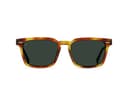
RAEN Adin 54 — best overall alternative. RAEN states Italian cellulose acetate and 100% UV protection, and the Adin is a clean 54 mm round with the kind of edge work that normally arrives with a designer markup. It is the pick for someone who wants an unbranded, well-made acetate frame and does not want to spend Oliver Peoples money to get one. The honest gaps: a plastic lens rather than glass, no published polarization figure on this colourway, and a round front that square and oval faces suit better than round ones. Our RAEN review covers the brand.
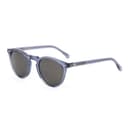
OTIS Omar x Outerknown Eco — best for a small face. OTIS publishes the Omar Eco at 47.5-22.5-140 with a 4 base lens curve and Vissottica barrel hinges, on a polarized mineral glass lens with 100% UVA/UVB and filter category 3. That is the most complete spec block of any pick here and a genuinely small eye size, which is rare in acetate. Two honest notes: OTIS’s own pages list 50-23-140 for a different Omar colourway, so treat the size as approximate and measure a pair you own first; and glass is heavier than plastic on a small frame where weight is more noticeable. Our OTIS review has the range.
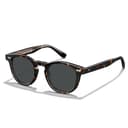
CARFIA Vintage Round — best budget vintage round. A hand-crafted acetate round with UV400 and polarized lenses stated on the listing, for roughly a tenth of the entry price of the brand this page is about. It is a substantial frame rather than a thin one, so it reads bolder than an Oliver Peoples silhouette. What you give up: published measurements, edge-polish quality, and hinge feel. Our CARFIA review is the brand page.
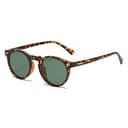
Gleyemor Vintage Round — cheapest. The lowest-cost route into a round acetate frame whose listing states the material and polarized lenses. Use it to find out whether a round front suits your face before committing real money. The gaps are the obvious ones at this price: no measurements, no UV figure on some ASINs even where Gleyemor states UV400 on siblings, and hinge and edge quality that is nothing like a mid-price frame. Our Gleyemor review is honest about where the brand sits.
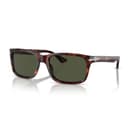
Persol PO3048S — the frame to buy instead. If what you want from Oliver Peoples is quiet luxury rather than a lower price, the honest advice is to spend the money on a frame with the same manufacturing story and a longer service life. Persol states Italian acetate, crystal lenses and made in Italy, its heritage pages describe cellulose acetate passing through thirty manual processes, and Luxottica states a two-year defect warranty. It is a rectangle rather than a round, and it is not cheap. Our Persol alternatives page is the mirror image of this one if you land there instead.
What we left off, and why
We left off every frame sold as an Oliver Peoples “dupe” of a specific model. Naming a cheap frame as a copy of a particular designer silhouette invites you to expect a resemblance we cannot verify from a listing photo, and the resemblance is rarely the part that matters — a thin front done badly looks worse than a thick front done well. We rank on material honesty and published fit instead.
We also left off the obvious cross-shop brands in the same tier that are not in our registry. We do not write spec tables for frames we have not read a listing for, which means some well-regarded names are absent here for a boring, defensible reason. If you are shopping the premium tier broadly, our designer acetate roundup is the right page; if the budget end is where you are actually looking, so is cheap sunglasses that look expensive, which ranks frames on exactly the question of how they read rather than what they cost.