The nylon lens is the part nobody dupes
Three of the four Saint Laurent frames we read name the lens material, and in each case it is nylon. That is worth stopping on, because the lens substrate is the single most hidden spec in this entire category. Our own lens materials guide exists because sellers almost never publish it: you are usually told a tint, sometimes a UV figure, occasionally a filter category, and essentially never what the lens is actually made of.
We are not going to tell you a nylon lens is sharper or tougher than whatever is in a $35 frame, because that would require a figure nobody publishes on either side. We can tell you what the asymmetry is: Saint Laurent names the substrate, and not one frame in our registry does. If you want to compare lenses rather than frames, the only fully specified route in this category is mineral glass, where the material is the selling point — which is why we rank it separately in glass lens sunglasses. Plastic lenses get named by tint and treatment, not substrate, almost everywhere else.
Practically, this means a “dupe” of a YSL frame is a frame dupe, never a lens dupe. You can match the material of the front — cellulose acetate is cellulose acetate, and several frames here state the Italian sheet specifically. You cannot match a lens whose equivalent nobody else describes.
What a dupe is, and what it is not
A dupe copies a shape: a silhouette, a proportion, a colorway. A counterfeit copies a mark— a logo, a model name, packaging — and that is a different thing entirely, legally and ethically. Nothing on this page carries anyone’s logo and nothing here pretends to be a Saint Laurent. If you want the Cassandre on the temple, the only honest way to get it is to buy one, and we would rather say that than sell you a story. We made the same distinction when we wrote Coach dupes, and it holds here.
The useful question is which part of the original you actually wanted. If it was the logo, stop reading. If it was the thick Italian acetate front, that is buyable at a fraction of the price and this page ranks it. If it was the shape, it is buyable for under $40. And if it was the fit, read the next section, because this is where the brand helps you least.
Three acetate models, three different bridges
Lay the published fittings side by side and the pattern is immediate. The SL 276 Mica is 53-16-145. The SL M94 is 53-20-145. The SL 572 is 50-22-145. Two of those have an identical 53 mm lens width and a 4 mm difference in the bridge; the third drops 3 mm of lens and adds 6 mm of bridge against the first.
The lens width is the number everyone quotes and the bridge is the number that decides whether a frame sits where you want it. A 16 mm bridge on a 53 mm lens pulls the lenses in close and sits the frame higher; a 22 mm bridge on a 50 mm lens spreads them and drops it. Same apparent size on a product photo, completely different frame on a face. We did the long version of this argument on Dior dupes, where the same spread shows up across a bigger sample, and the conclusion is the same here: if you know which YSL model you are chasing, the bridge is the figure to carry into the search box.
The hard limit, stated plainly: none of the six picks below publishes a bridge measurement.Three publish a lens width — the Persol at 58 mm, the Kate Spade at 55 mm and the RAEN at 54 mm — and three publish nothing at all. So the honest route is to measure a frame you already own and use the temple marking on it as your reference. Our sunglasses sizing guide explains how to read that stamp, and how sunglasses should fit covers what good looks like once it arrives.
Where the Italian acetate claim is real
Saint Laurent states made in Italyon the M94. That claim is worth something and it is also worth being precise about, because “Italian acetate” hides three separable things: acetate sheet manufactured in Italy, the frame being cut and assembled in Italy, and hand-finishing. A listing can honestly make the first without the other two, and no visual check reveals a country. Our Italian acetate explainer unpacks it, and Italian acetate sunglasses ranks the frames that state it.
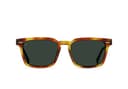
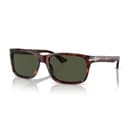
Two picks here make the claim on their own listings. The Persol PO3048Sis Italian cellulose acetate, hand-finished, and the edge polish and color depth are the visible difference between a frame cut from good sheet and one molded from pellets — it is the pick for someone whose actual objection to the M94 is the price, not the material. The RAEN Adin is Italian cellulose acetate at a 54 mm eye size from an independent brand, which is the middle of the market and the pick we would hand most people chasing “looks expensive, is not”.
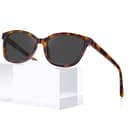
Below that, the honest description changes. The SOJOS and CARFIA frames state cellulose acetate and nothing about origin, and we will not upgrade that to Italian on their behalf. They are real acetate with budget finishing, which is a genuine thing to buy and a different thing from what Saint Laurent sells. Our page on why acetate sunglasses get expensive breaks down where the money actually goes.
How we picked these six
First, the material has to be stated.Every pick here states cellulose acetate on its own listing or brand page — which is the entry requirement, and it removes most of the fast-fashion market, where “acetate” appears in the title and the bullets quietly say TR90. We read the bullets.
Second, the shape has to map onto something Saint Laurent actually sells.The autocomplete around this query is model-level — Blaze, Jeanne, Dune, Howl, Romy, oval — and the shapes behind those names are oversized squares, soft cat-eyes and ovals. So the list is a softened cat-eye, an oversized square, a designer cat-eye, two rounds and a soft square, and not a single aviator or wraparound, because that is not what this brand is being searched for. Our cat-eye and oversized style pages are the shape-first route if you are not sure which you want.
Third, polarization is stated or it is flagged.Four picks state polarized lenses: the two SOJOS frames, the Kate Spade and the CARFIA. Two do not — RAEN and Persol do not state polarization on the frames here and their cards read not published rather than assuming it. Note that Saint Laurent does not state polarization on the pages we read either, so this is not a downgrade against the original; it is the same gap on both sides. If glare is your priority, start from polarized acetate sunglasses and read polarized vs non-polarized.
Fourth, we spread the money deliberately.Saint Laurent’s own prices on the pages read run from $380 on a New Wave SL 276 page to $495 on the Mica page to $580 on the M94, with EUR 400 in Spain — prices differ by region and colorway, which is itself worth knowing before you compare. The picks here run from just under $40 to about $333, so there is an answer whether you want the shape for pocket money or the material for half the designer price.
Matching the specific models people search for
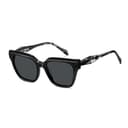
The Blaze is the most-searched and the least documented: no fitting published on either the SL M119 or SL M119/F page we read. What you are matching is a substantial squared front with a strong brow line, so the closest honest answer on this page is the SOJOS Audrey oversized square, which states acetate for the frame andthe temples — the distinction most budget oversized frames fail, and the one that decides whether a big shape looks deliberate or hollow.
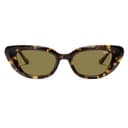
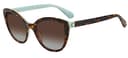
The cat-eye family (the SL 276 shape) is the easiest to substitute, because the softened cat-eye is the single most-produced budget acetate shape. The SOJOS Aria is the wearable version at budget money; the Kate Spade Amberlee is the same shape family with a published 55 mm lens width and polarized lenses, from a licensed fashion-eyewear house, which is the nearest thing here to buying a designer name without buying a logo tax.
The oval and round models (Jeanne, Romy, the oval listings) are where the RAEN Adinearns its place: a soft round rather than a perfect circle, in Italian acetate, with a keyhole bridge — a heritage detail that also lifts the frame slightly off the nose. See keyhole bridge sunglasses for why that matters on a low nose bridge.
Who should skip the dupes
Anyone who wants the logo.It is not available at this price by any honest route, and a frame with someone else’s mark on it is a counterfeit, not a dupe.
Anyone chasing a specific published fitting. If you know you need 53-20-145, buy the frame that publishes 53-20-145. Three of our six publish a lens width and none publishes a bridge, so a precise match is not something this page can honestly promise.
Anyone who needs prescription lenses. Saint Laurent states prescription compatibility on the M94; almost nothing in the budget tier does, and fitting an Rx lens into a cheap frame is usually not worth the labor. Our page on prescription acetate sunglasses explains why we name no budget picks for that.
Anyone who will be disappointed by budget finishing.At $35 you get real acetate with simpler hinges, thinner edge polish and less depth in the sheet. That is an honest purchase, not a bad one — but if the thing you admired about the original was the quality rather than the shape, buy fewer, better frames. Designer acetate sunglasses is the page for that, and are expensive sunglasses worth it is the argument in full.