What makes a good acetate brand
Before any single frame, it’s worth knowing what actually separates a brand worth trusting from a listing that just borrows the vocabulary. Three things decide it, and they’re the same three we weigh everywhere on this site.
The first is honest material. Genuine cellulose acetate is cut from sheet stock, so the color runs through the material and layered patterns like tortoiseshell have real depth. Injection-molded plastic is poured into a mold and printed, and it looks flat once you know what to look for. A brand that says “cellulose acetate” plainly, rather than hiding behind “premium plastic,” has usually earned the word — and the ones that split their range into a nylon line and an acetate line, and label each honestly, are the ones you can actually trust.
The second is finish, and this is where the price ladder really lives. Acetate has to be tumbled and polished to bring up its shine, and the best makers hand-finish the edges and surface so the frame feels solid and the color glows. Italian acetate — the sheet stock associated with makers like Mazzucchelli — is the material behind most premium frames, and the depth it gives a Havana tortoise is the single most visible difference between a designer frame and a budget one. Our Italian acetate explainer covers why the material and the finishing matter more than the logo on the temple.
The third is fit. A brand you can trust publishes enough measurement to predict the fit and cuts frames in more than one size where it can. This is where budget brands are weakest — exact widths often go unpublished on fashion listings — and it’s why a great-looking frame that arrives too wide or too narrow is the most common regret. Whatever the brand, a well-fitting acetate frame beats a badly fitting one at any price.
Designer & premium
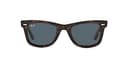
Ray-Banis the brand that defined acetate, and it earns the top spot for the simplest reason: the Original Wayfarer is genuine thick cellulose acetate cut in the shape that made the material famous, and in Havana it’s real layered tortoiseshell rather than a printed pattern. Ray-Ban lenses carry full UV protection and the frame is endlessly serviceable, which is what “buy one for life” actually means. The one caveat is that the classic Original Wayfarer variant isn’t polarized — you pay extra for the polarized version.
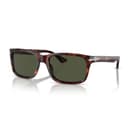
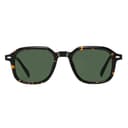
Persolis the brand to beat on finish. Its frames are cut from Italian acetate and hand-polished, and the Havana on a rectangle like the PO3048S has a warmth and edge polish that’s a visible step up from anything cheaper. Many Persol models use crystal glass lenses, which resist scratches better than plastic, and the Meflecto flexible temple system is a genuine comfort feature rather than marketing. It’s the splurge, not the value pick — premium money for a frame you keep for a decade.
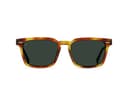
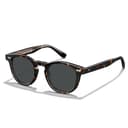
RAENis the independent to know. It’s a California brand that uses Italian, Mazzucchelli-grade acetate on its better frames, and a round like the Adin has patterns with genuine depth at roughly a third of a legacy-designer price. The soft-round shape — squared slightly rather than a perfect circle — balances a strong jaw better than a true round, and the keyhole bridge is a proper heritage detail. The trade-off with a smaller brand is that fewer colorways are in stock at any moment. It sits in the mid band, which is where independents tend to offer the most finish per dollar.
What ties the premium tier together is that you’re paying for material and finish, not eye protection. A budget UV400 frame protects your eyes as well as a Persol does; what the extra money buys is the depth of hand-mixed Italian acetate, the quality of the polish and hinges, and the fact that a good frame can be serviced and adjusted for years rather than replaced. If a frame matters to you and you’ll wear it daily, that’s worth paying for. If you want something great you won’t mourn losing, the budget tier below has genuinely caught up.
Budget brands that use real acetate
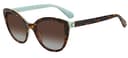
The budget end used to mean throwaway plastic. It doesn’t any more, and these four brands are the reason. SOJOSruns both a TR90 line and an acetate line, so the material depends on the specific model — but its acetate frames, like the handmade rectangle here, are genuinely cellulose acetate with polarized lenses and metal hinges rather than molded-in plastic ones, which is why they feel more substantial than the price suggests. It’s our default budget brand for a clean, understated everyday frame.
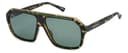
CARFIA leans hard into hand-crafted acetate and vintage detailing. Its frames tend to be substantial, with heritage touches like keyhole bridges and double bridges, polarized UV400 lenses, and a look that reads intentional rather than cheap; that heft is the trade-off. Privé Revauxis built around accessible price points, and frames like the Clevelander are clean, unisex acetate rectangles that state both polarization and 100% UV protection — one of the better-finished names in the budget band. Joopin is the cautionary case and the reason this list is shorter than you might expect: it puts “acetate” in its titles, but every current Joopin listing we read states acetate templeson a TR90 front. It makes a good cheap oversized frame — see our Joopin review— but not an acetate one, so it does not rank here.
The one thing to watch across the budget tier is that “acetate” on a cheap listing is worth verifying, because it’s the exact word that gets misused. The checks are simple: look for “cellulose acetate” spelled out rather than a vague “premium plastic,” expect a frame with real weight in the hand, and look for metal hinges pressed into the acetate rather than molded-in plastic ones. Every budget pick here clears those checks, which is why it’s on the list — and it’s the same standard our full brand write-ups hold each maker to, from the SOJOS write-up onward.
Brands we left off, and why
Two names people expect to see here are missing on purpose: goodr and Knockaround. Both make genuinely good, genuinely polarized sunglasses at low prices, and we like them — but their standard frames are injection-molded polycarbonate, not cellulose acetate. That isn’t a knock on quality; a goodr is a superb running frame and a Knockaround is a great near-disposable beach pair. It’s simply that this is an acetate site, and calling a polycarbonate frame “acetate” would be exactly the overclaim the rest of the page is built to avoid.
We cover both honestly in our brand write-ups rather than the rankings — start with the goodr write-up— so you can weigh them for what they actually are. The same rule applies to any frame whose material we can’t verify as acetate: it goes to the brand pages, not the picks. If a brand uses a bio-based cellulose acetate, that still counts as acetate and we say so; if it uses TR90 or polycarbonate, we say that too. The whole point of a brand shortlist is that the word on the box means something.