Acetate Club

Best Shady Rays Alternatives

Shady Rays publishes a lens transmission percentage and a replacement fee. It does not publish a frame measurement or a line-wide material. Five acetate frames that publish the other half, from $14 to $191.

By Stephen V.Last updated How we pick

Our pick is the CARFIA Vintage Round: a stated hand-crafted cellulose acetate frame with polarized lenses and UV400, for less than a Shady Rays Classic Original. It is the clean version of the trade this page is about — you give up a replacement program and buy a frame that can be warmed and adjusted instead of swapped. If you want numbers before you buy, the Carrera 317/S is the only pick here with a published fitting (55-20-150). And the budget pick is the Gleyemor Vintage Round in tortoise at about $14, which states acetate, polarized and UV400 — cheap enough that three pairs cost less than one Classic Original, which is its own kind of replacement plan.

Credit where it is due, because this is a substitution guide and not a hit piece. Shady Rays publishes two numbers almost nobody else at this price publishes. The first is lens darkness as a percentage: the Classic Original Blackout page gives its grey lens at 17% VLT, the Deep Timber tortoise at 13% and the Ocean Tortoise at 10%. That is a real, comparable figure, and no acetate frame on this page states one. The second is the replacement fee, which we come back to below. Lenses are given as premium polarized with 100% UV protection built in, plus shatter, scratch and salt-water resistance; frames are named per model — TR-90 with 5 barrel metal hinges on the Classic Original Blackout and the Talon, stainless steel and carbon fiber on the Navigator Rx.

Two things Shady Rays does not give you. There is no lens width, bridge or temple length on any page we read— sizing is offered as standard and small, with an extra-large option on one tortoise listing. And there is no line-wide material statement: the frame material appears only on individual product pages, and the three we read name three different things. Everything below states what its own seller states, and says not published where nothing is stated. Prices are live and dated on every button.

How this is funded: we earn a commission if you buy through our links, at no extra cost to you. It never changes which product we recommend, and we’ll tell you when we’d skip one. Full disclosure.

Quick picks

Ranked on frame material, fit and value. Select a row to jump to the full write-up. We have not handled these frames in person — here is exactly what we do instead.

#ProductBest forPrice
1
CARFIA Vintage Round (Hand-Crafted Acetate)

CARFIA Vintage Round (Hand-Crafted Acetate)

CARFIA leans hard into hand-crafted acetate at a budget price, and this vintage round is the men's-leaning pick — a substantial keyhole-bridge frame with polarized UV400 lenses. A lot of frame for the money, provided the round shape suits you.

Best overall
$36.09 · View on Amazon

$44.9920% off

Price as of November 21, 2026. #ad How we’re funded

2
Carrera 317/S (Grey, Double Bridge, 55 mm)

Carrera 317/S (Grey, Double Bridge, 55 mm)

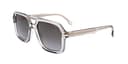
The double-bridge navigator in the line, and the one to read the material line on twice: Carrera states an acetate front with metal inserts on each side. That is a combination frame, not an all-acetate one, which matters if metal on your skin is the reason you are shopping acetate at all.

Best published fitting
$46.02 · View on Amazon

$52.4812% off

Price as of November 21, 2026. #ad How we’re funded

3
NEVEN Doc Robbins Rectangular (L/XL)

NEVEN Doc Robbins Rectangular (L/XL)

A large-fit polarized rectangle from a brand built around bigger heads — genuinely useful if standard frames pinch you, and it sits in the $50-100 band almost nothing else here occupies. Be clear-eyed about the material though: this listing doesn't state what the frame is cut from, and NEVEN's sibling models state TR90, not acetate.

Best for a large head
$62.30 · View on Amazon

Price as of November 21, 2026. #ad How we’re funded

4
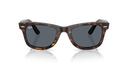
Ray-Ban Original Wayfarer RB2140

Ray-Ban Original Wayfarer RB2140

The frame that defined acetate eyewear, and still the benchmark. The RB2140 is thick cellulose acetate cut in the original 1950s shape — the Havana colorway is real layered tortoiseshell, not a printed pattern. If you buy one acetate frame for life, it's this.

Best buy-once frame
$133.70 · View on Amazon

$191.0030% off

Price as of November 21, 2026. #ad How we’re funded

5
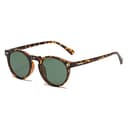
Gleyemor Vintage Round (Tortoise Acetate)

Gleyemor Vintage Round (Tortoise Acetate)

The same hand-crafted acetate round in tortoise with a G15 green lens — the most classic pairing in eyewear. It isn't a Persol and doesn't pretend to be, but a stated-acetate frame in a proper vintage colorway at this price is a lot of frame for the money.

Best budget
$11.19 · View on Amazon

$13.9920% off

Price as of November 21, 2026. #ad How we’re funded

The picks in full

#1Best overall

CARFIA Vintage Round (Hand-Crafted Acetate)

CARFIA leans hard into hand-crafted acetate at a budget price, and this vintage round is the men's-leaning pick — a substantial keyhole-bridge frame with polarized UV400 lenses. A lot of frame for the money, provided the round shape suits you.

Strengths

  • Hand-crafted acetate with a keyhole bridge — a classic detail at a budget price
  • Polarized and UV400 both stated
  • Reads intentional and vintage rather than cheap

Who should skip it

  • Heavier than a metal round; the substantial build isn't for everyone
  • Finish is good for the price, not designer-grade
Frame materialCellulose acetate
Frame shapeRound
Lens protectionUV400
PolarizedYes
Lens widthNot published
Suits face shapesSquare, Oval

Spec note. A keyhole bridge (the notched cutout above the nose) is a heritage acetate detail; it also lifts the frame slightly off the nose, which some people find more comfortable.

Specs and material read from the product listing, on September 29, 2026. “Not published” means the seller does not state that figure.

#2Best published fitting

Carrera 317/S (Grey, Double Bridge, 55 mm)

The double-bridge navigator in the line, and the one to read the material line on twice: Carrera states an acetate front with metal inserts on each side. That is a combination frame, not an all-acetate one, which matters if metal on your skin is the reason you are shopping acetate at all.

Strengths

  • Acetate front with a published 55-20-150 fitting — the longest temple of the three Carreras here
  • The double bridge breaks up a square front, which is the detail doing the work on this frame
  • Carrera states gradient lens treatment and UV protection 100

Who should skip it

  • Metal inserts on each side, per Carrera — so this is NOT an all-acetate frame and not the pick for a nickel sensitivity
  • Carrera does not state polarization on this model either
  • A 20 mm bridge is wide; a narrow nose bridge will sit low in this frame
Frame materialAcetate front with metal inserts on each side (per Carrera)
Frame shapeSquare
Lens protectionUV protection 100 (per Carrera)
PolarizedNot published
Lens width55 mm
Suits face shapesOval, Round, Heart

Spec note. Carrera describes the 317/S as a square double-bridge navigator with an acetate front and metal inserts on each side, sized 55-20-150, with gradient lens treatment and UV protection 100. The Amazon listing title repeats 55/20/150. Polarization is not stated by Carrera on this model, so it is recorded as not published rather than assumed either way.

Specs and material read from the product listing, on November 1, 2026. “Not published” means the seller does not state that figure.

#3Best for a large head

NEVEN Doc Robbins Rectangular (L/XL)

A large-fit polarized rectangle from a brand built around bigger heads — genuinely useful if standard frames pinch you, and it sits in the $50-100 band almost nothing else here occupies. Be clear-eyed about the material though: this listing doesn't state what the frame is cut from, and NEVEN's sibling models state TR90, not acetate.

Strengths

  • Purpose-built L/XL sizing, which is far rarer than the marketing around it suggests
  • Polarized with UV400 stated on the listing
  • Fills the price gap between budget acetate and designer acetate

Who should skip it

  • The listing doesn't state the frame material, and NEVEN's Legend and Tombstone listings state TR90 — don't assume acetate
  • Priced well above the budget acetate frames here without a stated material advantage
Frame materialNot published
Frame shapeRectangle
Lens protectionUV400
PolarizedYes
Lens widthNot published
Suits face shapesRound, Oval, Heart

Spec note. NEVEN sells an L/XL-focused range; its Legend and Tombstone listings state a TR90 frame. The Doc Robbins listing states neither TR90 nor acetate, so the material is genuinely unconfirmed rather than assumed either way.

Specs and material read from the product listing, on August 19, 2026. “Not published” means the seller does not state that figure.

#4Best buy-once frame

Ray-Ban Original Wayfarer RB2140

The frame that defined acetate eyewear, and still the benchmark. The RB2140 is thick cellulose acetate cut in the original 1950s shape — the Havana colorway is real layered tortoiseshell, not a printed pattern. If you buy one acetate frame for life, it's this.

Strengths

  • Genuine thick cellulose acetate — the Havana is layered tortoise, not a flat print
  • The reference wayfarer shape; angular lines add definition to a round or oval face
  • Ray-Ban lenses carry full UV protection and the frame is endlessly serviceable

Who should skip it

  • This classic variant is not polarized — you pay extra for the polarized version
  • The deep 1950s fit sits large on very small faces
Frame materialCellulose acetate
Frame shapeWayfarer
Lens protection100% UV protection (per Ray-Ban)
PolarizedNo
Lens width50 mm
Suits face shapesOval, Round, Heart

Spec note. The Original Wayfarer (RB2140) is the acetate model in the Wayfarer family; the lighter New Wayfarer (RB2132) is listed by Ray-Ban as nylon. If you specifically want acetate, the 2140 is the one.

Specs and material read from the product listing, on July 21, 2026. “Not published” means the seller does not state that figure.

#5Best budget

Gleyemor Vintage Round (Tortoise Acetate)

The same hand-crafted acetate round in tortoise with a G15 green lens — the most classic pairing in eyewear. It isn't a Persol and doesn't pretend to be, but a stated-acetate frame in a proper vintage colorway at this price is a lot of frame for the money.

Strengths

  • Stated hand-crafted acetate in the classic tortoise and G15 green combination
  • Polarized and UV400 both stated at the very bottom of the price range
  • The soft vintage-round shape softens a square or angular face

Who should skip it

  • Color depth looks flat next to a mid or premium acetate — expect value, not richness
  • No published measurements, so check the fit if you have a narrow face
Frame materialCellulose acetate (hand-crafted, per listing)
Frame shapeRound
Lens protectionUV400
PolarizedYes
Lens widthNot published
Suits face shapesSquare, Oval

Spec note. A G15 lens is the gray-green tint Ray-Ban made standard; it darkens the scene without shifting colors much, which is why it pairs so consistently with tortoise frames.

Specs and material read from the product listing, on August 19, 2026. “Not published” means the seller does not state that figure.

What 17%, 13% and 10% actually mean

Start with the good part, because it is genuinely good and it is the reason to read Shady Rays’ pages carefully rather than dismiss them. VLT is visible light transmission— the share of visible light the lens lets through. A 10% lens passes a tenth of the light reaching it; a 17% lens passes almost twice as much. Publishing that figure per colorway lets you compare two pairs numerically instead of guessing from a product photo, which is impossible, because tint renders differently in every studio shot.

Now translate it. Sunglass lenses are graded into filter categories on a 0 to 4 scale by how much light they transmit: category 0 passes 80–100%, category 1 passes 43–80%, category 2 passes 18–43%, category 3 passes 8–18% and category 4 passes 3–8%. All three published Shady Rays figures — 17%, 13% and 10% — land inside category 3. So the honest reading is: these are ordinary dark general-purpose sunglass lenses, stated precisely. That is not a criticism. It is the first time most readers will see the number instead of a word, and it means the tortoise colorway at 13% really is noticeably darker than the blackout at 17%.

Two practical consequences. First, a category 3 lens of any color is unsuitable for twilight or night driving— filters for road use run categories 0 to 3, and anything under 75% transmission is not a night lens. Our guides to filter categories and night driving cover that properly. Second, darkness is not UV protection. They are set independently, and you cannot judge UV filtering by how dark a lens looks. Read the stated figure, which is what every card on this page prints. See how to check UV protection and UV400 explained.

Here is the honest symmetry: none of the five acetate picks below publishes a VLT figure. Four of them state UV400 or 100% UV, which is the figure that protects your eyes, and none states a transmission percentage. If comparable darkness numbers are what you value most about Shady Rays, that is a real reason to stay.

The replacement program is the product

Shady Rays’ marketing promise is that losing or breaking a pair is not a disaster. It is worth reading the terms, because the terms are specific and they are not quite the slogan.

The protection-programs pagestates coverage “for a period of two (2) years from the date you purchased the Covered Item”, except for lens scratches and mirror tint or anti-reflective coating degradation, which last one (1) year. Other pages on the same site advertise a “Lifetime Craftsmanship Warranty” and “Free Replacements if Lost or Broken”. The help centercaps it: “max 2 replacements per item purchased within the first 24 months of purchase”. And the replacements are not free in the ordinary sense of the word — the protection page lists a $14.89 processing fee for standard sunglasses, $15.89 for broken prescription frames and $53.89 for other prescription replacements, while a replacement-center page gives $8.89 per replacement pair. Requests run through a separate portal and may require proof of purchase and photos of the damage. Coverage applies only to orders through shadyrays.com, official Amazon listings and approved retailers, and the page states the company reserves the right to deny any request.

Do the arithmetic rather than the vibe. A $48 frame plus two replacements at $14.89 is about $78 over two years for three pairs — which is a decent deal if you genuinely lose sunglasses twice a year, and irrelevant if you do not. The thing you are buying is insurance against your own habits. We found the same pattern of pages disagreeing with each other when we read Blenders, whose warranty terms also differ between product pages — it appears to be a category habit rather than one brand’s slip.

Acetate’s counter-offer: repair, not replacement

An acetate frame comes with no program, and that is the trade. What it has instead is a material property: cellulose acetate is thermoplastic, so it softens with heat and can be reshaped. That is the whole reason an optician can take a frame that pinches, warm it and bend it to your head in five minutes, and the reason a dulled surface can be re-polished years later. Molded TR-90 does not do either; it springs back to the shape it was injected in.

Practically, that means a different relationship with the same problem. A loose frame is a free adjustment at any optical shop rather than a replacement request. A stretched hinge is often a screw, and sometimes a hinge barrel, rather than a new pair — our pages on whether acetate frames can be repaired, how to adjust acetate frames and acetate frame hinges work through what is fixable and what is not. Scratched lenses are the exception in both systems: they are not repairable, and Shady Rays limits coating degradation to one year for the same reason. See scratched sunglasses and replacing sunglasses lenses.

Be clear-eyed about the other side too. Acetate chips and cracks where TR-90 flexes, it relaxes if you leave it on a hot dashboard, and it is heavier. For a frame that lives in a tackle box or a gym bag, molded nylon is the better engineering answer and we are not going to pretend otherwise — acetate vs TR90 sets the two side by side without picking a universal winner.

How we picked these five

First, the price band. A Classic Original lists at $48, a Pro Polarized version at $78, and some collection colorways at $58 to $59. Three of the five picks sit inside that band or just under it at the time of writing. One sits far below it, because at about $14 a frame you simply buy another one. And one sits far above it, deliberately, because the serviceability argument only pays off on a frame worth servicing.

Second, polarization has to be stated.Shady Rays states polarized on every listing we read, so an alternative that cannot match it is a downgrade on the feature you actually notice on water or asphalt. Three picks state polarized and UV: the CARFIA, the NEVEN and the Gleyemor. Two do not, and their cards say so — Carrera does not state polarization on the 317/S, and the classic Ray-Ban RB2140 variant here is not polarized (Ray-Ban sells polarized as a separate, dearer version of the same frame). If polarization is non-negotiable, start from polarized acetate sunglasses instead.

Third, the material has to be stated — or its absence flagged. The CARFIA, Gleyemor and Ray-Ban state cellulose acetate. Carrera states an acetate front with metal inserts on each side, which is a combination frame rather than an all-acetate one and matters if nickel on your skin is why you are shopping acetate at all — see hypoallergenic sunglasses. And the NEVEN Doc Robbins listing states no frame material at all, while NEVEN’s sibling Legend and Tombstone listings state TR-90. We record that as unconfirmed rather than assuming acetate, because assuming it would be exactly the fabrication this site exists to avoid.

Fourth, size.Shady Rays offers standard, small and an extra-large fit on at least one listing, which is more fit choice than most of this market. The acetate answer for a bigger head is the NEVEN, which is built as an L/XL rectangle — with the material caveat above attached. For the wider discussion, sunglasses for wide faces is the page.

The two picks above Shady Rays money, and why they are here

The Carrera 317/Searns its place on one thing: it publishes a fitting. 55 mm lens, 20 mm bridge, 150 mm temple — the longest temple of the three Carreras we track, which is the figure that decides whether a frame reaches comfortably behind your ears. If the frustration that brought you here was not knowing what size you were buying, this is the pick that solves it. Its honest cons are the metal inserts and the unstated polarization.

The Ray-Ban Original Wayfarer RB2140 is the opposite argument: it is the most serviceable frame in the category. Thick cellulose acetate, parts and service available essentially everywhere, a shape that has not changed since the 1950s. It costs roughly four times a Classic Original and it is not polarized in this variant, so it is only the right answer if your plan is to own one pair for a decade rather than three pairs in two years. Our Ray-Ban review covers which models in the line are actually acetate and which are nylon, because the family is not consistent.

Who should stay with Shady Rays

Anyone who loses sunglasses regularly. The replacement math works for you and nothing on this page competes with it. Read the terms, note the fee and the 24-month window, and keep your order record.

Anyone buying for water, snow or a job site. Salt-water resistance, shatter resistance and a molded frame are the right specification for those conditions. Acetate is a town-and-country material. If polarized mineral glass on an acetate front is what you are after instead, our Costa alternatives page is the one built for that comparison, and glass lens sunglasses ranks the category.

Anyone who wants the darkness number. It is a legitimate thing to value and the acetate market does not publish it. Our lens tint colors guide explains what each tint does, but it cannot invent transmission figures sellers have not stated.

One practical note from the research rather than the marketing: several Shady Rays product pages showed as unavailable on the day we read them, so check stock on the colorway you want before you plan around a warranty.
Frequently asked questions

What are the best Shady Rays alternatives?

The CARFIA Vintage Round is our pick: a stated hand-crafted cellulose acetate frame with polarized lenses and UV400 at roughly Classic Original money, and a frame an optician can heat and adjust rather than replace. The Carrera 317/S is the only pick here that publishes a fitting (55-20-150), with the caveats that Carrera states metal inserts on each side and does not state polarization. The Gleyemor Vintage Round in tortoise at about $14 is the budget answer - three pairs cost less than one Classic Original.

What does Shady Rays' VLT percentage mean?

VLT is visible light transmission - the share of visible light the lens passes. Shady Rays publishes it per colorway: 17% on the Classic Original Blackout grey lens, 13% on the Deep Timber tortoise and 10% on the Ocean Tortoise. All three fall inside filter category 3, which covers 8% to 18% transmission, so they are ordinary dark general-purpose lenses stated precisely. Publishing the number is unusual and useful; it lets you compare two colorways instead of guessing from a product photo.

Is the Shady Rays replacement program actually free?

Not in the ordinary sense. The protection-programs page states coverage for two years from purchase, with lens scratches and mirror or anti-reflective coating degradation limited to one year, while other pages on the same site advertise a Lifetime Craftsmanship Warranty and free replacements if lost or broken. The help center caps it at two replacements per item within the first 24 months, and the fees listed are $14.89 for standard sunglasses, $15.89 for broken prescription frames and $53.89 for other prescription replacements, with a replacement-center page giving $8.89 per replacement pair. Coverage applies only to orders through shadyrays.com, official Amazon listings and approved retailers, and the page states the company reserves the right to deny any request.

What are Shady Rays frames made of?

It depends on the model, and there is no line-wide statement on the pages we read. The Classic Original Blackout page gives a TR-90 frame with 5 barrel metal hinges and describes a polycarbonate build with polarized polycarbonate lenses; the Talon is given as a matte black TR-90 frame; the Navigator Rx is given as ultra-premium stainless steel and carbon fiber. Those are molded and metal constructions rather than cut acetate sheet, which is the material difference this page is about.

Does Shady Rays publish frame measurements?

Not on any page we read. There is no lens width, bridge width or temple length published on the product or collection pages; fit is offered as standard and small, with an extra-large option on one tortoise listing. Of the five alternatives here, only the Carrera 317/S publishes a full fitting - 55 mm lens, 20 mm bridge, 150 mm temple. The other four publish no measurements, and their cards say so rather than filling in a plausible number.

Are acetate sunglasses more durable than TR-90?

Not in the way that matters for abuse. TR-90 and similar molded nylons flex and spring back, which is why they dominate sport and safety eyewear; acetate chips and cracks under the same treatment and can relax out of shape in heat. Acetate's advantage is the opposite kind of durability: because it is thermoplastic it can be heat-adjusted to your head and re-polished when the surface dulls, so a frame stays wearable for years rather than being replaced. Which one is tougher depends entirely on what you are doing with it.

Sources

  • Shady Rays — product pages, protection programs and help center — Shady Rays' own US pages. LENS DARKNESS IS PUBLISHED AS A PERCENTAGE, which almost nothing else in this price band does: the Classic Original Blackout page gives grey lenses at 17% VLT, the Deep Timber tortoise at 13% and the Ocean Tortoise at 10%. Lenses are given as premium polarized with 100% UV protection built in, plus shatter, scratch and salt-water resistance; the Classic Original line is described as polarized polycarbonate. Frames: TR-90 with 5 barrel metal hinges on the Classic Original Blackout and on the Talon (Matte Black TR-90); the Navigator Rx is given as an ultra-premium stainless steel and carbon fiber frame. No general frame-material statement covers the line, and no page read publishes a lens width, bridge or temple length — sizing is offered as standard and small, with an extra-large fit option on the tortoise listing. Prices read on the access date: $48 for the standard Classic Original, $78 for a Pro Polarized version, and $58 to $59 on some collection colorways. PROTECTION PROGRAMS, read the same day: the protection-programs page states coverage for a period of two (2) years from the date of purchase, except lens scratches and mirror tint / anti-reflective coating degradation, which last one (1) year; other pages advertise a Lifetime Craftsmanship Warranty and Free Replacements if Lost or Broken. The help center states max 2 replacements per item purchased within the first 24 months of purchase. Processing fees are listed as $14.89 for standard sunglasses, $15.89 for broken prescription frames, $53.89 for other prescription replacements and $8.89 per replacement pair on a replacement-center page. Requests go through protect.shadyrays.com and may require proof of purchase and photos of the damage; coverage applies only to orders through shadyrays.com, official Amazon listings and approved retailers, and Shady Rays reserves the right to deny any request. Several product pages showed as unavailable on the access date (accessed November 16, 2026)
  • ISO 12312-1:2022 — Eye and face protection — Sunglasses for general use — The international standard for general-use sunglasses: UV filtering, filter categories and transmittance (accessed July 21, 2026)
  • The College of Optometrists — Tints and driving (BS EN ISO 12312-1 filter categories) — Category bands: 0 = 80-100% transmission, 1 = 43-80%, 2 = 18-43%, 3 = 8-18%, 4 = 3-8%; filters for road use shall be categories 0-3; under 75% transmittance is unsuitable for twilight or night driving (accessed September 21, 2026)
  • U.S. FDA — Tips to Stay Safe in the Sun: From Sunscreen to Sunglasses — FDA: lens darkness does not indicate UV protection; look for a 100% UV / UV400 label (accessed July 21, 2026)
  • American Academy of Ophthalmology — Recommended Types of Sunglasses — AAO on choosing sunglasses that block 99–100% of UV-A and UV-B (UV400) (accessed July 21, 2026)
  • Specialty Vision — Eyeglass Frame Materials (optometry-practice reference) — On titanium frames: very strong, lightweight and corrosion-resistant, suited to a thin, light profile and small or delicate styles; hypoallergenic, which matters for patients with a nickel allergy; corrosion resistance handles sweat, humidity and daily handling without pitting; a higher cost than basic metals. On blended-nylon frames: commonly used for sports and safety eyewear including wraparound styles, handles impact and motion better than standard plastics, and resists sweat and moisture well. On plastic frames: the most popular choice for affordability and styling, but they break more easily than metal and may fade in color over time, while Italian zyl acetate is known for its quality, hand-polished finishes and multi-layer color effects, and lasts many years with proper care (accessed October 11, 2026)
  • Daicel Corporation (Material SBU) — Cellulose Acetate — Manufacturer detail on the raw material: a resin derived from cellulose obtained from wood pulp or cotton; products made from it resist sunlight and particularly UV radiation and do not easily degrade, making them suitable for long-term use; it is inherently flame-retardant with high thermal stability, softening and carbonizing at approximately 230–300°C; and Daicel's cellulose acetate products are certified under the Japan BioPlastics Association's "Biomass Plastic" and "Biodegradable Plastic" schemes, with some certifications applying only to specific grades (accessed October 17, 2026)
  • Ray-Ban — Original Wayfarer Classic RB2140, Polished Tortoise / G-15 Green (50-22) — Ray-Ban's listing for the 50 mm Original Wayfarer: 50-22 fitting, 41 mm lens height, 150 mm temples, acetate frame, G-15 green lens (accessed September 18, 2026)

Keep reading