The criteria, and why they are in this order
1. Is the frame material stated?At this price it is the one claim that separates two frames that photograph identically. Cellulose acetate is cut and milled from cured sheet, so the color runs through the thickness of the material, the frame can be warmed and bent to your head by an optician, and the surface can be re-polished when it dulls. Injection-molded polycarbonate is formed in a mold: lighter, more impact-tolerant, and largely not adjustable or re-polishable. Neither is “better” in the abstract — but only one of them is what people mean when they say a frame feels expensive. Our acetate vs polycarbonate comparison sets the two out side by side.
2. Is polarization stated? Blenders states it on nearly every listing, so a substitute that does not is a downgrade. Five of the six picks here state polarized lenses in their own listings. Our polarized vs non-polarized guide covers what it does, and how to tell if sunglasses are polarized is the check to run when the pair lands.
3. Is there a stated UV figure? Every pick here states UV400 or 100% UV protection, and so does every Blenders page we read, so this is a floor rather than a differentiator. Worth knowing why it is cheap to meet: UV filtering comes from the lens material and an additive rather than from darkness or price, which is exactly why the FDA warns that you cannot judge a lens by how it looks. Our guide to checking UV protection covers the label, and UV400 explained defines the figure.
4. Price, against Blenders’ own $59. Every pick on this page sat at or below that figure at our last price check, and the live number on each button is the one that counts. We are not going to claim a saving on a number we cannot see today.
What you actually give up, stated plainly
A substitution guide that only lists upsides is a sales page. Three real losses:
The colorway catalog.Blenders’ whole identity is range — copper, champagne mirror, smoke and amber tints across dozens of frame finishes, often with mirrored treatments. The budget acetate market is tortoise, black, crystal and a handful of pastels. If the reason you were buying was a specific bold combination, no acetate frame on this page replaces it, and our lens tint guide is the honest version of what tint actually changes (less than the marketing suggests).
The returns and warranty infrastructure. Free 45-day returns and a stated warranty are worth real money on a frame you cannot try on, and most of the budget acetate market offers a marketplace return window and nothing else. If you are unsure about a shape, that infrastructure is a genuine reason to buy the brand that has it. Our guide to buying sunglasses online covers how to use a return window properly.
Impact tolerance.Polycarbonate is the material of choice for sport and safety eyewear because it takes a hit better than almost anything else. A thick acetate front is substantial, but it is not an impact material. If the pair is going running or cycling, buy polycarbonate — and our goodr review covers the frame most people actually want for that.
What you gain, and the one thing neither side publishes
The gain is concentrated in two properties, and both are about year three rather than day one.
Adjustability.An acetate frame can be warmed with an optician’s hot air and bent — temple splay, pad angle, the curve of the front against your face. That is the single cheapest fix for a frame that slides down your nose or presses behind one ear, and it is not available on a molded frame. Our guide to adjusting acetate frames covers what is safely adjustable, and why sunglasses slip down your nose is the page to read if that is your complaint.
Surface recovery. Acetate dulls and can be re-polished. Molded plastic dulls and stays dull. Over several summers that is the difference between a frame that still looks deliberate and one that looks tired. Our acetate frame care page is the maintenance side of that.
And the thing to be honest about: neither side publishes measurements. No Blenders page we read gives a lens width, bridge or temple length — and neither does any of the five acetate picks here. So the fit gamble is identical in both directions, and the practical answer is the same either way: measure the three numbers printed inside the temple of a pair you already wear comfortably and shop against them. Our sizing guide explains where to find them. If a published fitting is what you want at this money, the one brand that gives you one is Carrera, and our under $100 roundup is where that argument lives.
Who each pick is for
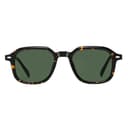
One versatile pair, round or oval face: the SOJOS Acetate Rectangle. A straight top line and squared corners are what a round face needs for definition, and it is unisex enough to share. Our rectangle roundup ranks the shape.
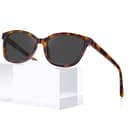
Not sure what suits you:the CARFIA Designer Acetate. A soft square — a rectangle with the corners rounded off — flatters a wider range of faces than either a hard-edged box or a strong cat-eye, which is why its “suits most faces” pitch holds up better here than it usually does. See square acetate sunglasses.
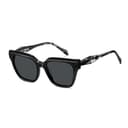
Coverage and drama: the SOJOS Audrey Oversize Square, which states acetate for the frame andthe temples — the distinction most budget “acetate” oversized frames quietly fail, because they are usually acetate arms on a molded front. Our oversized roundup covers the shape.
A clean everyday pair from a brand with a service path:the Privé Revaux Clevelander/S, which states cellulose acetate, polarized lenses and 100% UV protection. Our Privé Revaux review covers the brand.
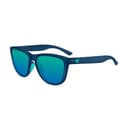
You wanted the price-to-polarization ratio, not the acetate:the Knockaround Premiums. Polycarbonate, stated as such, polarized, UV400, at roughly half Blenders’ list. The honest comparison rather than the flattering one.
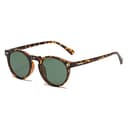
Cheapest route into real acetate: the Gleyemor Vintage Round in tortoise, with the classic tortoise-and-G15-green pairing. Our under $25 roundup covers that whole band, including the two frames in it that are not acetate at all.
How to decide, in one question
Do you want a frame or a wardrobe? Blenders is built for the second answer — several pairs, bold and specific, replaced when you fancy a change, with a returns window that makes experimenting cheap. The acetate case is the first answer: one frame, a material that can be fitted to your head and brought back to a shine, kept for years. Both are legitimate, and the price is close enough that the material is the decision rather than the budget. If you want the wider field rather than one brand’s competitors, start from best affordable acetate under $50, and cheap sunglasses that look expensive is the page about the five details that make a budget frame read as a good one.
And if you want the same substitution argument run against a brand that does publish its numbers, our best DIFF Eyewear dupes page is the one to read: DIFF names hand-cut acetate and 5-barrel hinges and gives a full fitting on several models, which changes what a substitute has to match.