Do Sunglasses Block Blue Light?
Yes — every tinted sunglass lens cuts part of the blue end of the spectrum, and a category 3 lens cuts far more of it than the clear glasses sold for screens. The more useful fact is the one the AAO leads with: the largest source of blue light is sunlight.
How this is funded:we earn a commission if you buy through our links, at no extra cost to you. It never changes which product we recommend, and we’ll tell you when we’d skip one. Full disclosure.
Short answer: yes, and more than the glasses sold for the job. Blue light is simply the short-wavelength end of visible light, and a sunglass lens works by reducing visible light — so blue goes down with everything else. A category 3 lens, the normal band for bright sun, transmits only 8-18% of visible light. The faintly tinted lenses sold for screen use are nowhere near that.
The more useful fact is the one the American Academy of Ophthalmology leads with: the largest source of blue light is sunlight. Which means the lens worth thinking about for blue light is the one you wear outside — and that the whole conversation has been happening around the wrong light source.
What blue light actually is
Light is described by wavelength, in nanometers. Ultraviolet runs up to roughly 400 nm; above that you are in visible light, which starts with violet and blue and runs through green, yellow and red. So blue light is not an exotic emission from a device. It is the first slice of ordinary daylight — the part that makes the sky blue and that your eyes have processed every day of your life.
That boundary at 400 nm is the whole reason UV400 became the shorthand it is: a lens that filters everything up to 400 nm has blocked the entire ultraviolet range that reaches your eyes. It also means UV400 and blue light are two separate conversations with a hard border between them — which is exactly where the UV420 label lives, reaching 20 nm past ultraviolet into visible blue. That page covers the label and what it claims; this one covers what a sunglass lens does to blue light whatever is printed on the box.
Three things govern how much blue a sunglass lens cuts
1. The filter category — how much light gets through at all. This is the biggest lever by a wide margin, and it is a standardized number from 0 to 4: category 0 transmits 80-100% of visible light, category 1 transmits 43-80%, category 2 transmits 18-43%, category 3 transmits 8-18%, and category 4 transmits 3-8%. A category 3 lens is removing most of the visible spectrum, blue included. No clear lens with a blue-light coating comes close to that, because a clear lens by definition transmits nearly all visible light.
2. The tint — which part of the spectrum gets cut hardest. A grey lens reduces wavelengths fairly evenly, which is why grey preserves color accuracy. Brown, amber and copper lenses deliberately remove more of the short-wavelength blue end, and that selective removal is the mechanism behind the contrast gain people notice in them. Our brown vs grey comparison is the page for that decision, and lens tint colors covers the wider palette.
The engineered version of this is worth seeing, because it shows the idea is real rather than marketing. Serengeti tunes its Mineral 555nm lens around 555 nanometers — the wavelength in the green part of the spectrum the human eye is most sensitive to — and pairs it with its Spectral Control treatment. That is a lens shaped around a transmission curve rather than simply dimmed, and reshaping the curve means handling the blue end differently from the green. Our Serengeti review covers the technology.
3. Coatings and claims printed on top.A “blue-light filtering” coating on a sunglass lens is doing a small amount of extra work on top of the two levers above, and it is almost never quantified. Treat it as a preference. The figure to insist on instead is a stated 100% UV or UV400 line, because — as the FDA puts it — you cannot judge a lens by how it looks, so the stated number is the only thing you have. We print it on every product card here and leave it blank where a seller does not publish one.
So should you buy a lens for its blue-light filtering?
For sun protection: no — buy it for the UV figure and the filter category, and accept the blue filtering as a side effect of a properly dark lens.
For screens: the AAO’s advice is explicit. Skip the glasses that claim to protect your eyes against blue light, because of a lack of evidence that they are effective. There is, per the AAO, no scientific evidence that blue light from digital devices causes damage to your eye, and the exposure from a screen is small next to daylight. The association the AAO does make is with sleep: too much blue light late at night from a phone, tablet or computer can make it harder to get to sleep — which argues for dimming the device or putting it away, not for an eyewear purchase.
For contrast and comfort in bright light: yes, as a preference, and this is the honest case for a brown or amber lens. Cutting the short-wavelength end genuinely does change how easily you read depth and texture in bright conditions, and plenty of drivers, anglers and skiers prefer it for exactly that. It is a comfort and performance claim, not a health one, and we are not going to dress it up as the second thing.
There is one case where a tint is a clinical tool rather than a preference, and it is worth naming so it is not confused with the above: FL-41, the rose tint used for photophobia and migraine. That is specified and prescribed, not bought off a fashion listing, and we cover it in why sunglasses give you a headache.
What this means on a listing
Read three lines, in this order.
The UV figure. A stated 100% UV or UV400. This is the only lens property with settled evidence behind it, and it is cheap — plenty of sub-$30 frames state it. If a listing skips it and reaches for a blue-light claim instead, that is a seller worth reading more carefully. Our guide to checking UV protection covers how to find it.
The filter category. Category 3 for bright sun, and nothing above it for general wear: the College of Optometrists states that filters for road use shall be categories 0 to 3, so a category 4 lens is out of a car entirely. Very few sellers publish the number, which is why we record it as not published on most cards rather than guessing.
The tint, last.Grey if you want the world to look like itself, brown or amber if you want contrast, and understand that this is the line where you are buying a preference. Anything beyond that — a quoted blue-light percentage, a transmission curve, a “blue block” badge — is a claim we cannot check on your behalf, and we will not repeat a number a seller has not published.
One last word on who this page is written by. We make money when you buy a frame through a link here, and the easiest version of this article would have told you that blue-light filtering is a feature worth paying for. The AAO’s position is that it is not, and that the sun — not your laptop — is the blue light worth owning a lens for. Buy for UV and fit. The blue filtering comes free with a lens dark enough to be useful. If you want the frames that get the rest of it right, our best acetate sunglasses roundup is the flagship, and best glass lens sunglasses covers the optically flattest lenses on this site.
Three lenses that publish what they filter
Named because each one states something specific about its lens rather than describing a tint by name - which is the only way to know what you are getting. No ranking and no awards: each illustrates one point from the argument above. Prices are live and dated.
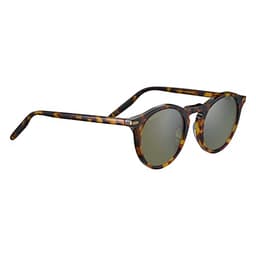
Serengeti Raffaele (Shiny Tortoise, Mineral Polarized 555nm, Cat 3)
The engineered case. The listing states a Mineral Polarized 555nm lens in filter category 3, and Serengeti states UV protection to 400 nm - so the UV line, the darkness band and the spectral tuning are all published, which is rare at any price. Tuning a lens around 555 nm means shaping the transmission curve rather than simply dimming everything, and reducing the short-wavelength end is part of how that contrast gain is produced. Glass is heavier on the nose, and it is premium money.
Price as of October 12, 2026. #ad How we’re funded
Frame material: Italian acetate (per Serengeti). Specs read from the listing on September 21, 2026.
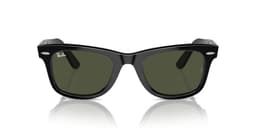
Ray-Ban Original Wayfarer RB2140 (Black / G-15 Green, 50 mm)
The classic, and the one most people have actually looked through. The G-15 lens is Ray-Ban's original grey-green tint: it takes the view down roughly evenly rather than warming it, so it is the neutral end of this comparison, and Ray-Ban states 100% UV protection on it. This Black / G-15 variant is not the polarized one, and gloss black acetate shows every fingerprint - the trade for a frame you can have serviced for decades.
Price as of October 12, 2026. #ad How we’re funded
Frame material: Cellulose acetate. Specs read from the listing on October 11, 2026.
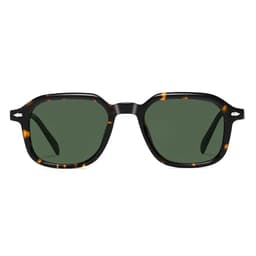
SOJOS Acetate Rectangle (Handmade, Polarized)
Here to make the point that the figure that matters is cheap. SOJOS states UV400 and polarized lenses on an acetate frame well under the price of either frame above, and UV400 is the line eye-health authorities point people toward - there is no ultraviolet left above 400 nm to block. What it does not publish is a filter category, so the exact darkness band is unknown, which is the honest limit of the pick.
Price as of October 12, 2026. #ad How we’re funded
Frame material: Cellulose acetate. Specs read from the listing on July 21, 2026.
General guidance, not eye-care advice. Acetate Club is written by an eyewear enthusiast, not an optician or optometrist. Sunglasses are sun protection, not a substitute for an eye exam — if you have a vision or eye-health concern, or need prescription lenses, see a qualified professional.
Frequently asked questions
Do sunglasses block blue light?
Yes. Blue light is part of visible light, and a tinted sunglass lens works by reducing visible light - so it necessarily cuts blue along with everything else. A category 3 lens, the normal band for bright sun, transmits only 8-18% of visible light, which means it removes far more blue light than the faintly tinted glasses sold for screen use. How much of the cut lands specifically on blue depends on the tint: a grey lens takes the whole spectrum down fairly evenly, while a brown or amber lens deliberately removes more of the short-wavelength blue end.
Do I need blue light glasses if I wear sunglasses?
The American Academy of Ophthalmology's advice is to skip glasses that claim to protect your eyes against blue light, because of a lack of evidence that they are effective. Its reasoning is worth knowing: the largest source of blue light is sunlight, and there is no scientific evidence that blue light from digital devices causes damage to your eye. So sunglasses for outdoors are the purchase that is actually supported - and they are already doing far more blue filtering than a clear lens sold for a screen.
Is blue light from screens bad for your eyes?
Per the AAO, there is no scientific evidence that blue light from digital devices causes damage to the eye, and the amount reaching you from a screen is small next to the amount from daylight. The effect the AAO does flag is on sleep: too much blue light late at night from a phone, tablet or computer can make it harder to get to sleep. That is a reason to put the device down or dim it at night, rather than a reason to buy a lens.
Which lens color blocks the most blue light?
Amber, orange, copper and brown tints remove the most short-wavelength blue, which is the mechanism behind the contrast gain people notice in those lenses. Grey takes the spectrum down more evenly and preserves color accuracy, which is why it is the neutral choice. Rose and yellow sit in between and shift color noticeably. None of these is a health claim: a tint is a preference about contrast and color, and the only lens property with settled eye-health evidence behind it is UV protection.
Does UV400 block blue light?
Only incidentally. UV400 describes a lens that filters everything up to 400 nanometers, which is where ultraviolet ends - so by definition it stops just short of visible blue. The marketing label UV420 reaches 20 nanometers further, into the very start of visible violet and blue. But any tinted sunglass lens cuts a large share of visible blue simply by being tinted, regardless of which number is on the box. Insist on a stated UV400 or 100% UV figure first; treat the blue-light claim as a preference.
Can sunglasses help with screen glare or eye strain?
For an outdoor screen, sometimes - though a polarized lens is as likely to make an LCD dashboard or phone look dim and patchy as it is to help, which is covered in our non-polarized roundup. For indoor screen strain, dark lenses are the wrong tool and can make things worse: the AAO notes that people who wear really dark glasses can dark-adapt themselves and increase their photosensitivity. Screen discomfort responds better to screen distance, text size, breaks and dry-eye treatment than to a tint.
Sources
- American Academy of Ophthalmology — Should You Be Worried About Blue Light? — AAO: the largest source of blue light is sunlight; there is no scientific evidence that blue light from digital devices causes damage to your eye; too much blue light late at night from a phone, tablet or computer can make it harder to get to sleep; skip the glasses that claim to protect your eyes against blue light, because of a lack of evidence that they are effective (accessed October 11, 2026)
- American Academy of Ophthalmology — Recommended Types of Sunglasses — AAO on choosing sunglasses that block 99–100% of UV-A and UV-B (UV400) (accessed July 21, 2026)
- U.S. FDA — Tips to Stay Safe in the Sun: From Sunscreen to Sunglasses — FDA: lens darkness does not indicate UV protection; look for a 100% UV / UV400 label (accessed July 21, 2026)
- National Eye Institute — Protecting your eyes from the sun's UV light — NEI on UV eye risks and choosing sunglasses that block UV-A and UV-B (accessed July 21, 2026)
- ISO 12312-1:2022 — Eye and face protection — Sunglasses for general use — The international standard for general-use sunglasses: UV filtering, filter categories and transmittance (accessed July 21, 2026)
- The College of Optometrists — Tints and driving (BS EN ISO 12312-1 filter categories) — Category bands: 0 = 80-100% transmission, 1 = 43-80%, 2 = 18-43%, 3 = 8-18%, 4 = 3-8%; filters for road use shall be categories 0-3; under 75% transmittance is unsuitable for twilight or night driving (accessed September 21, 2026)
- Serengeti — The Serengeti Lens (lens technology) — Serengeti on its mineral lenses (Corning borosilicate optical glass), the 555 nm tuning, Spectral Control, and UV protection to 400 nm (accessed September 21, 2026)
- Serengeti — Raffaele (acetate collection) — Serengeti's product page: Italian acetate, round, keyhole nose bridge, offered in Shiny Tortoise with the Mineral Polarized 555nm lens in category 3 (accessed September 21, 2026)
Keep reading
UV420 explained
The label that reaches 20 nanometers past ultraviolet, and what it is really selling.
Read the guideUV400 explained
The one number to insist on, and why nothing above it is ultraviolet.
Read the guideLens tint colors
What each tint does to the spectrum, from grey through amber to rose.
Read the guideSunglasses for sensitive eyes
When light itself is the problem, and what actually helps.
Read the guide