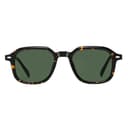
What the Symbole actually is, in Prada’s own specs
Most dupe lists work from a product photograph, which is why so many of them recommend frames that look right on a white background and wrong on a face. The silhouettes match and the proportions do not. Prada publishes enough on its own product pages to do better than that, so here is the frame we are matching against, in its own numbers.
Material: acetate, and on some colorways recycled bio-acetate. This is the most interesting line on the Symbole pages and the one every other dupe roundup skips. Prada gives the frames as acetate, and describes several colorways as a recycled bio-acetate front. That tells you the look you are copying is a cut-from-sheet look — depth of color through the material, a polished rim edge, a front with some physical substance to it. A molded frame in the same outline reads flat beside it, which is the single most common reason a dupe disappoints once it is out of the box. Our page on acetate vs plastic covers what actually differs, and how to tell if frames are acetate covers checking it on a frame you already own.
Shape: a squared front, not a soft one. Prada merchandises the Symbole under its squared sunglasses category, and the family runs from a compact squared rectangle up to a wider one, with a cat-eye variant published at 53-19-145. The defining feature is the straight top line and the blunt, almost architectural corner. That is a shape budget acetate can genuinely hit, because a straight line is the easiest thing in the world to cut.
Fitting: 49-20-145 to 55-16-145. The useful number on the page. Across the colorways we read, Prada publishes lens widths from 49 to 55 mm, bridges from 16 to 20 mm, and temples of 140 or 145 mm, with the fit labeled Standard on most variants and Full on one. In plain terms: a normal lens width, a normal-to-wide bridge, and temples at the long end of ordinary. If you wear a 54-18-145 frame comfortably you are inside this family’s range, which is not something we could say about the shorter 135 mm temples on some other luxury houses. Our sizing guide explains how to read those three numbers off a pair you already own, which is the only reliable way to shop a frame that does not publish its measurements.
Lens: 100% UVA/UVB. Stated on the listings, and the easiest property on this page to match, because UV filtering is cheap to manufacture. Every pick below states UV400 or 100% UV protection on its own listing. The FDA’s point is that you cannot judge UV protection by how dark a lens looks, so the stated figure is the thing that counts, not the price or the tint. Our guide to checking UV protection covers reading it off any listing, and UV400 explained covers what the number means.
How we ranked these
Five criteria, applied in this order, and no credit at all for resembling a photograph.
1. The listing states cellulose acetate. Not “acetate style”, not acetate temples on a molded front. Four of the five picks state acetate or bio-acetate for the frame itself.
2. The front is genuinely squared — a straight top line with blunt corners, rather than a soft wayfarer taper or a rounded rectangle. The Symbole look lives in that corner.
3. A stated UV figure, printed by the seller rather than inferred by us. Where a listing does not state one, we say so on the card.
4. Polarization where it is offered. Four of five picks are polarized. Prada does not claim polarization on the Symbole listings we read, which makes this one of those cases where the cheaper frame carries the extra feature. Worth knowing what it is: polarization is a glare filter, not a protection upgrade, as our polarized vs non-polarized guide explains.
5. Evidence for any material claim. This is the criterion that moves frames around on this page, and it is the one Prada’s own copy invites. Prada says recycled bio-acetate. It does not publish a percentage, a standard or a test basis for it. Neither do most of the budget frames that say “eco”. One frame on this page does, and it is ranked accordingly rather than at the top, because it costs many times what the others do.
Who each pick is for
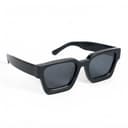
SOJOS Acetate Rectangle — best overall. The closest honest match in our registry to the specs above: cellulose acetate stated, a clean squared front with no decorative hardware, polarized lenses and UV400 printed on the listing, usually under $40. Buy it if you want the proportion and the material and have no interest in pretending it is something else. The gaps are real and worth naming: SOJOS publishes no measurements, so you cannot check it against the 54-20-140 fitting before it arrives; the lens is plastic and will pick up scratches sooner than glass; and the finish is value-tier, which shows at the rim edge and the hinge rather than from across a room. Our SOJOS review is candid about the brand’s ceiling, and affordable acetate sunglasses ranks the whole budget band on material honesty.
Earthly Ones Polarized Square — best bio-acetate match. If the Prada colorway you have been looking at is one of the recycled bio-acetate variants, this is the frame that matches the claim as well as the shape: the listing states eco bio-acetate, the lenses are polarized and UV400, and the front is a plain square. Two honest cons. First, like Prada, Earthly Ones publishes no percentage and no standard behind the bio wording — so you are buying the same unquantified claim, just without paying a premium for it, which is the only reason we are comfortable recommending it. Second, there are no published measurements and one size only, so a very small or very wide face is a gamble. Our bio-acetate explainer separates the two claims people confuse, and best bio-acetate sunglasses ranks the field on exactly this evidence question.
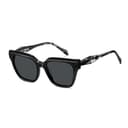
SOJOS Audrey Oversize Square — best bigger front. The Symbole runs up to a 55 mm lens, and if the version you keep coming back to is the wider one, a frame cut for coverage reads closer than a compact rectangle does. SOJOS states acetate for the frame and the temples here, which is the distinction most budget “acetate” oversized frames quietly fail, and it is what gives a big shape the planted feel it needs. Polarized, UV400, still under $50. Cons: it is a deliberate statement shape and will overwhelm small or petite features; it is listed as a medium, so very wide faces should check the fit; and again there are no published numbers. Our oversized acetate guide covers the proportions and thick frame sunglasses covers why a heavy front is where cut acetate and a molded shell stop looking alike.
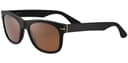
Serengeti Foyt Large — best lenses. A different answer to the same impulse: if you have $300 to spend on sunglasses, the Symbole is one way to spend it and a photochromic mineral glass lens in an eco-acetate square is the other. Serengeti states eco-friendly handcrafted acetate, mineral glass tuned at 555 nm, UV protection to 400 nm, and a lens that moves between filter category 2 and category 3 as the light changes — which is the “Cat 2 to 3” on the listing and a genuinely useful property for one-pair-for-everything wear. The cons are specific. This variant is not polarized; Serengeti sells polarized Foyt lenses separately. Photochromic glass is heavier on the nose than plastic. No measurements are published. And a category 2 lens in low light is still too dark for night driving. Our lens category guide explains the bands, photochromic sunglasses explains the mechanism, and the Serengeti review covers the brand.
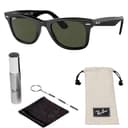
Ray-Ban Original Wayfarer Bio-Based — best real designer frame. The frame to buy if the thing you want is a designer acetate frame with a material claim you can actually check, rather than a copy of a specific house’s silhouette. Ray-Ban states 67% bio-based carbon content, calculated to ASTM D6866 — a real figure against a real standard, which is more than Prada publishes for its recycled bio-acetate and more than any budget frame on this page publishes for its “eco”. It is also, honestly, the least Symbole-shaped pick here: the Wayfarer is a tapered trapezoid, not a square, so we are not presenting it as a lookalike. Other cons: bio-based carbon content is a feedstock measure and not a biodegradability claim, Ray-Ban does not make one, and this is by far the most expensive way to buy bio-acetate on this page. The listing also does not state whether the pair is polarized, so check the variant. Our Ray-Ban review has the detail.
What a dupe cannot copy
Three things, and it is worth being blunt about them before you spend anything.
The logo. The three-dimensional triangle built into the temple is the Symbole’s identifying feature and it is a trademark. A frame that reproduces it is a counterfeit, not a dupe, and we will not link to one. Every pick here is sold under its own brand name — which is also the reason none of them will fool anyone who knows the original.
The finishing. Luxury acetate is tumbled and hand-polished through many more stages than a budget frame, and that is what you see at the rim edge, at the endpiece where the temple meets the front, and in how the color sits through the sheet rather than on it. A $35 frame can have the correct outline and still look like a $35 frame in the hand. We make the same argument, ranked, on cheap sunglasses that look expensive and explain the cost side on why acetate sunglasses are expensive.
Service. A luxury frame comes with a warranty, a repair path and replacement parts. A marketplace frame comes with a return window. If you intend to own a frame for years rather than a season, that gap matters more than the price does, and it is the argument our are expensive sunglasses worth it guide makes honestly in both directions.
The bio-acetate trap on both sides of the price gap
This deserves its own section, because it is the one place where the luxury frame and the $35 frame are making the same unverifiable claim and only one of them is charging for it.
Prada describes recycled bio-acetate colorways in the Symbole family. It does not publish a bio-based percentage, a recycled-content percentage, a test standard or a laboratory. Earthly Ones says “eco bio-acetate” and publishes exactly the same amount of supporting detail: none. Those two claims are, on the published evidence, equally strong. One of them costs around $500 more.
There are two separate claims hiding inside the words, and they are worth keeping apart. A bio-based content figure describes feedstock — how much of the carbon in the frame came from plants rather than petroleum — and the standard for measuring it is ASTM D6866. A biodegradability result describes what happens at the end of the frame’s life, and the published test basis for acetate is industrial composting under ISO 14855-2, not a landfill and not a compost bin in a garden. Ray-Ban publishes a D6866 figure and makes no biodegradability claim at all, which is the correct and conservative position. Our bio-acetate vs acetate page sets out the difference in full, and are acetate sunglasses eco-friendly is honest about how little of this is settled.
The practical upshot for this page: if a green claim is part of why you want the frame, buy the one that quantifies it or buy the one that does not charge you for it. Paying a luxury premium for an unquantified claim is the worst of the three options.
What we left off, and why
We left off every listing that puts the word “Prada” in its title. Those are either counterfeits or marketplace sellers borrowing a trademark for search traffic, and both are bad purchases for the same two reasons: you have no idea what the frame is made of, and the listing is one complaint away from vanishing along with your returns window.
We also left off the metal-fronted Symbole variants from the comparison. One of the listings we read is a metal-front version of the same family, and since this is an acetate publication with no metal frames in the registry, matching it would mean recommending something we do not cover. Saying so is more useful than quietly ranking a plastic frame against a metal one.
And we left off the very cheap molded squares that dominate dupe roundups elsewhere. They can match the outline for under $15 and they miss the entire point: the Symbole is an acetate frame, and the property that reads as expensive is the material, not the shape. If you want a cheap frame that looks like money, buy acetate and keep the silhouette simple.
If it is a different house you are actually after, this page has three neighbors built the same way — the target brand’s published specs first, then our frames ranked against them: Tom Ford dupes for the heavy oversized square, Miu Miu dupes for the low-profile rectangle, and CELINE dupes for the thick Triomphe oval. If you are coming from a molded fashion frame rather than a luxury one, QUAY alternatives is the material-upgrade version of this argument.