Acetate Club

Best Sunglasses for Men Under $100

Under $100 is the first band where a published three-number fitting becomes possible. Six men's frames that were under $100 at our last price check, ranked on what their seller states.

By Stephen V.Last updated How we pick

Our pick is the Carrera 317/S at about $52, and it wins on one thing the rest of this band almost never offers: Carrera publishes the whole fitting — 55 mm lens, 20 mm bridge, 150 mm temple— on an acetate front with metal inserts at each side. That 150 mm temple is the longest figure we track, which makes it the pick for a larger head that standard frames pinch. It is for the man who has been burned by buying a frame that turned out to be the wrong width. The budget pick is the Gleyemor Vintage Round in tortoise at about $14, which states cellulose acetate, polarized and UV400 — nothing else at the price makes all three claims.

Price check.Every frame below was under $100 when we selected it, and each button carries the live retailer price — as of November 22, 2026— rather than a number we typed. If a button now reads above $100, read the button, not the headline.

This band is where the market changes character. Below about $40 you buy material and hope about fit. Above $150 you buy finish, glass and heritage. Between roughly $35 and $100 you can get a designer name, a published fitting, or stated polarization— and usually two of the three rather than all three. The page is organised around which trade each pick makes, and every card says not published where a seller states nothing.

How this is funded: we earn a commission if you buy through our links, at no extra cost to you. It never changes which product we recommend, and we’ll tell you when we’d skip one. Full disclosure.

Quick picks

Ranked on frame material, fit and value. Select a row to jump to the full write-up. We have not handled these frames in person — here is exactly what we do instead.

#ProductBest forPrice
1
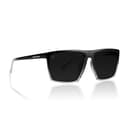
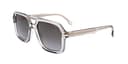
Carrera 317/S (Grey, Double Bridge, 55 mm)

Carrera 317/S (Grey, Double Bridge, 55 mm)

The double-bridge navigator in the line, and the one to read the material line on twice: Carrera states an acetate front with metal inserts on each side. That is a combination frame, not an all-acetate one, which matters if metal on your skin is the reason you are shopping acetate at all.

Best overall
$46.02 · View on Amazon

$52.4812% off

Price as of November 22, 2026. #ad How we’re funded

2
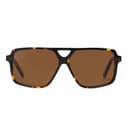
Carrera 329/S (Black Havana, 58 mm)

Carrera 329/S (Black Havana, 58 mm)

The pick that makes the Carrera argument on its own: Carrera states acetate for the front AND the temples, publishes the full 58-18-145 fitting, and sells it at a price most budget acetate brands charge while publishing nothing. The catch is the lens — this is a gradient, and Carrera does not call it polarized.

Best designer name under $50
$44.56 · View on Amazon

Price as of November 22, 2026. #ad How we’re funded

3
NEVEN Doc Robbins Rectangular (L/XL)

NEVEN Doc Robbins Rectangular (L/XL)

A large-fit polarized rectangle from a brand built around bigger heads — genuinely useful if standard frames pinch you, and it sits in the $50-100 band almost nothing else here occupies. Be clear-eyed about the material though: this listing doesn't state what the frame is cut from, and NEVEN's sibling models state TR90, not acetate.

Best for a large head
$62.30 · View on Amazon

Price as of November 22, 2026. #ad How we’re funded

4
SOJOS Square Aviator (Acetate)

SOJOS Square Aviator (Acetate)

A squared-off aviator in acetate rather than the usual thin metal — a heavier, more fashion-forward take on the classic teardrop. The acetate body gives it presence, and the polarized lenses make it a genuine driving frame, not just a look.

Best aviator
$27.99 · View on Amazon

$39.9930% off

Price as of November 22, 2026. #ad How we’re funded

5
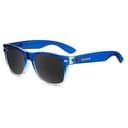
Knockaround Fort Knocks (Polarized)

Knockaround Fort Knocks (Polarized)

Knockaround's larger frame — same polycarbonate build and polarized lenses as the Premiums, just wider and taller. If the Premiums sat small on you, the Fort Knocks is the fix. Still not acetate, still excellent value.

Best knockabout
$23.75 · View on Amazon

$35.0032% off

Price as of November 22, 2026. #ad How we’re funded

6
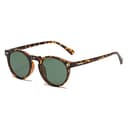
Gleyemor Vintage Round (Tortoise Acetate)

Gleyemor Vintage Round (Tortoise Acetate)

The same hand-crafted acetate round in tortoise with a G15 green lens — the most classic pairing in eyewear. It isn't a Persol and doesn't pretend to be, but a stated-acetate frame in a proper vintage colorway at this price is a lot of frame for the money.

Best budget
$11.19 · View on Amazon

$13.9920% off

Price as of November 22, 2026. #ad How we’re funded

The picks in full

#1Best overall

Carrera 317/S (Grey, Double Bridge, 55 mm)

The double-bridge navigator in the line, and the one to read the material line on twice: Carrera states an acetate front with metal inserts on each side. That is a combination frame, not an all-acetate one, which matters if metal on your skin is the reason you are shopping acetate at all.

Strengths

  • Acetate front with a published 55-20-150 fitting — the longest temple of the three Carreras here
  • The double bridge breaks up a square front, which is the detail doing the work on this frame
  • Carrera states gradient lens treatment and UV protection 100

Who should skip it

  • Metal inserts on each side, per Carrera — so this is NOT an all-acetate frame and not the pick for a nickel sensitivity
  • Carrera does not state polarization on this model either
  • A 20 mm bridge is wide; a narrow nose bridge will sit low in this frame
Frame materialAcetate front with metal inserts on each side (per Carrera)
Frame shapeSquare
Lens protectionUV protection 100 (per Carrera)
PolarizedNot published
Lens width55 mm
Suits face shapesOval, Round, Heart

Spec note. Carrera describes the 317/S as a square double-bridge navigator with an acetate front and metal inserts on each side, sized 55-20-150, with gradient lens treatment and UV protection 100. The Amazon listing title repeats 55/20/150. Polarization is not stated by Carrera on this model, so it is recorded as not published rather than assumed either way.

Specs and material read from the product listing, on November 1, 2026. “Not published” means the seller does not state that figure.

#2Best designer name under $50

Carrera 329/S (Black Havana, 58 mm)

The pick that makes the Carrera argument on its own: Carrera states acetate for the front AND the temples, publishes the full 58-18-145 fitting, and sells it at a price most budget acetate brands charge while publishing nothing. The catch is the lens — this is a gradient, and Carrera does not call it polarized.

Strengths

  • Carrera states acetate front and acetate temples — not acetate temples on a molded front
  • Full 58-18-145 fitting published by the brand and repeated in the Amazon listing title
  • Carrera states UV protection 100 and ships it with a storage case

Who should skip it

  • NOT polarized — Carrera gives the lens as a shaded gold mirror gradient, so expect no glare filtering
  • 58 mm is a wide eye size; this is a frame for a medium-to-wide face, not a small one
  • A geometric octagonal front is a stronger look than a plain rectangle and dates faster
Frame materialAcetate front with acetate temples (per Carrera)
Frame shapeGeometric
Lens protectionUV protection 100 (per Carrera)
PolarizedNo
Lens width58 mm
Suits face shapesOval, Round, Square

Spec note. Carrera's own product page gives the 329/S as a full-rim geometrical (octagonal) frame with an acetate front and acetate temples, a 58 mm lens, 18 mm bridge and 145 mm temple, a grey shaded gold mirror gradient NON-polarized lens, UV protection 100, and a storage case. The Amazon listing title repeats the same 58/18/145 fitting, which is how the ASIN was matched to the model.

Specs and material read from the product listing, on November 1, 2026. “Not published” means the seller does not state that figure.

#3Best for a large head

NEVEN Doc Robbins Rectangular (L/XL)

A large-fit polarized rectangle from a brand built around bigger heads — genuinely useful if standard frames pinch you, and it sits in the $50-100 band almost nothing else here occupies. Be clear-eyed about the material though: this listing doesn't state what the frame is cut from, and NEVEN's sibling models state TR90, not acetate.

Strengths

  • Purpose-built L/XL sizing, which is far rarer than the marketing around it suggests
  • Polarized with UV400 stated on the listing
  • Fills the price gap between budget acetate and designer acetate

Who should skip it

  • The listing doesn't state the frame material, and NEVEN's Legend and Tombstone listings state TR90 — don't assume acetate
  • Priced well above the budget acetate frames here without a stated material advantage
Frame materialNot published
Frame shapeRectangle
Lens protectionUV400
PolarizedYes
Lens widthNot published
Suits face shapesRound, Oval, Heart

Spec note. NEVEN sells an L/XL-focused range; its Legend and Tombstone listings state a TR90 frame. The Doc Robbins listing states neither TR90 nor acetate, so the material is genuinely unconfirmed rather than assumed either way.

Specs and material read from the product listing, on August 19, 2026. “Not published” means the seller does not state that figure.

#4Best aviator

SOJOS Square Aviator (Acetate)

A squared-off aviator in acetate rather than the usual thin metal — a heavier, more fashion-forward take on the classic teardrop. The acetate body gives it presence, and the polarized lenses make it a genuine driving frame, not just a look.

Strengths

  • Acetate build gives the aviator shape more weight and character than a wire frame
  • Polarized — a real advantage for driving and open water
  • Unisex sizing and neutral colorways

Who should skip it

  • A squared aviator is a bolder look than the classic thin-metal version
  • Heavier on the nose than a metal aviator
Frame materialCellulose acetate
Frame shapeAviator
Lens protectionUV400
PolarizedYes
Lens widthNot published
Suits face shapesOval, Square, Heart

Spec note. Most aviators are thin metal; an acetate aviator swaps the wire for a molded plastic body, which changes both the weight and the attitude of the frame.

Specs and material read from the product listing, on July 21, 2026. “Not published” means the seller does not state that figure.

#5Best knockabout

Knockaround Fort Knocks (Polarized)

Knockaround's larger frame — same polycarbonate build and polarized lenses as the Premiums, just wider and taller. If the Premiums sat small on you, the Fort Knocks is the fix. Still not acetate, still excellent value.

Strengths

  • Larger sizing suits wider and longer faces the Premiums leave out
  • Polarized and UV400 at a low price
  • Same broad color range

Who should skip it

  • Polycarbonate frame, not acetate
  • The bigger shape is more of a statement than the neutral Premiums
Frame materialPolycarbonate (not acetate)
Frame shapeSquare
Lens protectionUV400
PolarizedYes
Lens widthNot published
Suits face shapesOval, Square

Spec note. The Fort Knocks is essentially a scaled-up Premiums — same material and lens spec, a larger frame footprint.

Specs and material read from the product listing, on July 21, 2026. “Not published” means the seller does not state that figure.

#6Best budget

Gleyemor Vintage Round (Tortoise Acetate)

The same hand-crafted acetate round in tortoise with a G15 green lens — the most classic pairing in eyewear. It isn't a Persol and doesn't pretend to be, but a stated-acetate frame in a proper vintage colorway at this price is a lot of frame for the money.

Strengths

  • Stated hand-crafted acetate in the classic tortoise and G15 green combination
  • Polarized and UV400 both stated at the very bottom of the price range
  • The soft vintage-round shape softens a square or angular face

Who should skip it

  • Color depth looks flat next to a mid or premium acetate — expect value, not richness
  • No published measurements, so check the fit if you have a narrow face
Frame materialCellulose acetate (hand-crafted, per listing)
Frame shapeRound
Lens protectionUV400
PolarizedYes
Lens widthNot published
Suits face shapesSquare, Oval

Spec note. A G15 lens is the gray-green tint Ray-Ban made standard; it darkens the scene without shifting colors much, which is why it pairs so consistently with tortoise frames.

Specs and material read from the product listing, on August 19, 2026. “Not published” means the seller does not state that figure.

The three numbers, and why they matter more for men

A frame fitting is stamped inside the temple as three figures: lens width, bridge width, temple length. Men’s faces skew wider and men’s heads skew larger, so the third number is the one that most often goes wrong— and it is the one almost nobody publishes.

A temple that is too short pulls the frame forward off the nose and leaves pressure marks behind the ears by mid-afternoon. A temple that is too long lets the frame walk down. In our whole registry, three frames publish a temple length, and all three are Carreras: 150 mm on the 317/S, 145 mm on the 329/S and 145 mm on the 341/S. That is the practical reason two Carreras lead this page.

Lens width tells you how wide the frame sits. The 329/S publishes 58 mm, which is a large eye size and genuinely suits a wide face; the 317/S publishes 55 mm, the middle of the adult range. Everything else on this page publishes nothing, and the cards say so. Our sunglasses sizing guide explains how to read the stamp and sunglasses for wide faces covers the fit problem properly.

What a designer name costs in this band, and what it gets you

Carrera is the interesting case in this price range, because it is a recognised eyewear house selling at budget-acetate money on the open market. Reading Carrera’s own product pages rather than marketplace listings is what makes the picks defensible, and it also turns up two caveats worth knowing before you buy.

The 329/S is not polarized.Carrera states the lens as a grey shaded gold mirror gradient, non-polarized, with UV protection 100. If you want glare control off water or wet road, this is the wrong frame and we would rather tell you now — see polarized sunglasses under $50 instead.

The 317/S is a combination frame. Carrera states an acetate front with metal inserts on each side, and does not state polarization at all. The metal matters if the reason you are shopping acetate is a nickel sensitivity — see hypoallergenic sunglasses and acetate and metal sunglasses.

What the name does buy: a brand that publishes measurements, a storage case, frames that are prescription-ready at an optician, and a finish that reads as more expensive than the receipt. Our Carrera review goes through the line, including the model we track but do not feature.

The large-head problem, and the honest gap in our answer

If standard frames pinch, you have two routes under $100.

The NEVEN Doc Robbins is built as an L/XL rectangle with stated polarized UV400 lenses, which is the most direct answer to the problem on this page. The honest caveat is on the card and we will repeat it here: the Doc Robbins listing states no frame material at all, while NEVEN’s own sibling Legend and Tombstone listings state TR-90. We record that as unconfirmed rather than assuming acetate, because assuming it would be the fabrication this site exists to avoid. See our NEVEN review.

The Knockaround Fort Knocks is the cheaper route: a wider square in stated polycarbonate with stated polarized UV400 lenses, at about $35. Knockaround says polycarbonate on its own pages and so do we. It flexes where acetate chips, which is the right engineering for a frame that lives in a truck or a bag, and it cannot be heat-adjusted, which is the cost. See our Knockaround review and acetate vs polycarbonate.

What this band does not contain, in our registry, is a large acetate frame with a published fitting and stated polarization. The 317/S publishes the fitting but not polarization; the NEVEN states polarization but not the material. If you need all three, the cheapest honest answer is to move up a band — see designer sunglasses under $200.

Acetate under $100: what is real and what is marketing

Three of these six are stated cellulose acetate or an acetate front. The material claim is worth caring about for three concrete reasons rather than for snobbery.

It can be adjusted.Acetate is thermoplastic, so an optician can warm the temples and bend them to your head — the single best fix for a frame that nearly fits. Molded nylon springs back. See how to adjust acetate frames.

The colour goes all the way through. A real tortoise in acetate is layered sheet, not a printed surface, so a scuff does not show a different colour underneath. See how to tell if a frame is acetate.

It is repairable, within limits. Screws, hinges and arms can be serviced; a cracked front usually cannot. Our repair page is honest about which is which.

The counterweight: acetate is heavier, it chips rather than flexes, and it relaxes if you leave it on a dashboard in summer. Our are acetate sunglasses durable? page does not pretend otherwise.

How we ranked these six

A published figure beats a claim. The two Carreras publish full fittings and lead the page for that reason, caveats and all.

Stated polarization and a stated UV figure next.Four of the six state polarized; two do not and their cards say so plainly rather than leaving you to discover it. All six state a UV figure in some wording — best UV400 sunglasses ranks the registry on exactly how precise each wording is.

Then shape coverage.A square double bridge, a large geometric, an L/XL rectangle, an aviator, a wide square and a round — so the page answers more than one face shape. Start from acetate sunglasses for men if you want the material-first version of this list, or sunglasses for men over 50 for the fit-and-coverage version.

Then price spread, deliberately: about $14, $35, $40, $45, $52 and $62. Four of the six are under $50, because most men shopping this band are not trying to spend $100 — they are trying to avoid buying badly twice.
Frequently asked questions

What are the best sunglasses for men under $100?

The Carrera 317/S at about $52 is our pick, because Carrera publishes the full fitting - 55 mm lens, 20 mm bridge, 150 mm temple - on an acetate front with metal inserts at each side. The Carrera 329/S is the best designer name under $50 and publishes a 58 mm lens for a wider face, though Carrera states it as non-polarized. The NEVEN Doc Robbins is the L/XL answer for a large head, and the Gleyemor Vintage Round at about $14 is the budget pick.

What does $100 buy that $40 does not?

Mostly information and fit rather than protection. In this band you can get a published three-number fitting, a recognised eyewear house, a storage case and a frame an optician will fit prescription lenses to. What you do not get, in our registry at least, is a mineral glass lens or a stated filter category - those start around $145. UV protection itself costs essentially nothing to build into a lens and is claimed at every price.

Which men's sunglasses publish a full size?

Among the frames we track, only the three Carreras publish a complete lens-bridge-temple fitting: 55-20-150 on the 317/S, 58-18-145 on the 329/S and 54-17-145 on the 341/S. Everything else in this band publishes no measurement at all, which is the single biggest cost of shopping under $100 - you are buying on photographs and shape names rather than millimetres.

What size sunglasses suit a wide face or a large head?

Look for a lens width of about 56 mm or more and the longest temple length you can find, because temple length is what decides whether a frame reaches comfortably behind your ears rather than pressing on the sides of your head. The Carrera 329/S publishes 58 mm with a 145 mm temple and the 317/S publishes a 150 mm temple, the longest figure we track. The NEVEN Doc Robbins is built as an L/XL rectangle but publishes no measurement.

Are polarized lenses worth it under $100?

Yes for driving, water and snow, where polarization removes the reflected glare that a plain tint cannot. There are two exceptions: polarized lenses interact with LCD screens, so they can black out a car dashboard or a phone at the wrong angle, and some people find they affect depth perception. Four of the six picks here state polarized lenses; Carrera states the 329/S as non-polarized and does not state polarization on the 317/S at all.

Is acetate worth paying for in this price band?

For three concrete reasons rather than snobbery: acetate is thermoplastic so an optician can heat-adjust the temples to your head, the colour runs through the sheet so a scuff does not reveal a different layer underneath, and screws, hinges and arms can be serviced. Against that, acetate is heavier than molded nylon, chips rather than flexes, and can relax out of shape if left on a hot dashboard. For a frame that lives in a bag or a truck, molded polycarbonate is the better engineering answer.

Sources

  • Carrera — sunglasses (official product pages) — Carrera's own product pages, used as the MATERIAL provenance for the three Carrera registry entries, because the Amazon listing titles state the fitting but not the frame material and Carrera sells injected frames alongside acetate ones. 329/S: full-rim geometrical (octagonal) frame, acetate front and acetate temples, 58 mm lens / 18 mm bridge / 145 mm temple, grey shaded gold mirror gradient NON-polarized lens, UV protection 100, supplied with a storage case. 317/S: square double-bridge navigator, acetate front with metal inserts on each side, 55-20-150, gradient lens treatment, UV protection 100. 341/S: pilot with a double bridge and a metal insert running to the temples, acetate front and acetate temples, 54-17-145 published on the Black Gold colorway (the Havana Gold page states acetate front and temples with green shaded lenses but no dimensions), 100% UV protection advertised on the US page, offered prescription-ready. 3017/S, read the same day and NOT featured: cat-eye, acetate front and temples, 55-19-140 in Havana, UV Protection 100, gradient treatment, filter category 3, RXAble, with metal frontal rivets and a relief C on each temple. No page read states an injection-molding process for any of these models — Carrera names the material only (accessed November 1, 2026)
  • ISO 12312-1:2022 — Eye and face protection — Sunglasses for general use — The international standard for general-use sunglasses: UV filtering, filter categories and transmittance (accessed July 21, 2026)
  • American Academy of Ophthalmology — Recommended Types of Sunglasses — AAO on choosing sunglasses that block 99–100% of UV-A and UV-B (UV400) (accessed July 21, 2026)
  • The College of Optometrists — Tints and driving (BS EN ISO 12312-1 filter categories) — Category bands: 0 = 80-100% transmission, 1 = 43-80%, 2 = 18-43%, 3 = 8-18%, 4 = 3-8%; filters for road use shall be categories 0-3; under 75% transmittance is unsuitable for twilight or night driving (accessed September 21, 2026)
  • Specialty Vision — Eyeglass Frame Materials (optometry-practice reference) — On titanium frames: very strong, lightweight and corrosion-resistant, suited to a thin, light profile and small or delicate styles; hypoallergenic, which matters for patients with a nickel allergy; corrosion resistance handles sweat, humidity and daily handling without pitting; a higher cost than basic metals. On blended-nylon frames: commonly used for sports and safety eyewear including wraparound styles, handles impact and motion better than standard plastics, and resists sweat and moisture well. On plastic frames: the most popular choice for affordability and styling, but they break more easily than metal and may fade in color over time, while Italian zyl acetate is known for its quality, hand-polished finishes and multi-layer color effects, and lasts many years with proper care (accessed October 11, 2026)
  • Daicel Corporation (Material SBU) — Cellulose Acetate — Manufacturer detail on the raw material: a resin derived from cellulose obtained from wood pulp or cotton; products made from it resist sunlight and particularly UV radiation and do not easily degrade, making them suitable for long-term use; it is inherently flame-retardant with high thermal stability, softening and carbonizing at approximately 230–300°C; and Daicel's cellulose acetate products are certified under the Japan BioPlastics Association's "Biomass Plastic" and "Biodegradable Plastic" schemes, with some certifications applying only to specific grades (accessed October 17, 2026)
  • U.S. FTC — Guides Against Deceptive Pricing (16 CFR Part 233) — The federal guides on former-price and list-price comparisons: a struck-through price must be one the item was actually offered at, openly and in good faith, for a reasonably substantial period (accessed September 12, 2026)

Keep reading