Glare is the real problem, and it is not the same as brightness
Two different lens properties are at work, and conflating them is why people buy the wrong pair. Tint depth cuts how much light gets through overall and is described by the filter category — the College of Optometrists publishes the bands, where category 2 passes 18 to 43% of visible light and category 3 passes 8 to 18%. Polarization does something else entirely: it blocks light that has been reflected off a flat surface, which is the hard white sheet you get off a wet road, a car hood or water. A dark lens that is not polarized still leaves that reflection sitting on top of everything.
For driving, both matter and there is a limit on the first. The same guidance says road-use filters should be category 0 to 3, and that anything passing under 75% of visible light is unsuitable for twilight or night driving — so the very darkest lenses are a daytime-only tool, not an all-conditions one. Our guide to lens categories has the full table, and best acetate sunglasses for driving is the dedicated roundup if driving is the whole use case.
Fit: the number that saves you a bad purchase
Faces do not stay the same width, and the frames that get uncomfortable first are the ones that were slightly too narrow to begin with. If a frame leaves a mark at your temples, or you can feel it gripping behind the ears by mid-afternoon, it is too narrow — and no amount of bending the temples fixes a front that is the wrong size. Read the fitting on the listing: the three numbers (lens width, bridge width, temple length) tell you most of what you need, and our guide to sunglasses sizes explains how to compare them against a pair you already own. If your face is on the broad side, start with sunglasses for wide faces.
Honest caveat on this page: only two of the five picks publish a full fitting. Budget sellers routinely do not, and we say so on each card rather than filling the gap with a guess. Where a measurement is missing, the registry shows “Not published.”
Buy once: what makes a frame serviceable
Three things. Single-material construction, because an all-acetate front has no metal-to-plastic join to work loose — the trade-off we set out in acetate and metal frames. Heat-adjustability, because acetate softens enough for an optician to change how a frame sits, which is something molded nylon and sport plastics tolerate far less well; our page on adjusting acetate frames covers what is safe to do at home and what is not. And a model that stays in production, because screws, hinges and lenses stay available for a frame the maker still sells. Persol’s own FAQ puts a two-year warranty on material and manufacturing defects, excluding lens scratches and abuse — useful to know, and also a reminder that scratched lenses are on you, which is the argument for glass.
The picks, and who each suits
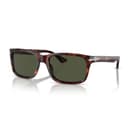
The Persol PO3048S is our best overall. Persol cuts its frames from Italian acetate and hand-finishes them, and the difference shows in edge polish and the depth of the havana pattern. The shape is a restrained rectangle that suits round, oval and square faces, and it is offered with Persol’s crystal glass lens, which holds up to a decade of being put down on tables better than plastic. Two honest cons: it is the most expensive frame here, and the 58 mm eye size means it runs large and classic — check it against a narrow face. Our Persol review and Ray-Ban vs Persol both cover the brand in depth.
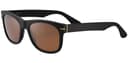
Best for driving is the Serengeti Foyt Large. Serengeti describes the frame as handcrafted eco-friendly acetate and the lens as a mineral photochromic in a category 2 to 3 range — it darkens in bright light and lightens when the light drops, which is the behavior you want on a route that runs in and out of shade. The matte black large fit suits round, oval and heart faces and broad heads. Two cons worth knowing: the classic Foyt mineral lens we track is not polarized, so if reflected glare off wet pavement is your specific problem the Persol or the Privé Revaux will do more about it; and photochromic lenses react to UV, which a windshield partly blocks — the AAO makes that point directly, and our photochromic guide explains what it means in a car.
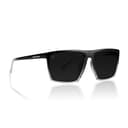
Best for a wider face is the NEVEN Doc Robbins, sold in a large/extra-large rectangle for heads that standard frames pinch, polarized, at a mid price. We flag one thing plainly: NEVEN does not publish the frame material for this model, and sibling models in the line state TR90 rather than acetate — so do not buy it as an acetate frame. Buy it because it is the one pick here built wide on purpose. Our NEVEN review and Knockaround vs NEVEN cover the brand.
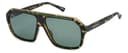
Best value is the Privé Revaux Clevelander: a stated cellulose acetate rectangle, polarized, 100% UV, in tortoise or plain, at a price that makes a second pair for the car an easy decision. It is the pick we would hand someone who wants to stop thinking about this. The finish is good for the money rather than designer, and no measurements are published.
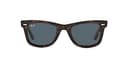
Best classic is the Ray-Ban Original Wayfarer RB2140, and it earns the slot on two specifics rather than reputation: it is thick cellulose acetate with layered tortoise on the havana rather than a printed pattern, and Ray-Ban publishes it in both a 50 mm and a 54 mm fitting with 150 mm temples, which is more size information than almost anything else at any price. The classic lens is not polarized, which is the con for a driver. Our 50 vs 54 comparison tells you which to order, and Wayfarer alternatives covers the cheaper routes to the shape.
How to choose between them
If you want one frame for the next decade and the budget is there, the Persol. If the problem is the drive, the Serengeti. If frames have always pinched, the NEVEN. If you want this solved today for not much money, the Privé Revaux. If you want a frame whose size you can check before you order, the Ray-Ban. Whichever you pick, confirm the listing states UV400 or 100% UV protection — the FDA is explicit that a dark lens is not evidence of it — and if the frame claims acetate at a budget price, run the checks in how to tell if frames are real acetate before you believe it.