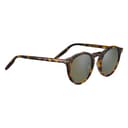
The one thing no alternative here replaces: photochromic glass
Start with the honest part. Not one frame on this page, other than the Serengeti itself, is photochromic.That is the single feature Serengeti sells that this market does not answer under $300, and if it is why you are shopping, the page you want is the brand’s own.
Photochromic means the lens changes darkness with ambient UV. Serengeti describes the mechanism rather than just the result: molecules in the lens expand under atmospheric UV radiation and darken the lens, then shrink and separate as light drops. The practical consequence is one pair for changing light — a tree-lined road, a cloudy morning that clears, a mountain road dropping in and out of shadow. A fixed category 3 lens cannot do that, and a fixed category 2 lens is a compromise in both directions. Our photochromic sunglasses guide explains how the chemistry works and where it falls short — notably behind a windscreen, because laminated glass blocks much of the UV the lens needs to activate.
There is a second honest caveat specific to this brand. Serengeti states its photochromic mineral lenses are activated in a hydrogen-fuelled Lehr furnace; that is a manufacturing claim we quote rather than verify, and we have not tested a lens.
What you can replace: mineral glass, and what it costs
The other half of the Serengeti argument is the substrate, and this one does have answers under $200.
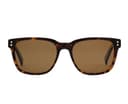
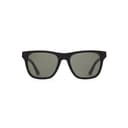
Mineral glass resists scratches far better than any plastic lens, holds its optical surface over years rather than months, and has a different, flatter clarity that people who switch to it rarely want to give up. What it costs you is weight, and the shatter risk that puts glass out of sport and out of most safety-critical use. Two picks here have it: the OTIS Test of Time X, which OTIS states at 100% UVA/UVB, and the OTIS Guilt Trip X, stated polarized with 100% UVA/UVB and filter category 3— the only non-Serengeti pick on this page that publishes a category figure at all, which makes it the closest numerical match to a Serengeti lens here.
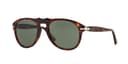
The third glass pick is a different argument entirely. The Persol 649 carries crystal (mineral glass) lenses in an acetate frame handmade in Italy, at a published 54-21 fitting with 140 mm temples, and Persol dates the model to 1957. It costs more than the Serengeti Raffaele in some colorways and it is not polarizedin this one. It is here because if your reason for looking at Serengeti was “Italian-made acetate with a glass lens and a real history”, Persol is the other brand that sentence describes. Our Serengeti vs Persol comparison settles that choice properly, and glass lens sunglasses ranks the whole category.
Filter categories: the number Serengeti publishes and nobody else does
This is the most useful thing on Serengeti’s product pages and it deserves explaining rather than listing. Lens darkness is graded 0 to 4 by how much visible light passes: category 0 passes 80–100%, category 1 passes 43–80%, category 2 passes 18–43%, category 3 passes 8–18% and category 4 passes 3–8%.
So “category 3” on the Raffaele means a dark general-purpose lens, and “category 2 to 3” on the Foyt means a photochromic lens whose range crosses the boundary between medium and dark — which is exactly the information you need to decide whether one pair can cover your week. Two practical notes: category 4 is not legal for driving anywhere we are aware of, and a category 3 lens of any colour is unsuitable for twilight or night driving. Our filter categories guide and night driving guide cover that.
And the symmetry, stated plainly: of the four non-Serengeti picks here, only the OTIS Guilt Trip X publishes a category figure. The Persol, the Test of Time and the Gleyemor publish a UV claim and nothing about darkness. If comparable darkness numbers are what you value most about Serengeti, that is a real reason to stay with the brand.
Price, and the two honest budget answers
Serengeti sits at about $300 for the Foyt Large and $320 for the Raffaele in the colorways we track, and Serengeti’s own page for the Joan states $350 before discounts. There are two defensible ways to spend less.
Spend half and keep the glass.The two OTIS frames do that: mineral glass, stated eco-acetate frames, published lens widths, at roughly $146 and $171. You give up photochromic behaviour, the 555 nm tuning and the brand’s lifetime defects guarantee. That is the trade this page exists to describe.
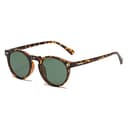
Spend a twentieth and change the question.At about $14, the Gleyemor Vintage Round states cellulose acetate, polarized and UV400. It has a plastic lens, no category figure, no published measurement and no service path. It is not a Serengeti alternative in any technical sense — it is an admission that for a frame you will lose on a beach, the $14 pair with a stated UV claim is the rational purchase and the $320 pair is not. See affordable acetate sunglasses if that is the honest answer for you.
Who should stay with Serengeti
Anyone who drives in changing light. A photochromic mineral lens with a stated category range is the correct specification for that, and nothing on this page replaces it. Note the windscreen caveat above.
Anyone who wants the darkness number. Serengeti publishes it per model; most of this market does not. That is a legitimate thing to value and we cannot invent category figures sellers have not stated.
Anyone who values the lifetime defects guarantee. Read the terms: Serengeti states the guarantee covers manufacturing defects for the lifetime of the product and excludes scratches and breakage from abuse. On a glass lens, that exclusion is the one that matters, so treat it as cover against a bad frame rather than against a dropped pair.
For the brand on its own terms, our Serengeti review goes through what the company publishes model by model, including the metal frames we rule out as off-material for an acetate site.