What you are actually comparing
A direct-to-consumer eyewear price is a bundle, and the bundle is the reason the comparison confuses people. Separate it into four parts and the decision gets easy.
1. The frame. Warby Parker describes its acetate frames as hand-polished cellulose acetate. That is the same material class as every pick below, and at the $95 entry point you are in the same manufacturing tier as a good marketplace acetate frame rather than above it. This is the part of the bundle a cheaper frame genuinely replaces.
2. The lens. UV-blocking with a scratch-resistant coating is included; polarization is an add-on priced at $65 on non-Sport frames as of our access date. Every single pick on this page is already polarized and states UV400 or 100% UV protection. That is the clearest arithmetic on this page: the polarization upgrade alone costs more than two of these frames. Our guide to polarized vs non-polarized covers whether you want it, and how to check UV protection covers reading the figure off any listing.
3. The service. Free 30-day returns and free scratched-lens replacement are real value and no marketplace seller matches them. A frame you can return easily is also a frame you can buy without knowing your size, which matters more than people expect — most sunglasses returns are fit, not taste. If you are unsure of your measurements, read sunglasses sizing before you buy anything, from anyone.
4. Prescription capability. This is the one that ends the comparison for some readers. Warby Parker prices single-vision prescription sunglass lenses from $195. Nothing on a marketplace does prescription at all, so if that is your requirement the saving on this page is not available to you at any level of compromise.
The $95 question, answered plainly
At $95 you are buying a competent hand-polished acetate frame with UV lenses and a generous service wrapper. At $30 to $40 you are buying a competent acetate frame with polarized UV400 lenses and no wrapper at all. At roughly $100 to $150 — the RAEN tier — you are buying a noticeably better-finished frame in stated Italian acetate, also with no wrapper.
So the decision is not really about frame quality. It is about whether the returns policy and the lens-replacement promise are worth the gap to you. For a first pair, or if you have never worn an acetate frame and do not know your size, they often are. For a second pair, a beach pair, a car pair, or a specific shape you already know suits you, they usually are not — and that is exactly the case our everyday sunglasses roundup is built around.
Who each pick is for
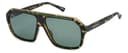
Privé Revaux Clevelander — best overall alternative. A polarized cellulose acetate rectangle with 100% UV protection stated on the listing. It is the closest thing here to the default Warby Parker purchase: a neutral everyday shape that suits most faces and does not read cheap. The gaps: no published measurements, a plastic lens that will scratch sooner than glass, and no service net if it does. Our Privé Revaux review covers the brand.
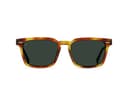
RAEN Adin 54 — best at the same price. If you were ready to spend around a hundred dollars anyway, this is where that money goes furthest: RAEN states Italian cellulose acetate and 100% UV protection, and the Adin is a clean 54 mm round with designer-level edge work. You give up the service wrapper and you get a materially better frame. Honest gaps: plastic lens, no published polarization figure on this colourway, and a round front that suits square and oval faces best. Our RAEN review has more.
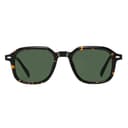
SOJOS Acetate Rectangle — best budget. Handmade acetate, polarized, UV400 stated, in a versatile rectangle, for roughly a third of the entry price. This is the frame that makes the arithmetic above concrete — it costs less than the polarization add-on it already includes. What is missing: measurements, edge polish, and hinge feel. Our SOJOS review is honest about the brand’s ceiling.
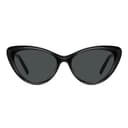
SOJOS Acetate Cat-Eye — best cat-eye. The same material and lens claims in an upswept front, for people whose Warby Parker shortlist was the cat-eye page rather than the rectangles. It is the shape that flatters heart and square faces most reliably. Same honest gaps as its sibling. Our cat-eye style guide covers the shape and square faces covers the fit logic.
Earthly Ones Polarized Round — best bio-acetate. If the reason you were shopping a mission-led brand is the environmental story, this is the pick whose listing actually states a bio-acetate frame, polarized lenses and UV400, at a budget price. Read our bio-acetate explainer first: the biodegradability claims attached to bio-acetate are measured under industrial composting conditions (ISO 14855-2), which is not the same as breaking down in a landfill, and we would rather you buy it knowing that.
What we left off, and why
We left off the other direct-to-consumer eyewear brands people cross-shop here. Not because they are bad — because we have no listing to read specs from, and a comparison table assembled from reputation is exactly the thing this site exists not to publish. We also made no claim about Warby Parker’s frame quality relative to these picks beyond what both sides publish, because we have not handled a Warby Parker frame. The prices and policies quoted above are the ones on its own pages as of our access date and they can change; check them before you decide.
And we left off the sub-$20 tier entirely. At that price the listing almost never states a frame material, which means the thing you are substituting for — an acetate frame — is no longer what you are buying. Our affordable acetate roundup ranks the budget band on exactly that test, and acetate vs plastic explains what the swap actually costs you in service life.