Acetate Club

Best Meller Alternatives

Meller's own product pages name bio-acetate on one model, Bio-based G850 on another, cellulose propionate temples on a third and "45% bio-based" on a fourth. Five frames that name one thing and mean it.

By Stephen V.Last updated How we pick

Our pick is the Earthly Ones Polarized Round in eco bio-acetate at about $40: the closest honest answer to a Meller Kubu, in the same round silhouette, with the listing stating Eco Bio-Acetate, polarized lenses and UV400 — one material, named once. It is for someone who wants the bio-acetate round frame Meller sells, at a price Meller does not reach in the US. The budget pick is the Gleyemor Vintage Round in tortoise at about $14, which states ordinary cellulose acetate rather than a bio version — the right buy if the shape was the point and the sustainability claim was not.

Credit where it is due. Meller is a design-led brand doing the eco angle more seriously than most, and its lens specification is stated clearly: a UV400 protection filter that Meller says blocks 100% of ultraviolet radiation and is approved by the European Union, with product pages labelling lenses “UV400 — Category 3” and listing them as Polarized TACwith antiscratch and superhydrophobic coatings. Publishing a filter category alongside the UV figure is more than most brands at any price do. Meller’s FAQ also states a lifetime warranty on all glasses and chains, covering soldering points that fail from manufacturing defects, with lens scratches and broken lenses excluded.

The reason this page exists is the frame. Across four Meller product pages read on the access date, the material is named four different ways: the Deka page states high-quality bio-acetate, the Eye page lists Material: Bio Acetate, the Ayo page lists Bio-based G850, the Neo page lists Bio-based G850 with cellulose propionate temples, and the Oba page states a frame made from 45% bio-based materials. Bio-acetate is presented as a premium line rather than the line-wide material. If you assumed every Meller frame was bio-acetate, that is the finding. Every pick below states one material, and the cards quote the seller’s exact wording.

How this is funded: we earn a commission if you buy through our links, at no extra cost to you. It never changes which product we recommend, and we’ll tell you when we’d skip one. Full disclosure.

Quick picks

Ranked on frame material, fit and value. Select a row to jump to the full write-up. We have not handled these frames in person — here is exactly what we do instead.

#ProductBest forPrice
1
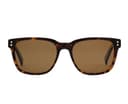
Earthly Ones Polarized Round (Eco Bio-Acetate)

Earthly Ones Polarized Round (Eco Bio-Acetate)

The cheapest frame we could find whose listing actually says bio-acetate rather than gesturing at 'eco'. Polarized, UV400 stated, in a soft round shape — and at a price where you are not paying a large premium for the material claim, which is the honest reason to start here.

Best overall alternative
$39.99 · View on Amazon

Price as of November 22, 2026. #ad How we’re funded

2
Earthly Ones Polarized Square (Eco Bio-Acetate)

Earthly Ones Polarized Square (Eco Bio-Acetate)

The same bio-acetate claim and the same price as the round, in the shape that flatters more people. If you want a bio-acetate frame you will actually reach for every day rather than one that makes a statement, this is the one to take.

Best square
$39.99 · View on Amazon

Price as of November 22, 2026. #ad How we’re funded

3
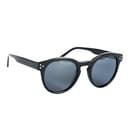
OTIS Test of Time X Eco (Havana Brown)

OTIS Test of Time X Eco (Havana Brown)

A genuinely good frame with a sustainability claim we would not repeat without a caveat. OTIS builds this on its eco-acetate with polarized mineral glass lenses, which is a real specification advantage. But OTIS states the frames are biodegradable in a landfill environment, and it publishes no standard, no figure and no lab to support that.

Best step up
$145.60 · View on Amazon

Price as of November 22, 2026. #ad How we’re funded

4
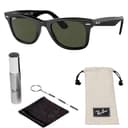
Ray-Ban Original Wayfarer Bio-Based RB2140

Ray-Ban Original Wayfarer Bio-Based RB2140

The only bio-acetate frame here that puts a measured number behind the claim. Ray-Ban states 67% bio-based carbon content calculated to ASTM D6866 — an actual standard, an actual figure — on the reference acetate shape. You pay Ray-Ban money for it, and the number is about feedstock, not biodegradability.

Best published bio-based figure
$166.50 · View on Amazon

$222.0025% off

Price as of November 22, 2026. #ad How we’re funded

5
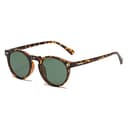
Gleyemor Vintage Round (Tortoise Acetate)

Gleyemor Vintage Round (Tortoise Acetate)

The same hand-crafted acetate round in tortoise with a G15 green lens — the most classic pairing in eyewear. It isn't a Persol and doesn't pretend to be, but a stated-acetate frame in a proper vintage colorway at this price is a lot of frame for the money.

Best budget
$11.19 · View on Amazon

$13.9920% off

Price as of November 22, 2026. #ad How we’re funded

The picks in full

#1Best overall alternative

Earthly Ones Polarized Round (Eco Bio-Acetate)

The cheapest frame we could find whose listing actually says bio-acetate rather than gesturing at 'eco'. Polarized, UV400 stated, in a soft round shape — and at a price where you are not paying a large premium for the material claim, which is the honest reason to start here.

Strengths

  • The listing states bio-acetate explicitly, not the vaguer 'eco' wording most budget frames use
  • Polarized and UV400 both stated at well under $50
  • Soft round shape suits square and angular faces

Who should skip it

  • No measurements published, so buying blind is a real risk if your face is unusually wide or narrow
  • Bio-acetate content is not quantified and no standard is cited — the claim is the seller's word
  • A new Amazon-only brand with no independent brand site to check against
Frame materialBio-acetate (per the listing: “Eco Bio-Acetate”)
Frame shapeRound
Lens protectionUV400
PolarizedYes
Lens widthNot published
Suits face shapesSquare, Oval, Heart

Spec note. The listing names the material but attaches no percentage and no test standard to it. That is the norm at this price and the reason we rank a frame that publishes a figure above one that does not.

Specs and material read from the product listing, on September 3, 2026. “Not published” means the seller does not state that figure.

#2Best square

Earthly Ones Polarized Square (Eco Bio-Acetate)

The same bio-acetate claim and the same price as the round, in the shape that flatters more people. If you want a bio-acetate frame you will actually reach for every day rather than one that makes a statement, this is the one to take.

Strengths

  • Square front adds definition a round face lacks, and stays neutral enough for daily wear
  • Bio-acetate stated on the listing, with polarized UV400 lenses
  • Same price as the round, so the choice is purely shape

Who should skip it

  • No published measurements, same as its sibling
  • No quantified bio-content and no cited standard
  • One size only, so very small and very wide faces are a gamble
Frame materialBio-acetate (per the listing: “Eco Bio-Acetate”)
Frame shapeSquare
Lens protectionUV400
PolarizedYes
Lens widthNot published
Suits face shapesRound, Oval, Heart

Spec note. Identical material wording and price to the round in the same range; the only published difference between them is the silhouette.

Specs and material read from the product listing, on September 3, 2026. “Not published” means the seller does not state that figure.

#3Best step up

OTIS Test of Time X Eco (Havana Brown)

A genuinely good frame with a sustainability claim we would not repeat without a caveat. OTIS builds this on its eco-acetate with polarized mineral glass lenses, which is a real specification advantage. But OTIS states the frames are biodegradable in a landfill environment, and it publishes no standard, no figure and no lab to support that.

Strengths

  • Mineral glass lenses, which resist scratching far better than plastic over years of wear
  • Polarized, and OTIS states its lenses block 100% of UVA and UVB
  • 70s-leaning square shape with a genuine point of view, at well under designer money

Who should skip it

  • OTIS claims the eco-acetate is biodegradable in a LANDFILL environment; the published test basis for acetate biodegradation is industrial composting, and OTIS cites no standard, figure or lab
  • Mineral glass is heavier on the nose and less impact-resistant than plastic
  • Sold through third-party sellers, so stock and price move more than a first-party listing
Frame materialEco-acetate (OTIS states it is derived from cotton seeds and plant matter)
Frame shapeSquare
Lens protection100% UVA/UVB (per OTIS)
PolarizedYes
Lens width55 mm
Suits face shapesOval, Round, Heart

Spec note. OTIS lists the Test of Time X at 55-18-140. Its lenses are mineral glass rather than plastic — OTIS's own argument being that glass is sourced from sand and soda ash and is endlessly recyclable, which is a separate sustainability claim from the frame material.

Specs and material read from the product listing, on September 3, 2026. “Not published” means the seller does not state that figure.

#4Best published bio-based figure

Ray-Ban Original Wayfarer Bio-Based RB2140

The only bio-acetate frame here that puts a measured number behind the claim. Ray-Ban states 67% bio-based carbon content calculated to ASTM D6866 — an actual standard, an actual figure — on the reference acetate shape. You pay Ray-Ban money for it, and the number is about feedstock, not biodegradability.

Strengths

  • 67% bio-based carbon content stated by Ray-Ban and calculated to ASTM D6866 — a real standard, not a slogan
  • The reference Wayfarer shape and full Ray-Ban serviceability, unchanged by the material swap
  • 100% UV protection stated, same as the standard RB2140

Who should skip it

  • Bio-based carbon content is a feedstock measure — it is NOT a biodegradability claim, and Ray-Ban does not make one
  • By far the most expensive way to buy bio-acetate here
  • This listing does not state whether the pair is polarized; check the variant before you buy
Frame materialBio-based cellulose acetate (Ray-Ban states 67% bio-based carbon content, ASTM D6866)
Frame shapeWayfarer
Lens protection100% UV protection (per Ray-Ban)
PolarizedNot published
Lens widthNot published
Suits face shapesOval, Round, Heart

Spec note. Ray-Ban describes its bio-acetate as cellulose acetate from cotton or wood pulp combined with a bio-based plasticizer made from renewable sources such as cereals, beet or sugar cane — the plasticizer is the part that changes. Ray-Ban's own bio-based RB2140 pages list a 50-22 fitting; this listing does not state the size it ships.

Specs and material read from the product listing, on September 3, 2026. “Not published” means the seller does not state that figure.

#5Best budget

Gleyemor Vintage Round (Tortoise Acetate)

The same hand-crafted acetate round in tortoise with a G15 green lens — the most classic pairing in eyewear. It isn't a Persol and doesn't pretend to be, but a stated-acetate frame in a proper vintage colorway at this price is a lot of frame for the money.

Strengths

  • Stated hand-crafted acetate in the classic tortoise and G15 green combination
  • Polarized and UV400 both stated at the very bottom of the price range
  • The soft vintage-round shape softens a square or angular face

Who should skip it

  • Color depth looks flat next to a mid or premium acetate — expect value, not richness
  • No published measurements, so check the fit if you have a narrow face
Frame materialCellulose acetate (hand-crafted, per listing)
Frame shapeRound
Lens protectionUV400
PolarizedYes
Lens widthNot published
Suits face shapesSquare, Oval

Spec note. A G15 lens is the gray-green tint Ray-Ban made standard; it darkens the scene without shifting colors much, which is why it pairs so consistently with tortoise frames.

Specs and material read from the product listing, on August 19, 2026. “Not published” means the seller does not state that figure.

Four materials, four different things — and why it matters

This is not pedantry. The four names on Meller’s own pages describe materials with genuinely different properties, and one of them is not acetate at all.

Bio-acetate is cellulose acetate in which some petroleum-derived plasticizer is replaced with a bio-based one. It cuts, polishes and heat-adjusts like ordinary acetate, because it essentially is ordinary acetate with a different plasticizer. See what bio-acetate is and bio-acetate vs acetate.

Cellulose propionate is a different cellulose ester. It is lighter and more impact-resistant than acetate and is injection-moulded rather than cut from sheet, which means it does not take the deep layered colour acetate does and behaves differently under an optician’s heater. It is a perfectly good frame material; it is not the same purchase. Our acetate vs propionate page sets the two side by side.

“Bio-based G850”is a trade designation rather than a generic material name, so it tells you a supplier grade and not a chemistry. One third-party listing describes a Meller frame as a polymer derived from castor plant seeds, which is a bio-based polyamide family rather than a cellulose one — a different material class again.

“45% bio-based materials” is a percentage without a named standard, which is the weakest of the four claims. Compare it with the Ray-Ban pick on this page, which states 67% bio-based carbon content calculated to ASTM D6866— a figure and a method. That is what a substantiated version of the same claim looks like, and it is why that frame is on the page despite costing five times a Meller.

One thing none of these claims is: biodegradability. Bio-based carbon content is a feedstock measure. Meller does not claim its frames break down, Ray-Ban does not either, and neither do we — see are acetate sunglasses eco-friendly? and bio-acetate vs recycled plastic.

What the alternatives match, and what they do not

They match the material statement. Both Earthly Ones picks state Eco Bio-Acetate on the frame, once, unambiguously. OTIS states an eco-acetate it describes as derived from cotton seeds and plant matter. Ray-Ban states cellulose acetate from cotton or wood pulp with a bio-based plasticizer made from renewable sources such as cereals, beet or sugar cane. Those are three different levels of precision and all three are single claims.

They mostly match the lens claim. Four of the five picks state polarized lenses and a UV figure, which is the Meller specification minus the coatings. What they do not match is the filter category: Meller labels its lenses Category 3, and of our five picks only the OTIS Test of Time X states a category figure. If comparable darkness numbers are part of why you were looking at Meller, that is a real reason to stay.

They do not match the coatings as stated. Meller lists antiscratch and superhydrophobic treatments on its TAC lenses. None of the five picks states a coating specification at all. We are not going to infer one from a product photo.

And they do not match the warranty.Meller’s stated lifetime cover on soldering points from manufacturing defects is unusual at this money. Read the exclusions — lens scratches and broken lenses are out, and a claim needs Customer Service contact, proof of purchase and a photo — but a budget marketplace frame typically offers nothing comparable.

Price: the part that is genuinely hard to compare

Meller does not publish a line-wide price list, and what it sells for depends heavily on retailer and region. On the access date the Kubu, Shipo and Nayah were each listed at 98 CAD at a Canadian retailer and the Dashi at £49.00at a UK one. Our own registry entry for the Meller Kubu carries no live US price at all, because Meller sells mostly direct and its US marketplace stock is thin — which is the practical reason a lot of people end up on a page like this one.

Against that, the two Earthly Ones picks sit at about $40 with a live US price and a stated bio-acetate frame, which is the clean substitution. The OTIS at about $146 is the step up — mineral glass, a published 55 mm lens width, a stated filter category — and the Ray-Ban bio-based RB2140 at about $222 is the expensive way to buy a substantiated figure. Every number above is read live from the retailer and carries its own date stamp on the button; none is typed into the page.

Who should stay with Meller

Anyone buying the specific Meller frame they have already tried on. Meller’s silhouettes are its own and we are not pretending a $40 round is the same object. If the Kubu fits your face, buy the Kubu.

Anyone who values the stated category and coatings. UV400 plus Category 3 plus antiscratch and superhydrophobic treatments, stated together, is a fuller lens specification than four of our five picks publish.

Anyone in Europe.Meller’s pricing and availability are built for that market, and the comparison on this page is a US-price comparison.

What we cannot tell you — because no page we read states it — is whether Meller’s bio-acetate resists yellowing, which is the standing question about any acetate. Our do acetate frames turn yellow? page explains what actually causes it. And we found no independent lens test results for the brand, so every lens figure on this page is the company’s own, quoted as published. For the category rather than the brand, see best bio-acetate sunglasses and sustainable acetate sunglasses.
Frequently asked questions

What are the best Meller alternatives?

The Earthly Ones Polarized Round at about $40 is our pick: the same round silhouette as a Meller Kubu, with the listing stating Eco Bio-Acetate, polarized lenses and UV400 - one material, named once. The Earthly Ones Polarized Square covers the square shape, the OTIS Test of Time X Eco is the step up with a mineral glass lens and a stated filter category, and the bio-based Ray-Ban RB2140 is the substantiated-claim option at 67% bio-based carbon content to ASTM D6866. The Gleyemor Vintage Round at about $14 is the budget pick.

Are Meller sunglasses actually bio-acetate?

Some models are, and the brand does not claim it line-wide. Across four Meller product pages read on the access date the frame material is named four ways: high-quality bio-acetate on the Deka, Material: Bio Acetate on the Eye, Bio-based G850 on the Ayo, Bio-based G850 with cellulose propionate temples on the Neo, and 45% bio-based materials on the Oba. Bio-acetate is presented as a premium line rather than the standard material, so the model matters.

What is the difference between bio-acetate and cellulose propionate?

Bio-acetate is cellulose acetate with some petroleum-derived plasticizer replaced by a bio-based one; it cuts, polishes and heat-adjusts like ordinary acetate because it essentially is ordinary acetate. Cellulose propionate is a different cellulose ester - lighter and more impact-resistant, but injection-moulded rather than cut from sheet, so it does not take the deep layered colour acetate does and behaves differently under an optician's heater. Both are good frame materials; they are not the same purchase.

Does bio-acetate biodegrade?

Not as a consequence of being bio-based, and no brand on this page claims it does. Bio-based content is a feedstock measure - it describes where the carbon came from, not what happens at end of life. Ray-Ban states 67% bio-based carbon content calculated to ASTM D6866 and makes no biodegradability claim alongside it, and Meller's pages do not make one either. Breaking cellulose acetate down generally requires industrial composting conditions rather than a home bin.

What lenses does Meller use?

Meller states a UV400 protection filter that it says blocks 100% of ultraviolet radiation and is approved by the European Union, with product pages labelling lenses "UV400 - Category 3" and listing them as Polarized TAC with antiscratch and superhydrophobic coatings. Category 3 means a dark general-purpose lens passing 8 to 18% of visible light. Publishing a category figure alongside a UV figure is more than most brands do, and only one of our five picks matches it.

Does Meller have a lifetime warranty?

Meller's FAQ states a lifetime warranty on all its glasses and chains, covering soldering points that fail due to manufacturing defects. Lens scratches and broken lenses are excluded, and a claim requires contacting Customer Service with the defective product identified, proof of purchase and a photo of the product. Read that as cover against a defective frame rather than against an accident - which is the same shape of cover Serengeti and most eyewear houses offer.

Sources

  • Meller — sunglasses, FAQ and product pages — Meller's own pages, reached by domain-restricted search (meller.us returns nothing to our method; mellerbrand.com does). THE FRAME MATERIAL IS NOT ONE MATERIAL: the Deka page states high-quality bio-acetate, the Eye page lists Material: Bio Acetate, the Ayo page lists Material: Bio-based G850, the Neo page lists Bio-based G850 with CELLULOSE PROPIONATE TEMPLES, and the Oba page states the frame is made from 45% bio-based materials. Bio-acetate is presented as a premium line rather than the line-wide material. LENSES: Meller states a UV400 protection filter that protects against 100% of ultraviolet radiation and is approved by the European Union, with product pages labelling lenses "UV400 - Category 3"; lenses are listed as Polarized TAC with antiscratch and superhydrophobic coatings, and Meller describes the polarized filter as reducing reflections from sun on water, snow and metallic surfaces. WARRANTY: the FAQ states a lifetime warranty on all glasses and chains covering soldering points that fail from manufacturing defects, excluding lens scratches and broken lenses, with claims requiring Customer Service contact, proof of purchase and a photo of the product. Prices are not published as a line-wide list and vary by retailer and region: on the access date the Kubu, Shipo and Nayah were each listed at 98 CAD at Simons (Canada) and the Dashi at GBP 49.00 at Aspiga (UK). A third-party listing describes the Shipo frame as bio-acetate (cellulose propionate) from renewable plant sources with bio-based plasticizers, and the Nayah as a polymer derived from castor plant seeds. No independent lens test results were found, and no page read states yellowing resistance for the bio-acetate (accessed November 21, 2026)
  • Mazzucchelli 1849 — M49 bioplastic (bio-based cellulose acetate) — Manufacturer detail on bio-acetate: 68% bio-based content, >90% biodegradation after 115 days per ISO 14855-2:2018 (accessed July 21, 2026)
  • Daicel Corporation (Material SBU) — Cellulose Acetate — Manufacturer detail on the raw material: a resin derived from cellulose obtained from wood pulp or cotton; products made from it resist sunlight and particularly UV radiation and do not easily degrade, making them suitable for long-term use; it is inherently flame-retardant with high thermal stability, softening and carbonizing at approximately 230–300°C; and Daicel's cellulose acetate products are certified under the Japan BioPlastics Association's "Biomass Plastic" and "Biodegradable Plastic" schemes, with some certifications applying only to specific grades (accessed October 17, 2026)
  • Daicel Corporation — investor glossary: acetate plastic (Acety®) — Daicel's own definition: acetate plastic is made mainly from cellulose acetate and has excellent transparency, toughness and moisture absorption properties, as well as color, gloss, pattern and texture not found in other plastics; it is used in a variety of products, including eyeglass frames, toys and writing instruments; and it is marketed under the trademark Acety® by group company Daicel Miraizu. The company also records that it commercialized cellulose acetate to replace highly flammable celluloid (cellulose nitrate) (accessed October 17, 2026)
  • ISO 12312-1:2022 — Eye and face protection — Sunglasses for general use — The international standard for general-use sunglasses: UV filtering, filter categories and transmittance (accessed July 21, 2026)
  • ISO 14855-2:2018 — Aerobic biodegradability of plastics under controlled composting — The industrial-composting biodegradation test method bio-acetate claims are measured against (accessed July 21, 2026)
  • The College of Optometrists — Tints and driving (BS EN ISO 12312-1 filter categories) — Category bands: 0 = 80-100% transmission, 1 = 43-80%, 2 = 18-43%, 3 = 8-18%, 4 = 3-8%; filters for road use shall be categories 0-3; under 75% transmittance is unsuitable for twilight or night driving (accessed September 21, 2026)
  • American Academy of Ophthalmology — Recommended Types of Sunglasses — AAO on choosing sunglasses that block 99–100% of UV-A and UV-B (UV400) (accessed July 21, 2026)

Keep reading