SOJOS vs CARFIA
The two budget brands that actually use acetate, at almost identical money. What each one publishes, where the ranges genuinely diverge, and which to buy.
How this is funded:we earn a commission if you buy through our links, at no extra cost to you. It never changes which product we recommend, and we’ll tell you when we’d skip one. Full disclosure.
This is the budget-acetate version of a question this site has already answered at the top of the market. Search “acetate sunglasses” on Amazon under $40 and two names come back more than any others, both making the same unusual promise for the price: genuine cellulose acetate, not the injection-molded plastic that dominates the band, with polarized UV400 lenses on top. They cost roughly the same. They are not the same purchase.
We do not own these frames and we do not run lab tests, so this is built the way every brand page here is built — from what each maker publishes on its own site, what the listings state, and honest reasoning about fit and value. Read that way, the two brands separate along a line that has little to do with quality and a lot to do with what you are shopping for.
The short version
| Frame material | Both state cellulose acetate on the frames here. SOJOS also runs a large TR90 line; CARFIA states Italian acetate. |
|---|---|
| Range | SOJOS is broader — cat-eye, square, round, aviator. CARFIA is narrower and vintage-led. |
| Published specs | SOJOS: full dimension block, no weight. CARFIA: weight in grams, dimensions inconsistently filled in. |
| Fit | SOJOS runs largely one-size. CARFIA has a frame genuinely cut for a small face. |
| Lenses | Polarized, stated UV400 on both. A tie, and a meaningful one. |
| Warranty | One year on both. Returns: 30 days SOJOS, 14 days CARFIA, on their own sites. |
| Price | Same band, and both cheaper through Amazon than direct. Live prices are on the cards below. |
Both are genuinely acetate. That is the start, not the finish
The first question people ask about a $30 frame is whether the material claim is real. On these two, it is. SOJOS states “Frame Material: Acetate” in the specification block on its acetate product pages, and CARFIA describes its frames as hand-polished cellulose acetate on its own site. Neither is passing off molded plastic, which is more than can be said for a lot of what sits alongside them in the same search results.
That matters because acetate is not a marketing word. It is a material with properties you can feel: more weight in the hand, color that runs through the sheet rather than sitting on the surface, and a frame an optician can heat-adjust to your head instead of writing off. Our explainer on what acetate actually is covers why that is worth having at any price, and the five checks for real acetate covers how to confirm it once the box arrives.
The important caveat is brand-wide rather than frame-specific, and it lands entirely on one side. SOJOS sells far more than acetate.Its own site lists a large TR90 line across squares, rounds, ovals and clip-ons, and its care guidance addresses acetate frames and metal frames separately. TR90 is a nylon — light, flexible, genuinely fine for a knockabout frame, and not acetate. It is easy to buy the wrong one from a thumbnail, so read the material line before you check out. Our acetate vs TR90 comparison lays out what you would be giving up, and our SOJOS reviewgoes further into which line is which. CARFIA’s range is more consistently acetate, so the same mistake is harder to make.
What each brand actually publishes
This is the most useful thing we found, and it is not visible from a marketplace listing. Go to each brand’s own product pages and they publish different halves of the same spec sheet.
SOJOS gives you the numbers that decide fit. Every acetate product page we checked carried a complete, populated block: frame width, temple length, bridge width, lens width, lens height, frame material and lens type. One acetate cat-eye lists a 143 mm frame width, 145 mm temples, a 15 mm bridge and a 59 mm lens; another lists 147 / 145 / 19 / 50. Those are the figures that tell you whether a frame will sit on your face, and they are all there. What SOJOS does not publish anywhere we could find is weight.
CARFIA gives you the number SOJOS withholds, and is less reliable about the rest. Its product pages state a frame weight in grams — 28 g on one frame, 30 g on two others — and print dimensions in both millimeters and inches, which is a genuinely thoughtful touch for anyone measuring against a frame they already own. But the block is not consistently filled in: on at least one CARFIA sunglasses listing, every dimension field reads 0 mm while the weight and the UV rating are present.
The practical upshot: if you have an unusual face size and you are buying blind, SOJOS is the safer brand to shop, because the numbers you need are reliably there. If you care about how heavy a frame will feel, CARFIA is the only one of the two telling you. Either way, do the measuring before the choosing — our guide to reading sunglasses sizes explains what those figures mean and how to take them off a pair you already wear.
Range: broad versus specific
SOJOS covers more ground. The acetate line alone runs cat-eye, square, round and an acetate-bodied aviator, which means most people can find their shape without leaving the brand. Its cat-eyerange is the standout — both a sharp 90s-revival cut and a softened everyday version of the same idea, which is more nuance than the price band usually offers.
CARFIA does fewer things and does them with more of a point of view. The look is deliberately retro: keyhole bridges, double bridges, substantial fronts. Both are genuine period details rather than decoration, and they are the reason CARFIA earns a place in our vintage acetate roundup while most budget brands do not. If you want a frame that looks like it has a decade behind it, that is a real difference and not a marketing one.
So: if you already know the shape you want, check whether CARFIA makes it before anything else, because when it does the character is stronger. If you do not know the shape you want, start at SOJOS, where the odds of finding it are simply higher.
Fit is where CARFIA has something SOJOS does not
Most budget acetate runs medium-to-large in a single size, and that is the most common reason a cheap frame ends up in a drawer. It is not that the frame is bad. It is that it is 145 mm wide across a face that needs 130.
SOJOS is largely a one-size brand, which is fine for an average face and a real risk at either extreme. CARFIA makes a double-bridge frame cut for a small face— unusual in acetate at any price, because a small acetate frame is fiddlier to cut and sells to fewer people. If frames have always sat too wide on you, that frame is the answer on this page, and it is why CARFIA appears in our guide to sunglasses for small faces.
The flip side is honest and it is symmetrical: that same frame is too small for a medium or large face, and neither brand has a genuinely wide option. If you need width, read sunglasses for wide faces first, because the answer is probably not on this page at all.
Weight, and why you cannot compare it directly
CARFIA describes its frames as ultra-lightweight and publishes 28–30 g to back it up, which is genuinely light for acetate. It is tempting to read that as CARFIA being lighter than SOJOS. It is not evidence of that, because SOJOS publishes no weight at all— there is nothing to compare against, and we are not going to invent a number to fill the gap.
What can be said fairly: a substantial acetate frame is heavier than the wire frame it often imitates, both brands make substantial-looking frames, and 28–30 g sits at the comfortable end of the acetate range rather than the heavy end. If weight is the thing you are optimizing for, the honest recommendation is to look at TR90 instead of either — it is lighter than acetate by design, and the comparison explains what you trade for that.
Lenses and UV: a tie that matters
Both brands state polarized lenses with UV400 protection across the frames here, and CARFIA states 100 percent of UVA and UVB blocked. That is the whole story on eye protection, and it is worth being blunt about why: UV protection is a property of the lens, not of the price.A stated-UV400 frame at $30 protects your eyes as well as one at $300. Lens darkness is not the same thing and never has been — our UV400 explainer covers what the number means, and how to check a pair you already own covers verifying it.
Polarization is separate again, and it is a comfort feature rather than a safety one. Both brands polarize as standard here, which is more generous than several much-pricier frames on this site. If you are unsure whether you want it — and there are real cases where you do not, screens and some winter conditions among them — read polarized vs non-polarized before you decide.
The Italian-acetate and “zyl” language, read honestly
CARFIA’s copy leans on two words worth translating. It describes frames as cut and hand-finished from premium Italian zylacetate. Zyl is short for zylonite, an old trade name for the same cellulose acetate everyone else sells — it sounds like a different, more technical material and it is not one. Our zyl vs acetate explainer exists because the word appears constantly in optical listings and confuses people every time.
Italian acetate is the second one, and SOJOS uses it too on at least one round frame. At this price it describes the sheet stock a frame is cut from, not the multi-day hand-polishing a premium Italian maker adds afterward. That is a real distinction rather than a pedantic one: it is most of the gap between a $35 frame and a $300 one. Our Italian acetate explainer sets out what the phrase does and does not promise. Neither brand is lying; both are using industry language that reads richer than it is.
Price, warranty and where you buy
The two sit in the same band, and both are cheaper through Amazon than direct from the brand, sometimes by a wide margin on the same model. We are not writing prices into this paragraph because they move weekly; the live, dated prices are on the cards below.
Warranty is a tie. Both state one yearagainst defects in materials and workmanship on their own sites, with CARFIA excluding damage from accidents, negligence or improper care — standard terms, and not a reason to pick either.
Returns are not a tie. SOJOS allows a return or exchange within 30 days, though items bought from its sale page are excluded. CARFIA offers a 14-day fit-and-style guarantee, good for one exchange or refund, with original shipping non-refundable. On a frame you cannot try on first, a doubled window is a genuine advantage.
The caveat swallows most of that, though, and it is the practical reason our links go where they do: buy through Amazon and Amazon’s returns policy governs instead of the brand’s. That is usually the most forgiving of the three, and it is the single best argument for buying either of these frames from a marketplace rather than direct. Both brands also sell prescription lenses on their own sites, where the terms tighten again — SOJOS does not accept returns or exchanges on prescription lenses at all. Our guide to prescription acetate sunglasses covers why that route needs more care.
One care note applies to both and is easy to miss: SOJOS warns that acetate is temperature-sensitive and can deform if left in direct sunlight. That is true of all acetate, not just theirs. A frame left on a car dashboard is the most common way a budget acetate frame dies, and a minute of frame care prevents it.
Where each one wins
SOJOS wins on range and on numbers. More shapes, a genuinely strong cat-eye line, a longer returns window, and a populated measurement block on every product page we checked. If you are buying your first real acetate frame and you are not sure what suits you, the odds are better here.
CARFIA wins on character and on small faces. Keyhole and double bridges, a published weight, and one frame cut for a face most of the market ignores. If you know you want a retro frame, or bigger frames have always sat too wide, this is the brand.
Neither wins on eye protection, warranty or finish.Both state UV400, both warrant a year, and both are good-for-the-price rather than designer-grade — the layered color depth and hand-polished edge of a premium frame are exactly what the price gap buys, and no amount of choosing between these two produces it.
So which one?
Take SOJOS if you want the widest choice of shapes, if you are shopping a cat-eye, or if you have an unusual face size and need published measurements to buy with confidence. Check the material line first, because the TR90 frames sit right next to the acetate ones. Full detail in our SOJOS review.
Take CARFIA if you want vintage detailing done properly at budget money, if you want a stated weight before you commit, or if you have a small face and have given up on frames fitting. Full detail in our CARFIA review.
Take neitherif what you actually want is the finish. Both of these are honest frames at honest prices, and neither will ever have the hand-polished edges of a frame costing several times more. If that is what you are after, buying one good frame beats cycling through cheap ones — our designer acetate roundup is the other end of the same shelf, and are expensive sunglasses worth it works through when the step up is worth making. And if the goal is simply the most acetate for the least money, our affordable acetate roundup ranks both of these brands against the rest of the field.
Both brands also have a head-to-head against the benchmark, if that is the comparison behind the comparison: SOJOS vs Ray-Ban and CARFIA vs Ray-Ban. The short version of both is that the budget frame wins on lenses and the icon wins on published sizing and serviceability — but the arguments differ, because CARFIA’s line includes a genuinely small-face frame that Ray-Ban does not really answer.
Two from each, and what each one is for
Not a ranking - a pair from each brand along the same two axes. One safe everyday frame, one frame that shows what the brand is actually for. All four were confirmed listed and in stock before this page went up; live prices are on the cards.
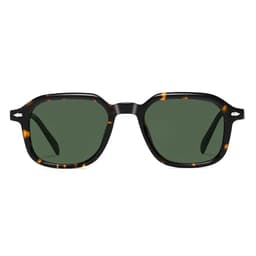
SOJOS Acetate Rectangle (Handmade, Polarized)
The SOJOS everyday pick. A polarized acetate square from the brand's acetate line - the shape that flatters the widest range of faces, and the one to buy if you want a first acetate frame you will not think about again.
Price as of October 15, 2026. #ad How we’re funded
Frame material: Cellulose acetate. Specs read from the listing on July 21, 2026.
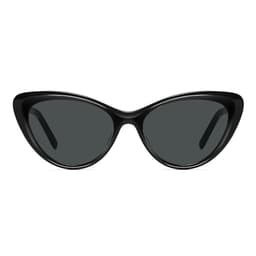
SOJOS Acetate Cat-Eye (Handmade, Polarized)
The SOJOS specialty. Cat-eye is the shape this brand does better than anyone else at the price, and this is the sharper 90s cut rather than the softened one. Buy it because you want a cat-eye, not because you want a bargain.
Price as of October 15, 2026. #ad How we’re funded
Frame material: Cellulose acetate. Specs read from the listing on July 21, 2026.
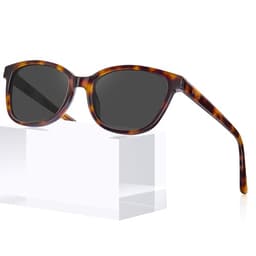
CARFIA Designer Acetate (Women's, Polarized)
The CARFIA everyday pick. A soft squared-round that is forgiving across oval, round and heart faces, and the lowest-risk CARFIA buy if you have not measured your face and do not intend to.
Price as of October 15, 2026. #ad How we’re funded
Frame material: Cellulose acetate. Specs read from the listing on July 21, 2026.
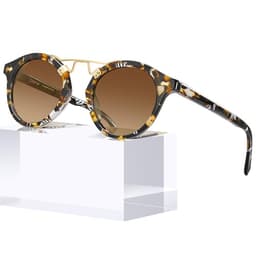
CARFIA Small-Face Double-Bridge (Acetate)
The CARFIA specialty, and the single thing on this page SOJOS has no answer to: an acetate frame actually cut for a small face, with a period double bridge. It is too small for a medium or large face, which is the point.
Frame material: Cellulose acetate. Specs read from the listing on July 21, 2026.
Frequently asked questions
Is SOJOS or CARFIA better?
Neither is better across the board, and the split is unusually clean. SOJOS has the wider shape range and the stronger cat-eye line, and its own product pages carry a fully populated measurement block. CARFIA is narrower and more specific: vintage detailing like keyhole and double bridges, a published frame weight, and a frame genuinely cut for a small face. Buy SOJOS if you want range and numbers; buy CARFIA if you want retro character or you have a small face.
Are both SOJOS and CARFIA real acetate?
On the frames covered here, yes - both state cellulose acetate rather than injection-molded plastic. The catch is brand-wide rather than per-frame. SOJOS also runs a large TR90 line and sells metal frames, and TR90 is a nylon, not acetate, so the material line on the specific listing is the thing to read. CARFIA's range is more consistently acetate. If you want to verify a frame in hand, our five acetate checks take about a minute.
Which one publishes better specs?
They publish different things. Every SOJOS product page we checked carried frame width, temple length, bridge width, lens width, lens height, frame material and lens type, all populated - but no weight. CARFIA publishes a weight in grams, which SOJOS does not, alongside dimensions in both millimeters and inches. CARFIA is less consistent, though: at least one of its sunglasses listings has every dimension field left at zero.
Do SOJOS and CARFIA have the same warranty?
The warranty is effectively a tie and the returns window is not. Both state a one-year warranty against defects in materials and workmanship on their own sites. SOJOS gives 30 days to return or exchange, with sale-page items excluded; CARFIA gives a 14-day fit-and-style guarantee, good for one exchange or refund. Buy either through Amazon, as our links do, and Amazon's returns policy governs instead - which is usually the more forgiving of the three.
Are these good enough, or should I spend more?
For eye protection they are good enough, and that is not a hedge - both state UV400, and UV protection comes from the lens rather than the price. What more money buys is finish: layered color depth, a hand-polished edge, sizing offered in more than one eye size, and a frame worth re-polishing in five years. If you want that, the honest move is to skip both and spend several times as much once, rather than buying three budget frames in a row.
Sources
- Mazzucchelli 1849 — the cellulose-acetate maker for eyewear — Background on cellulose acetate as the traditional material for spectacle and sunglass frames (accessed July 21, 2026)
- U.S. FDA — Tips to Stay Safe in the Sun: From Sunscreen to Sunglasses — FDA: lens darkness does not indicate UV protection; look for a 100% UV / UV400 label (accessed July 21, 2026)
- American Academy of Ophthalmology — Recommended Types of Sunglasses — AAO on choosing sunglasses that block 99–100% of UV-A and UV-B (UV400) (accessed July 21, 2026)
Keep reading
SOJOS review
The full brand review, including why the acetate line and the TR90 line are not the same purchase.
Read the reviewCARFIA review
The full brand review, the vintage detailing, and where the finish shows its price.
Read the reviewBest affordable acetate sunglasses
Both brands against the rest of the sub-$50 acetate field, ranked.
See the budget picksHow to tell if frames are real acetate
The five checks that settle whether a budget frame is the real material.
Check before you buyHow to read sunglasses sizes
What 50-19-145 means, and why the numbers decide this comparison.
Read the guide